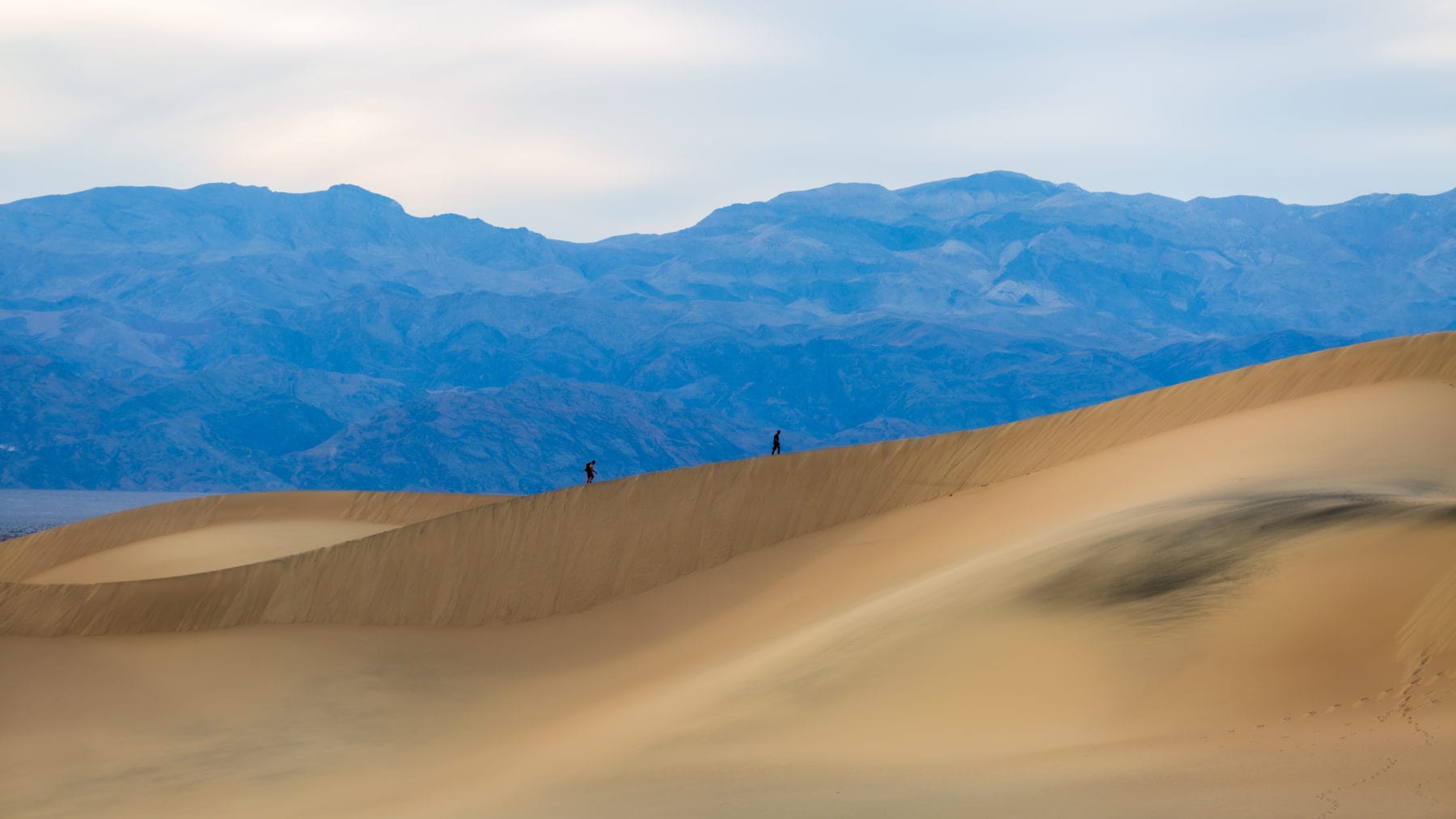
Ultimate Guide: Three-day Death Valley National Park Itinerary
After almost two decades, I finally had the chance to visit Death Valley National Park. While many understandably view visiting Death Valley as a desolate desert, beauty is found in the dust and dirt.
The hikes, camping, and photography in Death Valley National Park are uniquely memorable and offer so much for every visitor. With so much to do in this region, you’ll be booked for three days.
Below, we’ll cover how to plan your trip with a three-day Death Valley National Park itinerary, camping options, and how far it is from major metro areas. Plus, enjoy the stunning photos. This place impressed me so much, and I’m sure you’ll fall in love with it too!
Three-Day Itinerary for Death Valley National Park
Easy Booking: Expedia.com | Hotels.com | VRBO | Booking.com | Airbnb.com
Need Gear: Find Gear at REI
Find Awesome Tours: Viator.com or GetYourGuide.com
First time here? Stay in touch by following on IG: @Alecoutside and my newsletter
Iceland on your bucket list? Get my Iceland guide + 144 pinned locations on Google Maps
Please stay safe out there and follow Leave No Trace principles as best you can.
What to Know About Visiting Death Valley National Park
Is Death Valley National Park worth visiting?
Yes. Full stop. It’s one of America’s top national parks. It’s a different kind of environment than many are used to, but it’s beautiful and unique, and it offers a wide range of hiking and adventure for people of all skill levels.
What is the best time for visiting Death Valley National Park?
Not the summer. Let me repeat, not the summer! Summertime in Death Valley can reach 125 or 130 degrees and is quite literally an oven. Instead, come between October and March, and you’ll have one of the most magical experiences you can imagine.
Related links:
Best hikes in California
What to see in California during fall
Top places to see in Northern California
A guide to backpacking to Big Pine Lakes
Explore General Sherman Tree in Sequoia National Park
Death Valley Camping
Death Valley has nine campgrounds throughout the park, with three in Furnace Creek and the rest between 30 minutes and two hours from Furnace Creek. It won’t come as a shock that most Death Valley camping happens from October through April, as summer months can see lows in the 90s or 100s.
Only Furnace Creek takes reservations. The rest are first-come, first-served.
I stayed one night at Sunset Campground, a gravel parking lot. It was excessively windy, which didn’t give us a good night’s sleep. We then moved up to Texas Springs Campground, a great Death Valley camping location with fire rings for campfires. It’s also more protected, with hills surrounding the sites.
Ideally, the first thing on your Death Valley things-to-do list is to get your reservation at Furnace Creek. Suppose you don’t, plan to arrive before 10 am to find an unoccupied campsite, or one that will be free in a few hours. Campers have until noon to be at their site.
Don’t feel like camping? Book a spot in the center of the park here.
Gas
Gas won’t be cheap while visiting Death Valley. Gas is available in two places in Death Valley National Park: Stovepipe Wells and Furnace Creek. Stovepipe Wells was cheaper by nearly two dollars per gallon.
There is also gas in Trona and Panamint Springs. Keep in mind that if you’re coming in from the west, you have a sizeable uphill climb to get into Death Valley. It isn’t a place you want to be low on gas.
How far is it to Death Valley National Park?
- From Los Angeles: 4.5 hours
- From San Francisco: 8.5 hours – check winter road conditions
- From Las Vegas: 2.25 hours (For national parks near Las Vegas, this is the one I’d choose)
- From Phoenix: 7 hours
What is there to eat in Death Valley?
There are a few restaurants/saloons in Death Valley, but the grocery/general store had little more than pre-made sandwiches and snacks. Breakfast items were severely lacking. I highly recommend bringing everything you’ll need when you visit.
Gear to bring while visiting Death Valley
- Wide Brimmed Hat
- Sunglasses
- Moisture-wicking shirt or long-sleeve sun shirt
- Hiking shorts or pants
- Sunblock
- 5- or 10-gallon water jugs
3-Day Death Valley National Park Itinerary
Death Valley Itinerary Day 1 – Friday
Locations: Badwater Basin
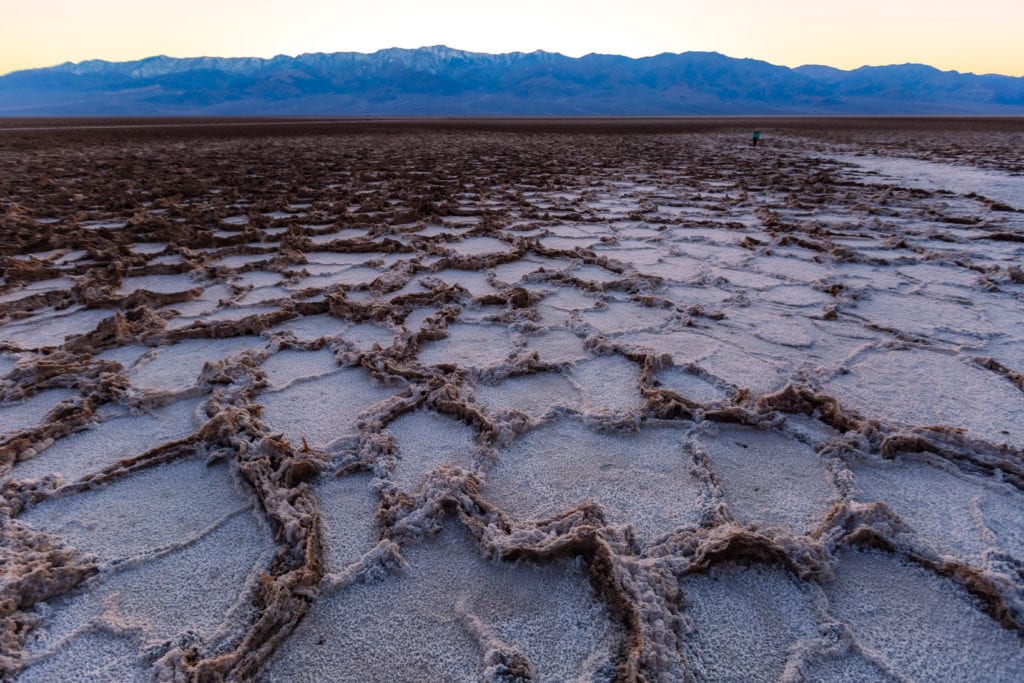
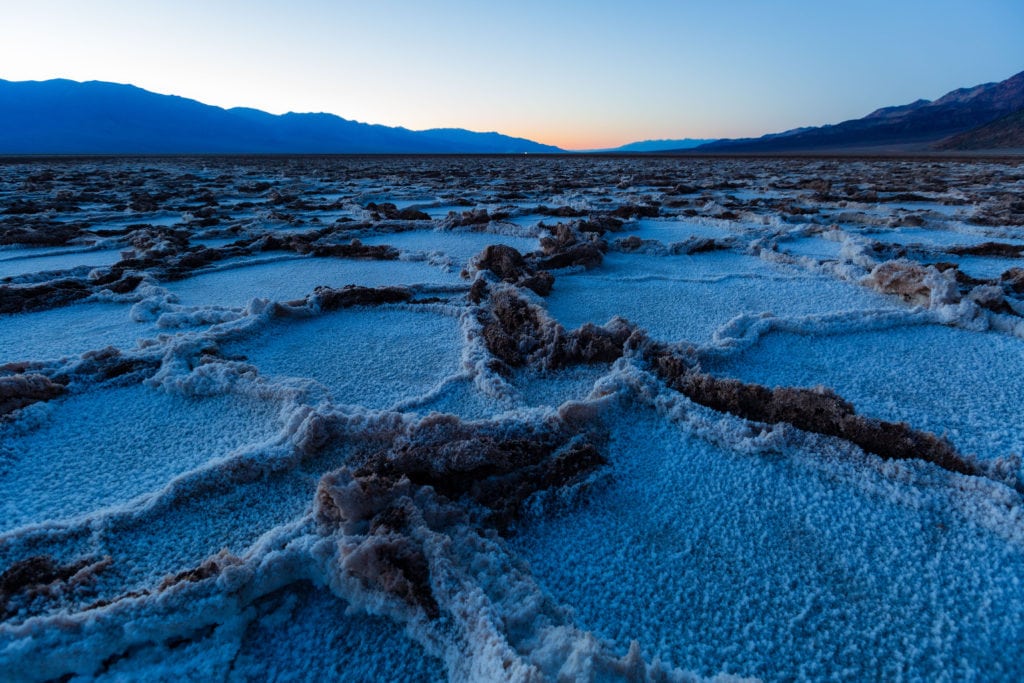
We left Santa Barbara a little later than we had intended, with a 5.5-hour drive in front of us. Once you get into the desert, you’re driving through some rough-looking terrain. We arrived in Death Valley National Park by 3 pm and were disappointed to find the Texas Springs CG full. This meant camping at the Sunset CG. As mentioned above, this wasn’t anything special.
After setting up camp, we went south to Badwater Basin, the lowest point in the park and the Western Hemisphere. At -282 feet, it doesn’t look much different than the rest of the valley. As for the Badwater Basin, it’s incredible.
I recommend walking at least half a mile away from the main area. Doing this will 1) get you away from people and 2) give you the classic octagon shapes you see in photos. Add this to your list of things to do in Death Valley National Park when planning your trip.
Badwater Basin is great for both sunrise and sunset. But while it’s excellent, you need some sky action to make the photo pop. Unfortunately, we weren’t lucky and had clear skies. Next time!
Death Valley Itinerary Day 2- Saturday
Locations: Artist’s Palette, Golden Canyon, Mesquite Sand Dunes
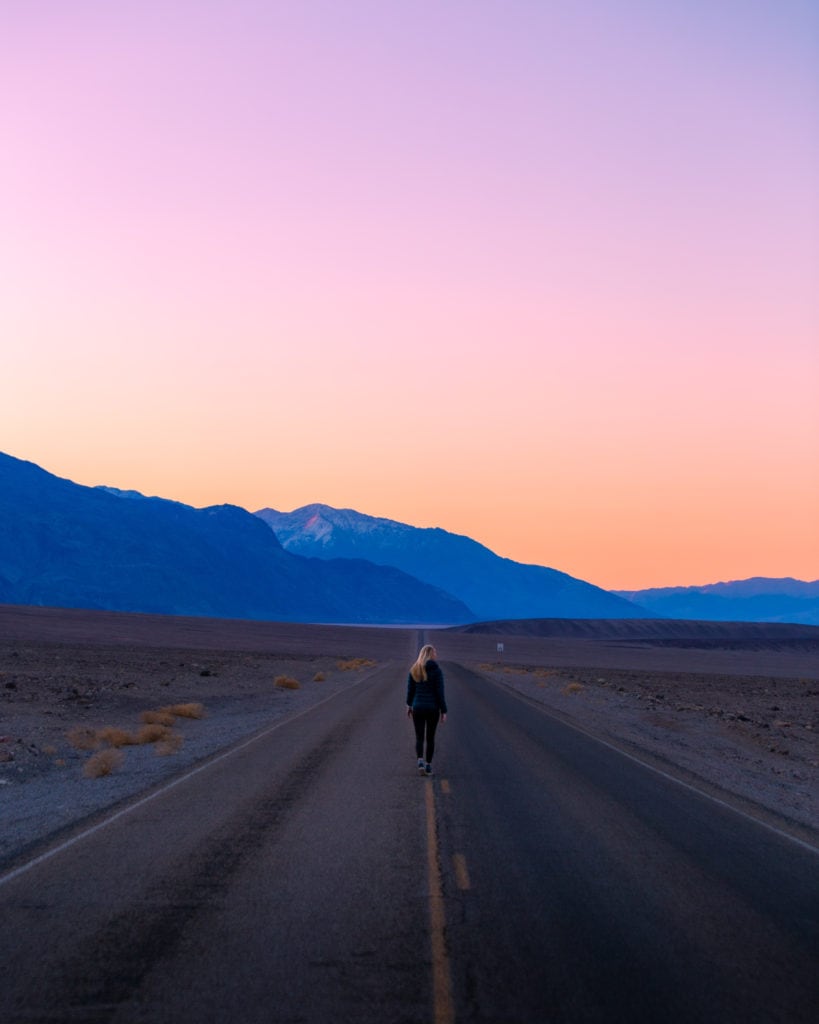
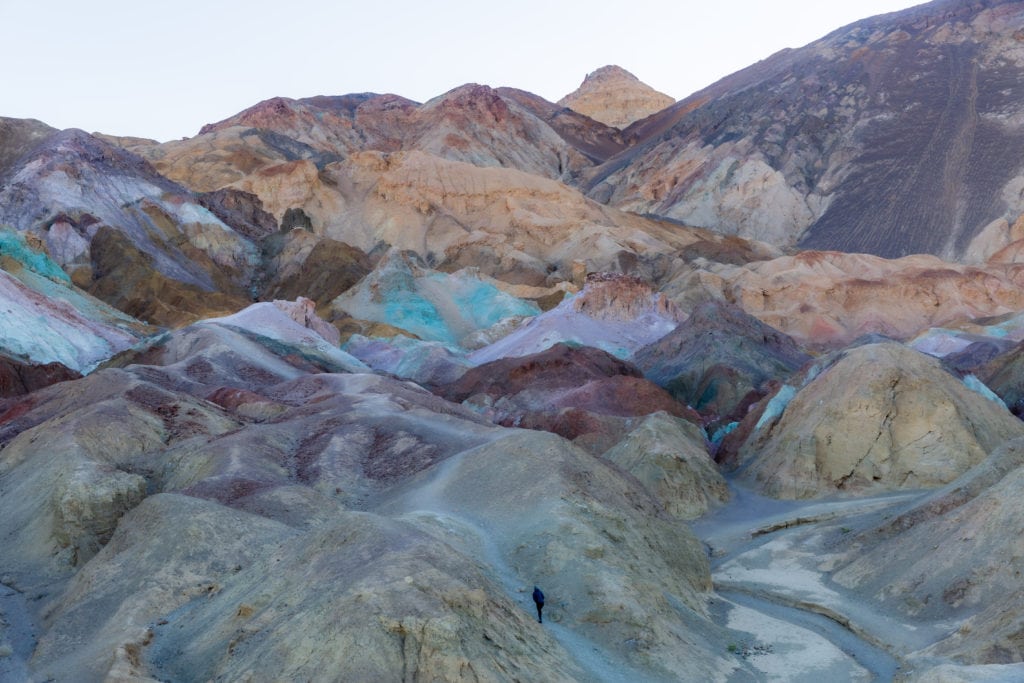
My girlfriend and I woke up early and headed to Artist’s Palette for sunrise. Surprisingly, we were the only ones there for about 45 minutes. I was shocked, considering it was a weekend visiting Death Valley. This is best viewed in low light – before sunrise/after sunset, as it allows the colors to come out!
The Artist Drive is 8 miles from Furnace Creek, and the loop takes about 20 minutes with no stops. (But do stop, it’s beautiful.) When ranking Death Valley National Park hikes, this one is near the top.
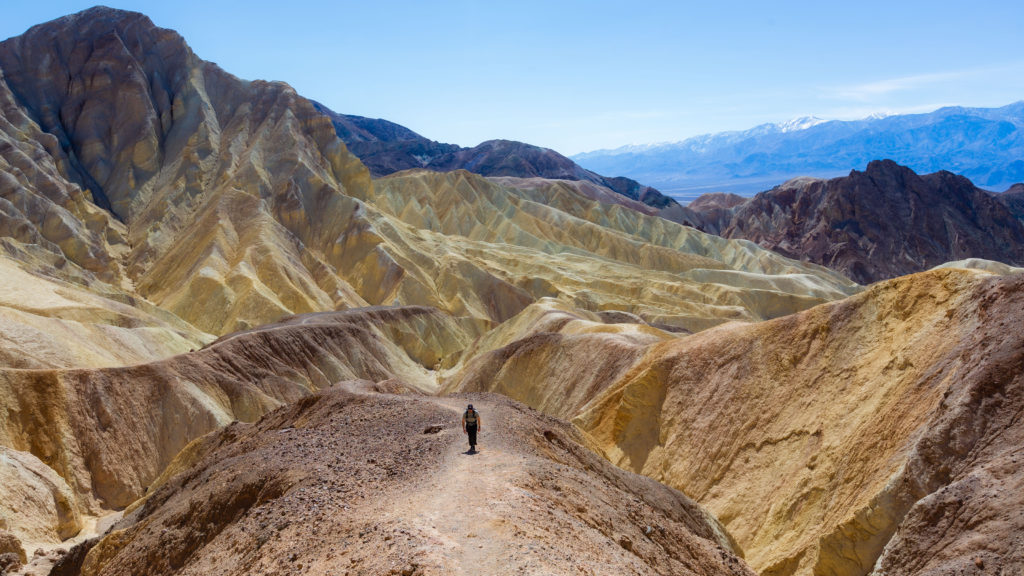
After breakfast, we wanted to check out the Golden Canyon hike. It’s less than 10 minutes from the FC campgrounds, so it’s super accessible. Be warned, it is a bit crowded at the trailhead, but road parking is available.
The trail is about 3 miles long and offers great views of the valley from the top. Given how pretty this is, don’t forget to add it to your Death Valley National Park to-do list. But it heats up in the afternoon.
Death Valley National Park photos

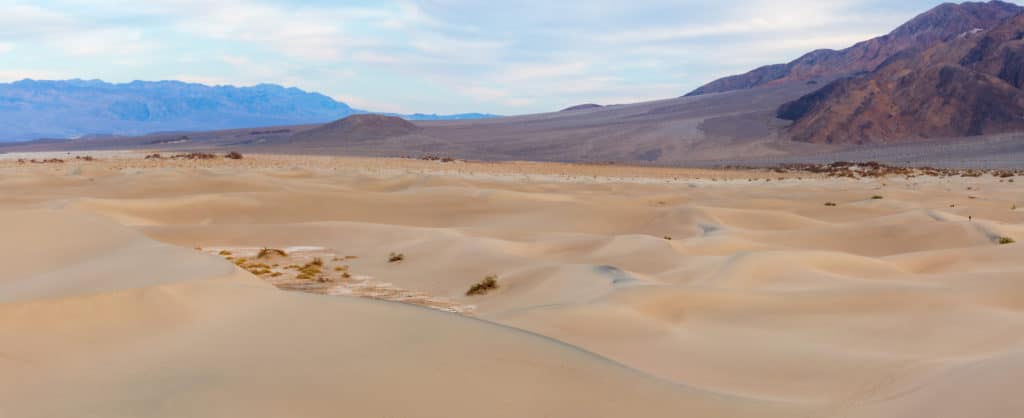
With that hike behind us, we needed to decompress for a bit. We took a break at the campsite and headed to the Mesquite Sand Dunes near Stovepipe Wells. The drive is 30 minutes from point to point. When visiting Death Valley, traffic isn’t usually a problem. However, it is only a single-lane road each way, so if there is an issue, traffic can get backed up.
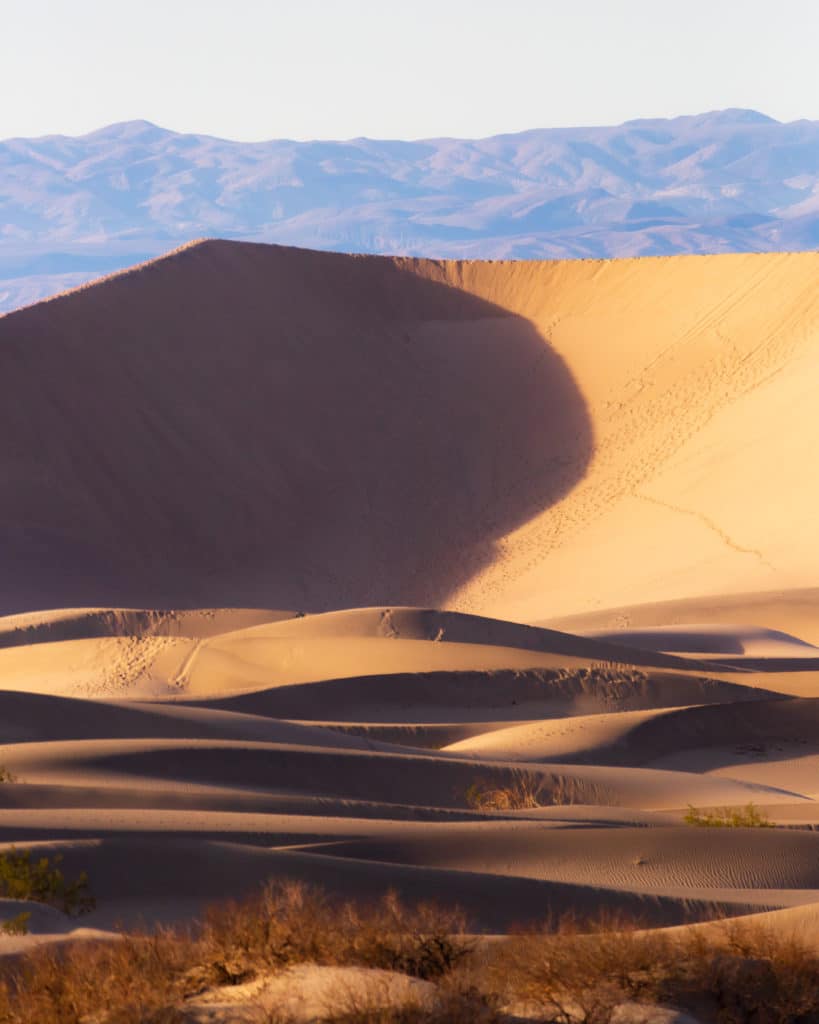
There’s no one route in the sand dunes. We did, though, have a goal in mind. The highest sand dune in the area. This is two miles round-trip, consisting of many smaller dunes before finally hitting the big one.
Even though the distance isn’t far, hiking in the sand is not easy. Our legs were feeling it on the way back! I recommend this as one of the must-do hikes in Death Valley National Park.



Death Valley Itinerary Day 3 – Sunday
Locations: Zabriskie Point, Mosaic Crater, Ubehebe Crater, Father Crowley Overlook
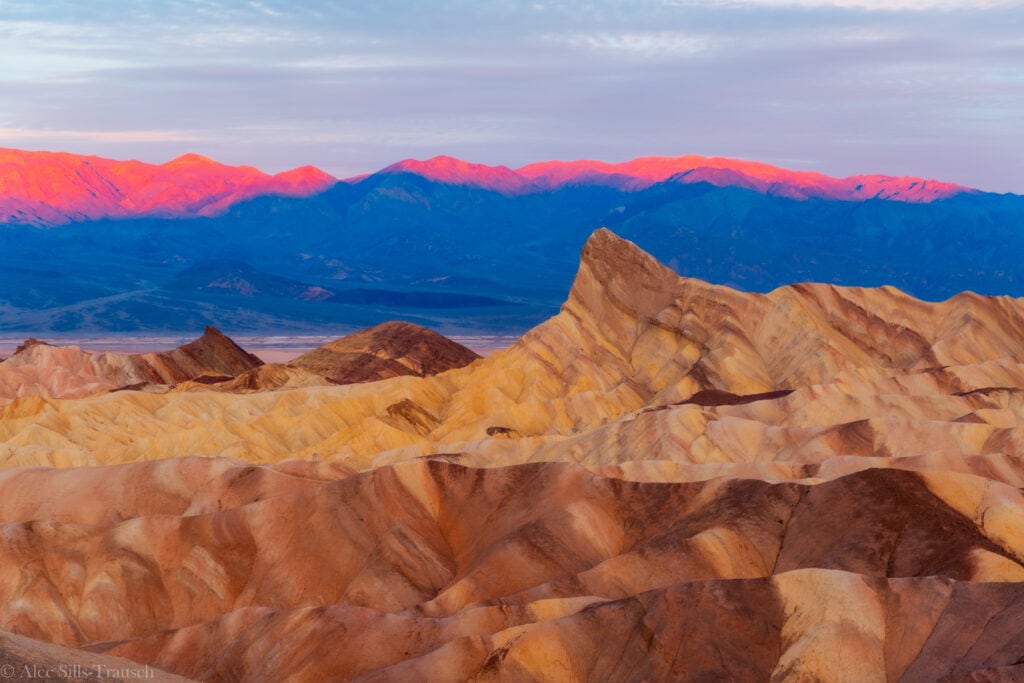
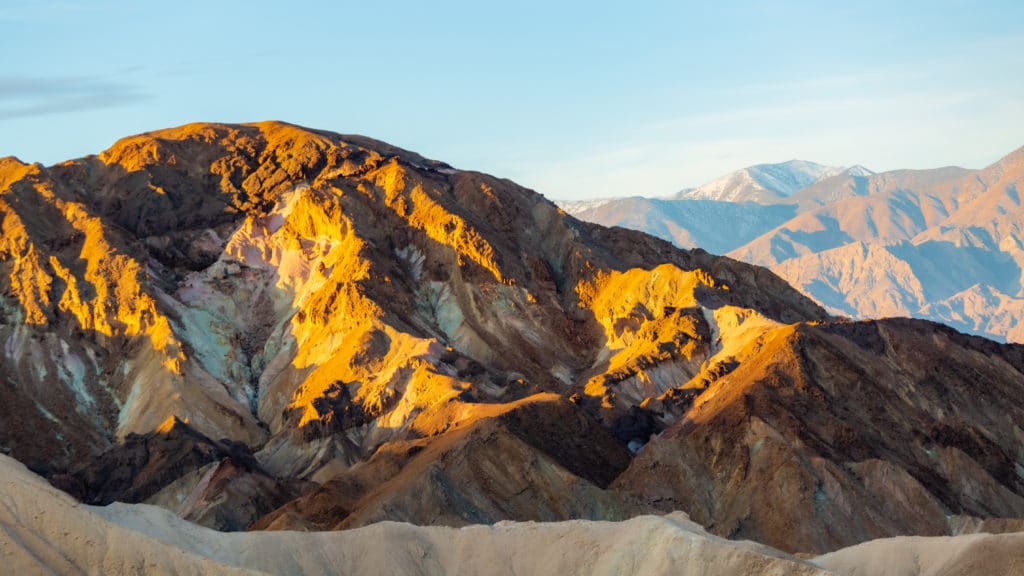
We awoke before sunrise again and drove 12 minutes to Zabriskie Point. As we pulled into the parking lot, it was the polar opposite of the previous morning. There were easily 50 people, primarily photographers, spread out across the dirt, capturing the sunrise show.
It was a beautiful morning watching the sun slowly flood onto the valley floor and hit the tip of Zabriskie Point. With sunrise behind us, we returned to the campsite, started a small fire, and enjoyed a quick breakfast before packing up the site.
After stuffing my Prius full, we headed to Mosaic Canyon for a quick 2-mile stroll and took the 40-minute drive to Ubehebe Crater. We had no idea what to expect, but it turned out to be one of the trip’s highlights. It was stunning in size, and the chance to walk the circumference allowed us to see it from all angles.
This is one of the Death Valley National Park hikes you must do.


As the sun set, we headed out of Death Valley National Park on our way back to Santa Barbara. We were treated to a stunning sunset, the perfect bookend to a beautiful trip.
Wrapping up – 3-Day Death Valley National Park Itinerary
Death Valley National Park is a remarkable and awe-inspiring destination that captivates visitors with its unique landscapes, extreme climate, and rich history.
Despite its name, the park is teeming with life, showcasing the resilience of various plant and animal species adapted to this harsh environment. From towering sand dunes to vast salt flats and colorful canyons, Death Valley offers an array of natural wonders that leave a lasting impression on all who venture into its depths.
Whether it’s exploring remote trails or stargazing under the clear desert skies, there is no shortage of experiences to be had in this extraordinary national park.
I hope this Death Valley National Park itinerary helps guide your trip and that you have as amazing a time as I did!
Until next time, adventurers, stay safe.
Follow on social media: TikTok || Instagram || Facebook || Newsletter | YouTube