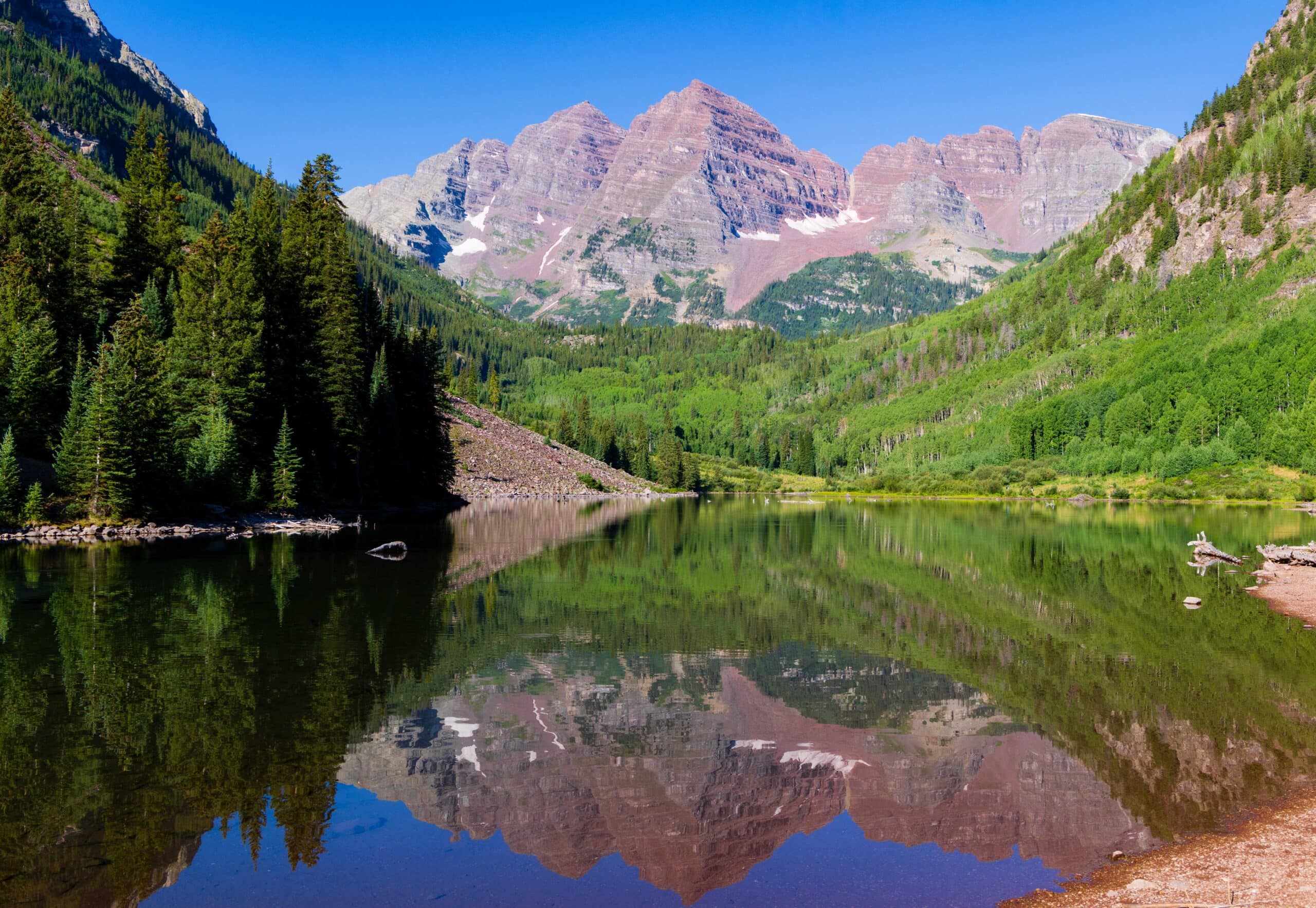
Visiting Maroon Bells and Photographing Sunrise Near Aspen, Colorado
The White River National Forest is the most visited national forest in the United States. Much of that visitation is thanks to people visiting Maroon Bells Scenic Recreation Area outside of Aspen, Colorado.
After two trips to these hallowed grounds, it fully lives up to the hype. It’s easily one of the most picturesque locations in North America and is incredibly user-friendly. The most scenic viewpoint is a short walk, no longer than a football field away. It also gives hikers and backpackers incredible access to the backcountry, where mountains tower above 14,000 feet and alpine lakes beckon us closer.
Inside, we dive into how to visit the Maroon Bells and what you need to know to photograph this stunning place at sunrise when the peaks light up in dazzling shades of reds, pinks, and oranges.
What you need to know before you visit Maroon Bells
Transportation Permits/Reservations Required
To photograph sunrise at Maroon Bells, you have to drive your own car personally. Purchasing a shuttle ticket won’t work, as they do not run in the wee hours of the morning. This means you’ll technically need a parking reservation for the early morning.
If you plan to visit for a day hike, you’ll need to park at the Aspen Highlands Garage (costs $30+ per day) plus pay for the shuttle tickets, which are $16.
A cheaper, but more convoluted option
I haven’t done this route, but I’ve heard you can park in town and then take the local bus to the Aspen Highlands Garage. You’ll then have to get onto the Maroon Bells shuttle to get to the final destination. This will save you some money but may add more headaches to the experience with having to line up bus schedules.
When is Maroon Bells Open?
Access to Maroon Bells runs from May 15 to October 31 each year. The shuttle runs from May 22 through October 18. If you want to bike it, you may do so at your own convenience. Cars may drive the road before 8am and after 5pm. (Cars already inside may leave, but cannot re-enter; this rule doesn’t apply to those with campground reservations.)
No cell service
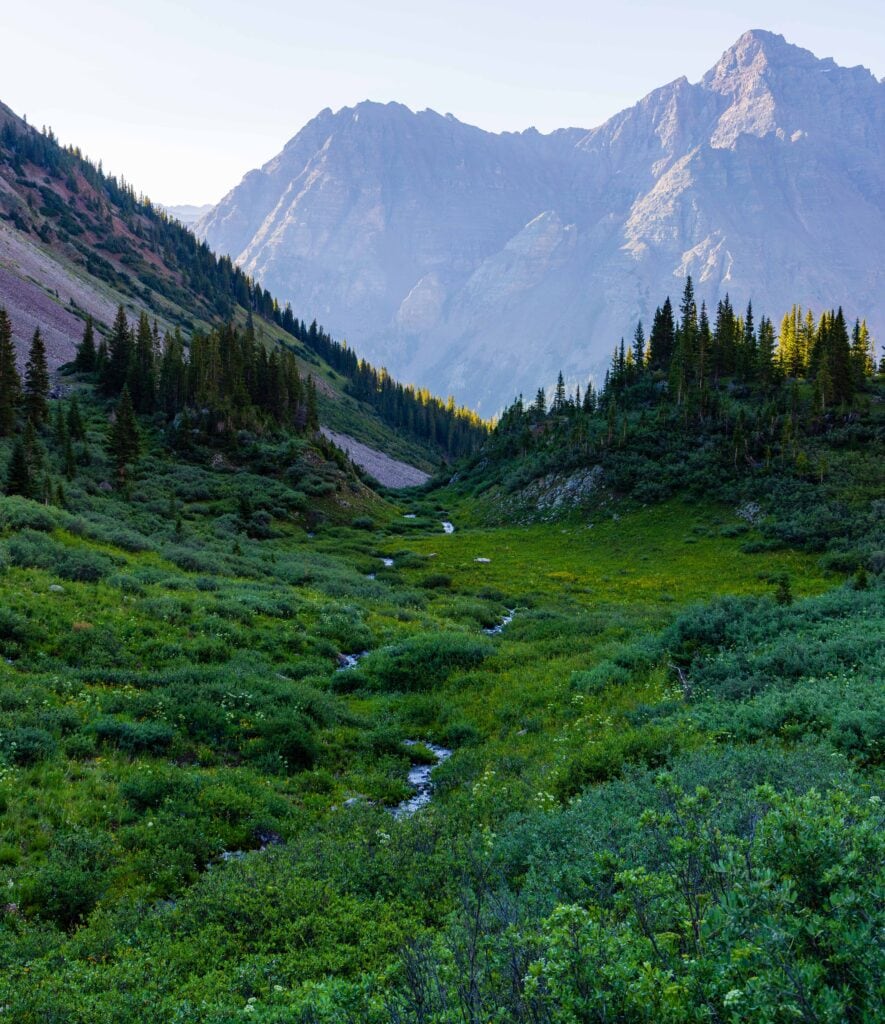
Don’t expect any cell service while you’re exploring Maroon Bells. You’re tucked deep into the canyon, giving you a break from the chaos of the outside world.
3.5 hours from Denver
I don’t think I’d recommend driving from Denver straight to photograph sunrise at Maroon Bells. It’s a 3.5 to 4-hour drive, including the steep switchbacks of Independence Pass. It’s better to stay in Leadville, Aspen, Carbondale, or Glenwood Springs, and then make your way to the Bells.
Hotels Near Aspen to consider:
- The St. Regis Aspen Resort (Aspen $$$$)
- The Inn at Aspen (Aspen $$$)
- White Elephant Aspen (Aspen $$$$)
- Aspen Mountain Lodge (Aspen $$)
- Mountain Chalet Snowmass (Snowmass $$)
- Pokolodi Lodge (Snowmass $$)
What to do on your visit to Maroon Bells
Lace up your hiking boots because we’re going hiking! There are a variety of hiking trails for all levels of hikers. While the Four Pass Loop may be the holy grail of trails, it’s by far the least-done trail in the area.
So, let’s dive into what you can do when visiting Maroon Bells. Remember, your starting elevation is 9,500 feet. On flat ground, you may not feel it, but with any elevation gain, your breathing will intensify.
Easy Hiking – Maroon Bells Scenic Loop Trail – 2 miles
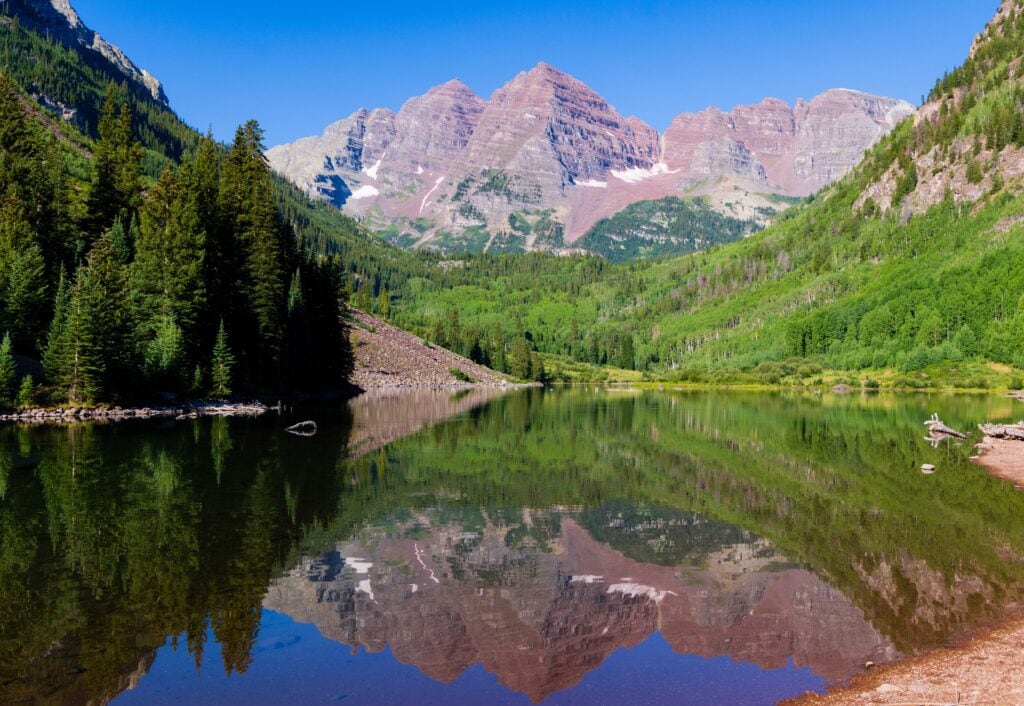
The easiest hike in the Maroon Bells Recreation Area is the Scenic Loop Trail. This route hugs the right side of the lake and does a figure-eight behind it. This is an incredibly scenic and beautiful trail, best for those who don’t want to hike too far or may not do well with unstable ground.
Most of the trail is not shaded, so bring a hat and wear sunblock.
Easy Booking: Expedia.com | Hotels.com | VRBO | Booking.com | Airbnb.com
Need Gear: Find Gear at REI
Find Awesome Tours: Viator.com or GetYourGuide.com
First time here? Stay in touch by following on IG: @Alecoutside and my newsletter
Iceland on your bucket list? Get my Iceland guide + 144 pinned locations on Google Maps
Please stay safe out there and follow Leave No Trace principles as best you can.
Mid-Level Hiking
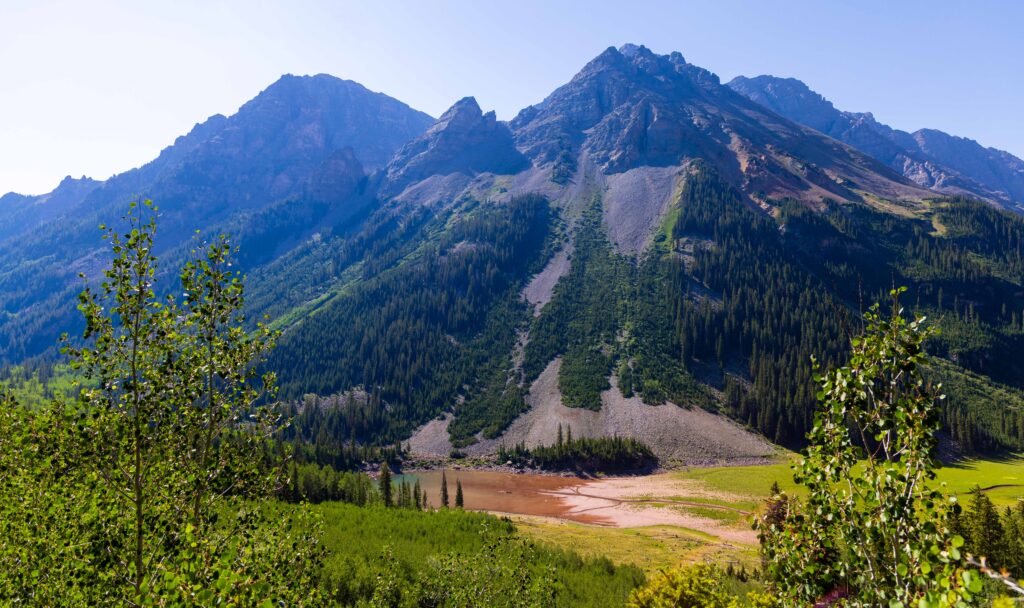
If you’re looking for a nice half-day adventure, hiking out to Crater Lake is the perfect day hike. This is a 3.6-mile round-trip trail with 700 feet of gain. You’ll feel the altitude, but it’s not too hard of a trail.
If you want a longer hike without serious elevation gain, keep going on the trail beyond the lake. It’ll take you deeper into the valley but shouldn’t be too tiring.
Hard Hiking
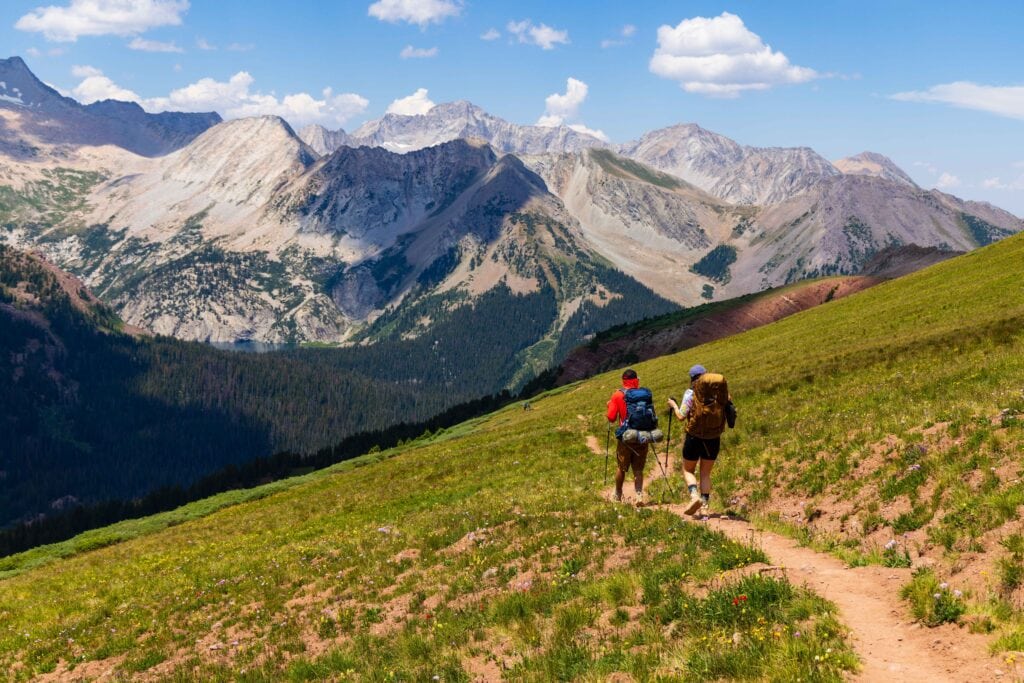
If you’re okay with putting in the work, you can see some truly fantastic views in the Maroon Bells just on a day hike. The first recommendation would be hiking up to Buckskin Pass. This is a 10-mile round-trip day with 3,000 feet of gain. (Read my trail report here.)
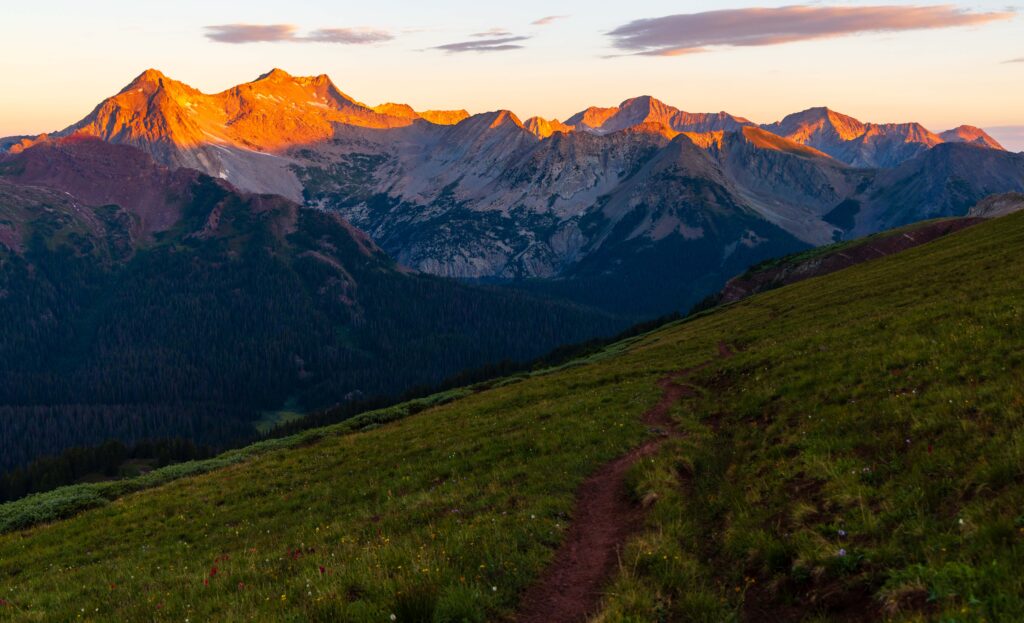
The first 1.6 miles is on the main trail to Crater Lake, and then you’ll begin the climb to the pass. It’s a MAGICAL trail with flowers, streams, and crazy views. I recommend bringing a water filter to fill up water around the halfway point.
(If you want a 17-mile day, you can go all the way to Snowmass Lake and back. But this is a long and tiring day with around 5,000 feet of gain overall.)
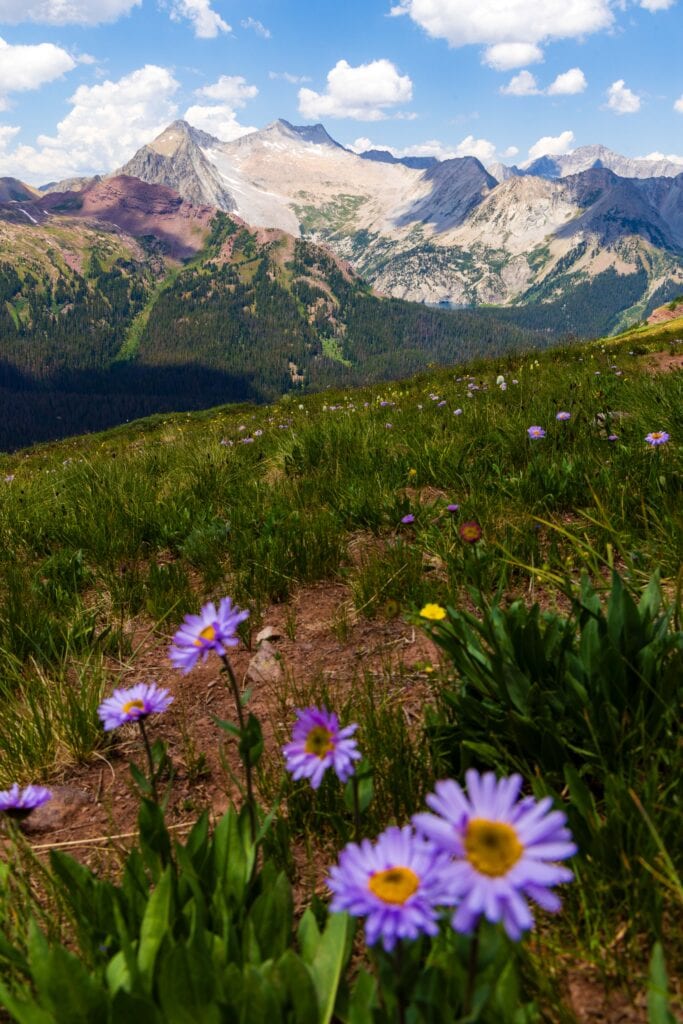
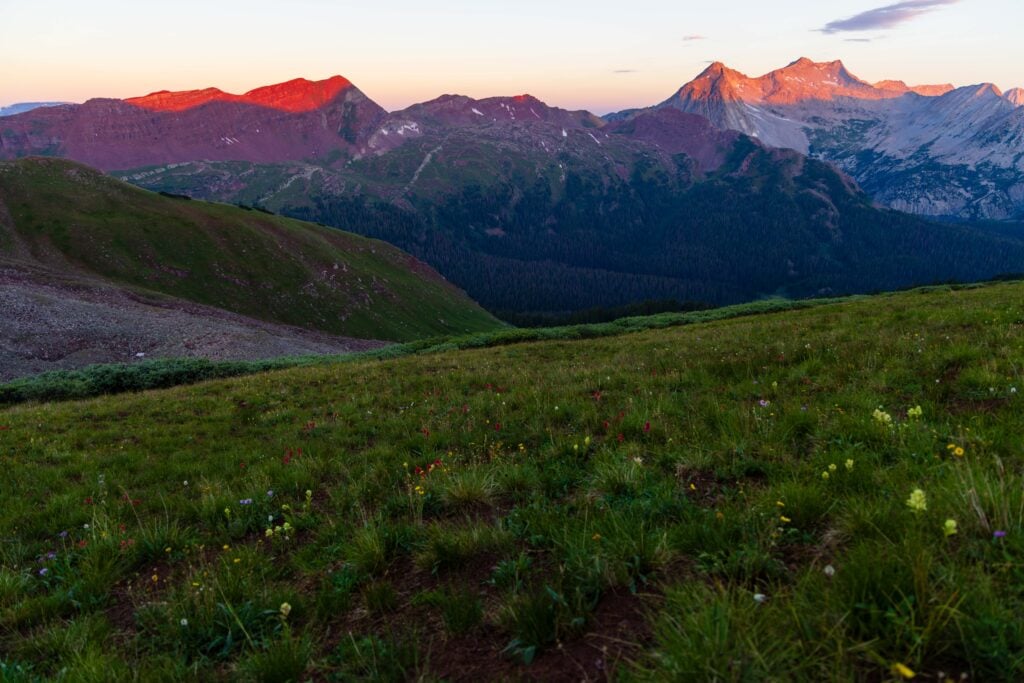
A slightly longer option, but with a more gradual climb, is West Maroon Pass. This would be around 13 miles and 3,100 feet of gain. This follows the Crater Lake Trail and keeps going to the first pass on the Four-Pass Loop Route.
Lastly, if you start in Snowmass Village, you can hike to and from Snowmass Lake without the arduous task of Buckskin Pass. This is the more common route for those looking to summit Snowmass Mountain, a 14er.
Round trip to the lake and back is 17 miles and 2,500 feet of gain (about half the elevation gain if you went via Buckskin Pass).
Strenuous Day Hike
Any of the 14ers would fall into this category.
The Maroon Bells are ridiculously beautiful, but they are also some of the most treacherous 14ers to climb. Crumbling rock, steep and exposed terrain, and fast-moving storms can turn the Maroon Bells into the Deadly Bells. The most climbed mountains are Maroon Peak, North Maroon Peak, and Pyramid Peak.
Only experienced climbers should attempt these peaks, as they tend to be in the Class 3/4/5 range.
Strenuous, Multi-Day Hiking
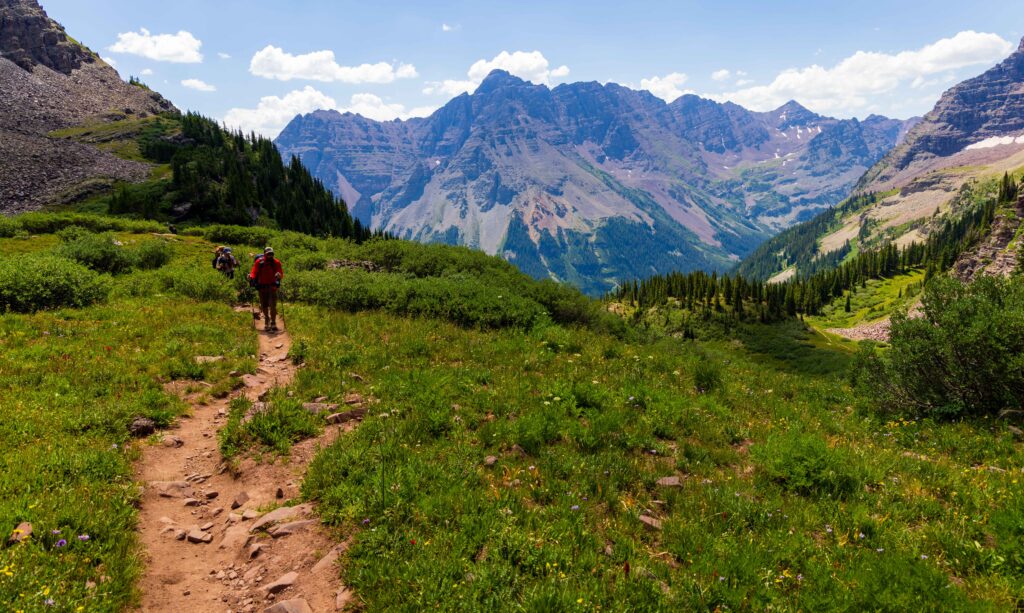
This is the Four-Pass Loop, which gets its name from the four passes hikers must traverse to complete the loop. West Maroon Pass, Frigid Air Pass, Trail Rider Pass, and Buckskin Pass are all above 12,000 feet, going clockwise.
The route is approximately 28 miles with 8,000 feet of gain. While experienced trail runners do this in a day, most backpackers spend 3-4 days exploring along this route. It could be done in 2 long days if you are fit enough and can’t find the necessary permits to spend longer out here.
Anyone planning to do this must secure backpacking permits along the trail.
Another fun option is to do the Aspen to Crested Butte hike. This requires a little bit of planning, unless you’ll be retracing your steps. There are shuttle services to drive you back to Aspen/CB. It’s a 10-11 mile trail with 2300-2,800 feet of gain depending on your route (starting in CB has less uphill overall, but is steeper).
Sunrise Times at Maroon Bells

While these are estimated sunrise times, you may have to wait a little bit for the sun to get up and over the mountains. However, looking at my photos/videos from October 1, the tops of the peaks were lit up at 7:05am.
| Date | Sunrise |
|---|---|
| June 1 | 5:43 AM |
| June 15 | 5:41 AM |
| July 1 | 5:45 AM |
| July 15 | 5:54 AM |
| August 1 | 6:08 AM |
| August 15 | 6:21 AM |
| September 1 | 6:36 AM |
| September 15 | 6:49 AM |
| October 1 | 7:04 AM |
| October 15 | 7:17 AM |
Where to Go For Photographing Sunrise at Maroon Bells
This is seriously one of the most straightforward photography missions in the world. The only thing easier would be if you didn’t have to leave your car.
After parking in the parking lot, click on your headlamp and walk 100-200 yards to the front of the lake. Unless you’re the first person there, you’ll see plenty of other photographers with their tripods set up waiting for light to hit the top of the Bells.
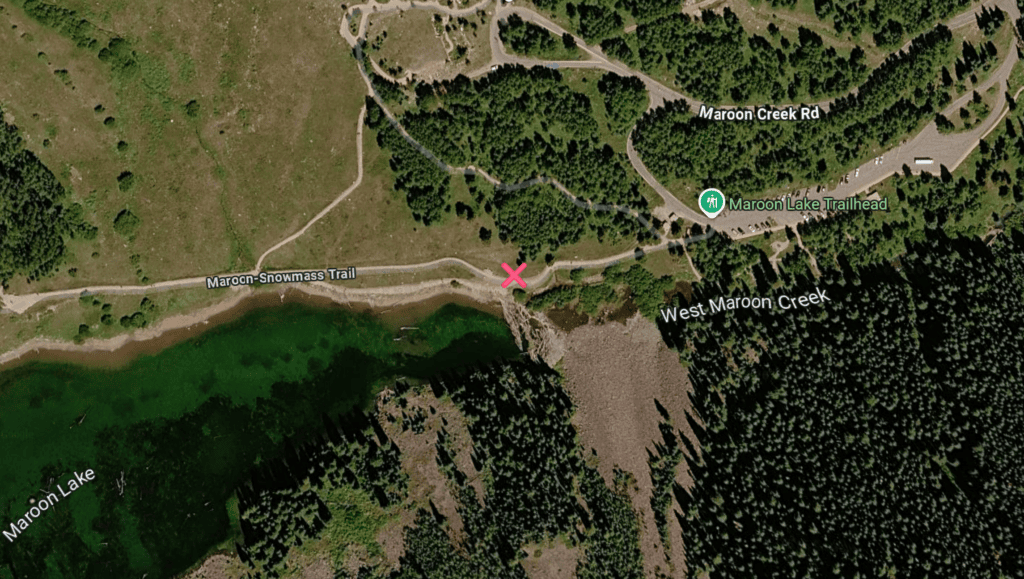
One important thing to note is that at some point in the last 3-5+ years, they have roped off the lake to protect the lake/environment/keep people safe, so you shouldn’t (though people still cross the line) go down to the water level.
Unfortunately, this is where the best, more direct photo of the bells/reflection takes place.
Photography Tips for Sunrise at Maroon Bells

Why photograph sunrise here?
The first light on the peaks is heavenly! Watching them light up in a bright gold or red hue is simply phenomenal, and you’ll be watching one of the most grandiose sights you’ve ever seen. Yes, it might be early and maybe even chilly, but it’s worth it!
What Lens to Use
I’ve used multiple lenses for photographing sunrise at Maroon Bells. I’d suggest a wide angle (such as a 16-35) and then one with a little oomph (like a 24-105) to get closer on the surrounding peaks.

Tripod or no Tripod?
I would recommend a tripod. This allows you to slow down your shutter speed without having to boost your ISO and add grain to the image. Your tripod is also a good way to save your place along the rope line to ensure you get the position and photo you want.
That said, once it gets brighter, don’t be afraid to take your camera mobile and find new and unique compositions along the path and higher up above via the trail that takes you to the small visitor center/bus stop.
Camera Settings to Try at Sunrise
This is all a rough estimate because the light will change fast; there are a lot of other variables.
That said, if it’s relatively dark, try to be around 1/10, f/5.6, and ISO 100. See how that plays out. You may need to do 0.5 sec, though. And then as it gets lighter, quicken your shutter speed accordingly.
If you’re doing a long exposure, turn on your two-second timer to decrease the chance of a small shake after you hit the shutter button.
Summer Tips
In the summer, Maroon Lake will be fuller, giving you a better chance of a complete reflection with the peaks above. You’ll also get stunning pictures with flowers in your foreground. (These are a little bit further down the path.)
Sunrise, though, is far earlier, so you’ll have to plan to get to the area around 5:15am. I know, that’s sorta rough!
Fall Tips

In the fall, Maroon Bells and Aspen at large turn the most glorious yellow and orange. While exact peak fall is never an exact science, a good bet is the last week of September into the first week of October.
The hills surrounding the lake at Maroon Bells go from green to gold, and it’s one heckuva sight!
Final thoughts on Visiting Maroon Bells in Colorado
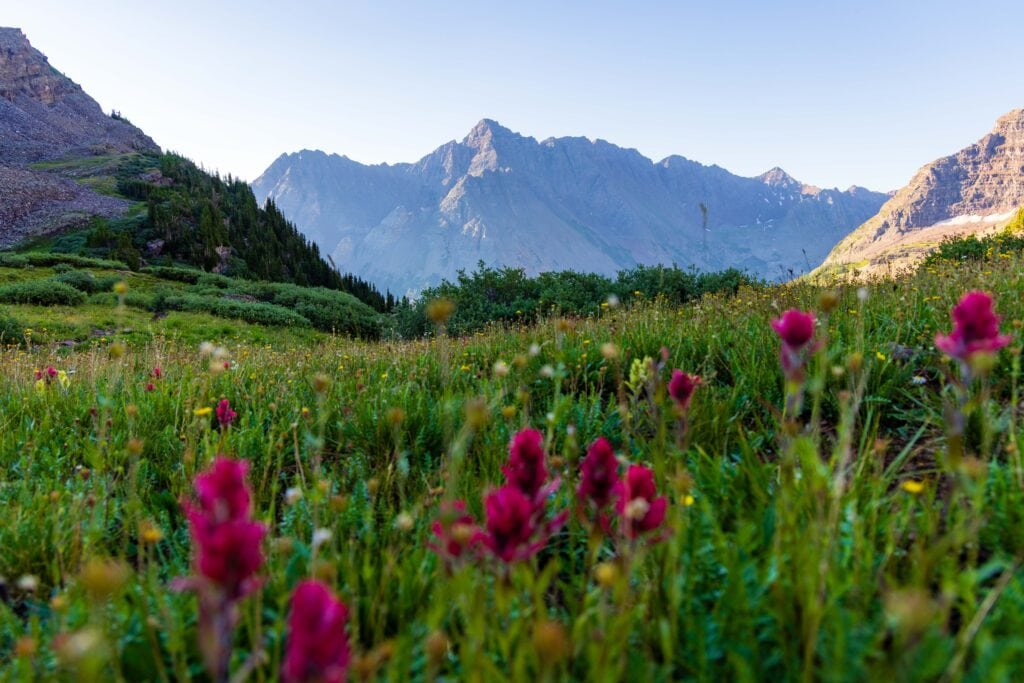
There’s a reason Aspen and the Maroon Bells are one of the most popular places in Colorado. It’s a ridiculously magical location and so beautiful.
If you have it in you to wake up early, photographing sunrise at Maroon Bells is totally worth it. But if you are just looking for a gorgeous day hike amongst the towering peaks, you’ll be left thinking it was all a dream.
However you plan out your visit to the Maroon Bells, you’re in for a treat and one you’ll remember forever.
Until next time, adventurers, stay safe.
Follow on social media: TikTok || Instagram || Facebook || Newsletter | YouTube