Gear Guide for Hiking 14ers: What to pack for your next summit
In the continental United States, the highest anyone can hike and climb is 14,000 feet. There are 58 fourteeners in Colorado and another nine in the lower 48 states, spread across Washington and California.
Their grandeur draws people from all over, seeking to summit the country’s tallest mountains. But with that allure comes those who are not prepared or are not as prepared as they should be. That’s the basis for this gear piece, helping educate hikers on what they should wear and bring before hiking the fourteeners.
As you read through this gear guide for hiking 14ers, make a checklist of what you need. It’s better to have it and not need it than need it and not have it.
Easy Booking: Expedia.com | Hotels.com | VRBO | Booking.com | Airbnb.com
Need Gear: Find Gear at REI
Find Awesome Tours: Viator.com or GetYourGuide.com
First time here? Stay in touch by following on IG: @Alecoutside and my newsletter
Iceland on your bucket list? Get my Iceland guide + 144 pinned locations on Google Maps
Please stay safe out there and follow Leave No Trace principles as best you can.
Top Gear for Hiking 13ers and 14ers
Let’s dive into the gear you will want for hiking 14ers.
Footwear
I’m not here to shame you for using whatever footwear you want. If you want boots, go with boots. If you want trail runners, do that. If you prefer approach shoes, do that.
What I will say is that if it’s more of a natural walk-up 14er, trail runners are a perfect shoe. But if you’re dealing with loose rocks, I prefer hiking boots as they protect my ankles and are a bit more sturdy in cruddy terrain. Ultimately, though, it’s all about what makes you feel comfortable and safe.

Hiking Boots: LOWA Renegades (Male & Female), Merrell Moab 3 (Male & Female), Salomon X Ultra 5 (Male & Female)
Trail Runners: Altra Lone Peaks (Male & Female), Mammut Duncan II (Male & Female – w/ ankle support)
Browse more options at REI or Backcountry.
What clothes to wear while hiking a 14er (Layering System and more)
Let’s chat about layering gear for hiking 14ers. This is a crucial concept to understand and remember.
Base Layer:
A good base layer is your first defense against sweat and cold. It should wick moisture away from your skin to keep you dry and regulate body temperature. Choose synthetic materials like polyester or merino wool, which offer excellent breathability and odor resistance.
Avoid cotton—it traps moisture and can lead to rapid cooling once you stop moving. Lately, I’ve been opting for sun hoodies, which protect me from the sun’s harsh rays and keep me cool.
- Mammut Sun Hoodie – Men’s | Women’s
- Outdoor Research Astroman Air – Men’s | Women’s
- Capilene Cool Daily Graphic Hoody – Men’s
- REI Sun Hoodie (a bit thicker and warmer) Men’s | Women’s
Mid Layer:
The mid layer provides insulation to retain body heat. A fleece pullover is a solid and affordable option, offering warmth without bulk.
For colder starts or higher elevations, consider a lightweight, insulated jacket with synthetic fill or down, especially if the weather forecast indicates cold or windy conditions. Make sure it fits comfortably under your shell for layering efficiency.

Lightweight Fleece Options:
- Patagonia Lightweight Synchilla Snap-T Fleece Pullover – Men’s | Women’s (My personal favorite)
- Arc’teryx Gamma Lightweight Hoody – Men’s | Women’s
Heavier Down Jackets with a hood:
- The North Face Breithorn – Men’s | Women’s (I own and love it. Super warm, packs down somewhat nicely)
- REI Magma 850 – Men’s | Women’s
- Mountain Hardwear Ghost Whisperer – Men’s | Women’s
Outer Layer:
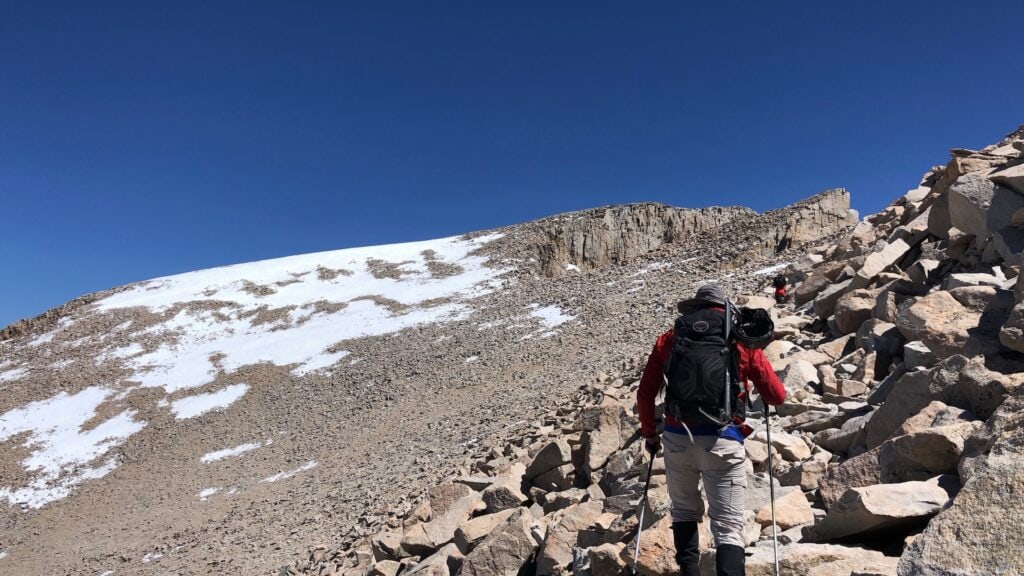
Your outer layer acts as a shield against the elements—rain, wind, and even light snow at higher elevations. A waterproof and windproof shell is non-negotiable when hiking 14ers, as alpine weather can change rapidly.
Look for jackets made from breathable materials (such as Gore-Tex or similar), featuring adjustable hoods and pit zips for added ventilation. This layer doesn’t need to be bulky but should offer reliable protection. This is one of the most critical gear for hiking 14ers as it will protect you from the worst of nature’s elements.
- Black Diamond Rain Jacket: Men | Women
- Outdoor Research Rain Jacket: Men | Women
- Arcteryx Rain Jacket: Men | Women
- Patagonia Houdini Wind Jacket. Perfect for a bluebird day, and you just want to keep the wind/sun off your skin.
Pants:
Lightweight, breathable hiking pants are ideal for comfort and mobility on long climbs. Stretch fabric and articulated knees can help with scrambling or steep ascents. Convertible pants that zip off into shorts can offer versatility in changing temps. (Mens | Womens)
For early-season climbs or when storms are in the forecast, pack rain pants, ideally with side zippers so you can pull them on over your boots.
Gloves and Hat:
Even in summer, temperatures can dip into the 30s at the summit, especially in the early morning. Lightweight gloves help protect your hands from wind and cold while still allowing dexterity.
A lightweight, warm beanie is perfect for pre-dawn starts or summit breaks. A buff or neck gaiter adds versatility—it can be used as a headband, face shield, or neck warmer depending on conditions. And then you want to make sure that you’re protected from the sun on the way down. Having a wide-brimmed hat is preferred (men | women), but a standard ball cap also works.
Backpack
For a standard day hike up a 14er, you’ll want a pack in the 20-30 liter range. Nothing too big, but big enough to carry water, extra layers, and snacks. I carry a slightly bigger pack due to my camera gear. The biggest tip is to make sure you gear for hiking 14ers is comfortable and you can wear it for hours on end.
- Gregory: Juno 30 (Women’s) and Zulu 30 (Men’s)
- Osprey: Hikelite 26 Pack
- Osprey: Tempest 22 (Women’s) and Talon 22 (Men’s)
- Black Diamond: Trail Vista 28
Navigation
Some 13ers and 14ers are relatively easy to summit, while others require more navigation and the ability to route-find. Due to this, having a GPS of the trail and/or a map is paramount.
First, having your phone fully charged and bringing a backup battery pack is crucial. I tend to download the AllTrails Map for general simplicity. Still, I would also recommend downloading the route from 14ers.com (if you’re summiting a Colorado peak) and/or using GAIA GPS for more accurate readings.
Safety Essentials Gear for Hiking 14ers
Here are some additional pieces of gear for hiking 14ers that you may want to bring. I almost always carry extra batteries simply because I don’t know when the headlight will fail.
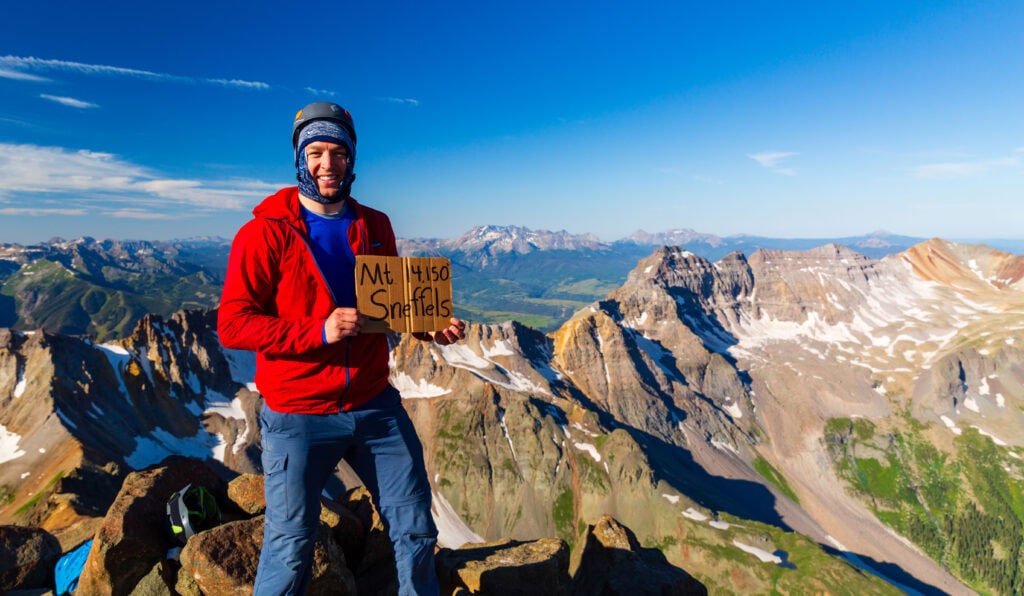
- Climbing Helmet – Although not mandatory, if there are parts of hiking 13ers and 14ers where rocks could fall on your head, it’s advisable to wear one. This is generally for those with Class 3 portions.
- Headlamp with extra batteries
- Basic first aid kit, including blister care
- Multi-tool or knife – nothing fancy needed, and I don’t usually bring one, but they can be helpful in certain situations.
- Emergency blanket or bivvy – these are for the rare instances you get caught in a freak storm and need to hunker down.
- Whistle – another super lightweight piece of gear that could save you if you need help. Just tie it to your bag and you’re set.
Food & Hydration
Being hydrated and having sufficient snacks and food are crucial to a successful 14er ascent. If you try to go light on this, you will suffer, and it won’t be a good time.
- Carry 2–3L of water; bring a filter or purification tabs
- Pack high-calorie snacks (such as bars, trail mix, or jerky) and ensure you bring enough salty snacks to counterbalance your water intake. I’d also suggest a sandwich to eat up top. I ranked my favorite snacks here.
- Electrolyte tablets or drink mixes
Sun & Weather Protection
Keeping the sun off of you will help you maintain stamina and strength as you summit your 14er. The heat will wear you down, and wearing long sleeves (or a sun hoodie as seen above), sunglasses, sunblock, and a hat will save you in more ways than you realize.
- Sunscreen (SPF 50+), lip balm with SPF
- Find sunglasses that are quality and durable, but don’t buy something crazy expensive. Goodr’s are perfect for these trips.
- Standard hat or wide-brim hat. I usually opt for the wide-brimmed hat as it keeps the sun off of everything.

Trekking Poles
There’s a love-hate relationship with trekking poles and hikers, but for this type of climb, you want them. They will save your knees on the downhill and provide extra stability as you hike over rock terrain.
Pro Tip: When hiking up, aim for them to be a bit shorter than 90 degrees. And then when you are heading down, extend them.
I enjoy my Black Diamond hiking poles. They come with snow baskets, making them ideal for winter snowshoeing as well. If you’re looking for a lighter option that doesn’t change sizes, I’ve had these BD ones since 2018.
Seasonal Additions for gear for hiking 14ers
If you’re planning to do winter, spring, or early summer summits, you’ll need to add a few more pieces to your 14ers hiking gear.
Microspikes
Microspikes for early-season or winter snow travel. These are easy to transport and give you better traction on icy slopes. Men’s boots in sizes 10-13 are large, while women’s in sizes 9-11 are medium.
Gaiters
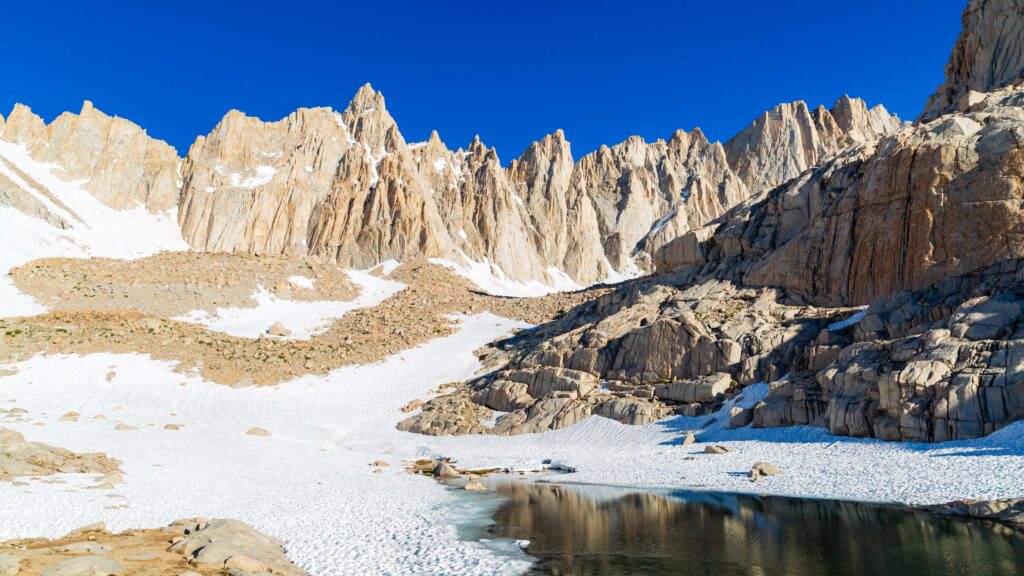
Gaiters to keep snow/scree out of boots. These are actually great for year-round hikes. Snow gaiters can be knee-high, while you can get standard hiking ones that only cover your ankles to keep rocks out. I used snow gaiters when I summited Mount Whitney in 2019.
Ice Axe
Depending on how steep the slope is, you may want to bring an ice axe for winter mountain summits. This likely doesn’t apply to most people.
Safety Tips for Hiking 14ers
Check the weather and trail conditions beforehand
This is one of the most important things to do before hiking anywhere at elevation, especially for 14ers. Check the weather forecast and understand when storms are set to arrive. However, also understand that storms can materialize far earlier than expected.
Most storms happen in the afternoon when temperatures rise. Still, some can occur in the morning, meaning you should continually scan the horizon.
Start early to avoid thunderstorms
When hiking 13ers and 14ers during the summer, it’s wise to start around sunrise if not earlier. This should give you a summit in mid-morning, and you should be easily down from the summit by noon. This can be rough for non-morning people, but it is a lifesaving tip.
There is no worse place to be during a thunderstorm than on top of a summit, and gear for hiking 14ers won’t save you from a lightning strike.
Let someone know your route and ETA
My rule of thumb is always to tell people (my fiancée, parents, or friends) where I’m going and an estimated return time. I will also give them a ‘Seek Help’ time when they haven’t heard from me. This is usually 12 hours or so after I should be back.
Know your limits and turn back if needed
Another incredibly important tip for hiking 14ers: if you’re not feeling good on the way up, or maybe the Class ranking is a bit too high, never feel bad about stopping and turning around. It could be lifesaving.
Some hikes, you just don’t have it. And that’s okay. If you’re moving slower than you thought and notice the clouds seem a bit too stormy, enjoy the view around you, and then head back down.
There is literally no shame in turning around. Your loved ones will thank you.
My Experience Hiking 14ers
I’ve climbed five 14ers and 95% of another (a wrist cast prevented my friend from summiting Mount Wilson). They’re a lot of fun but require understanding your body, your ability, and tracking the weather forecast. They also require you to start early in the morning to be far enough off the summit where possible thunderstorms won’t pose too great a danger.
This list will continue to update as I hike more 14ers in Colorado:
- Mount Whitney
- Mount Sneffels
- Mount Bross
- Mount Lincoln
- Mount Cameron
Final thoughts on the best gear for hiking 14ers
When it comes to hiking 14ers, having the right gear is paramount. Yes, you could be totally fine with subpar clothes and gear, but on the off chance you’re caught in a storm or need help, you’ll be in rough shape.
Having gear you can rely on will not only help you hike better, but can also keep you alive. As you’re looking for gear for hiking 14ers, I hope this article helps you create a list and discover new gear for your adventures.
Until next time, adventurers, stay safe.
Follow on social media: TikTok || Instagram || Facebook || Newsletter | YouTube