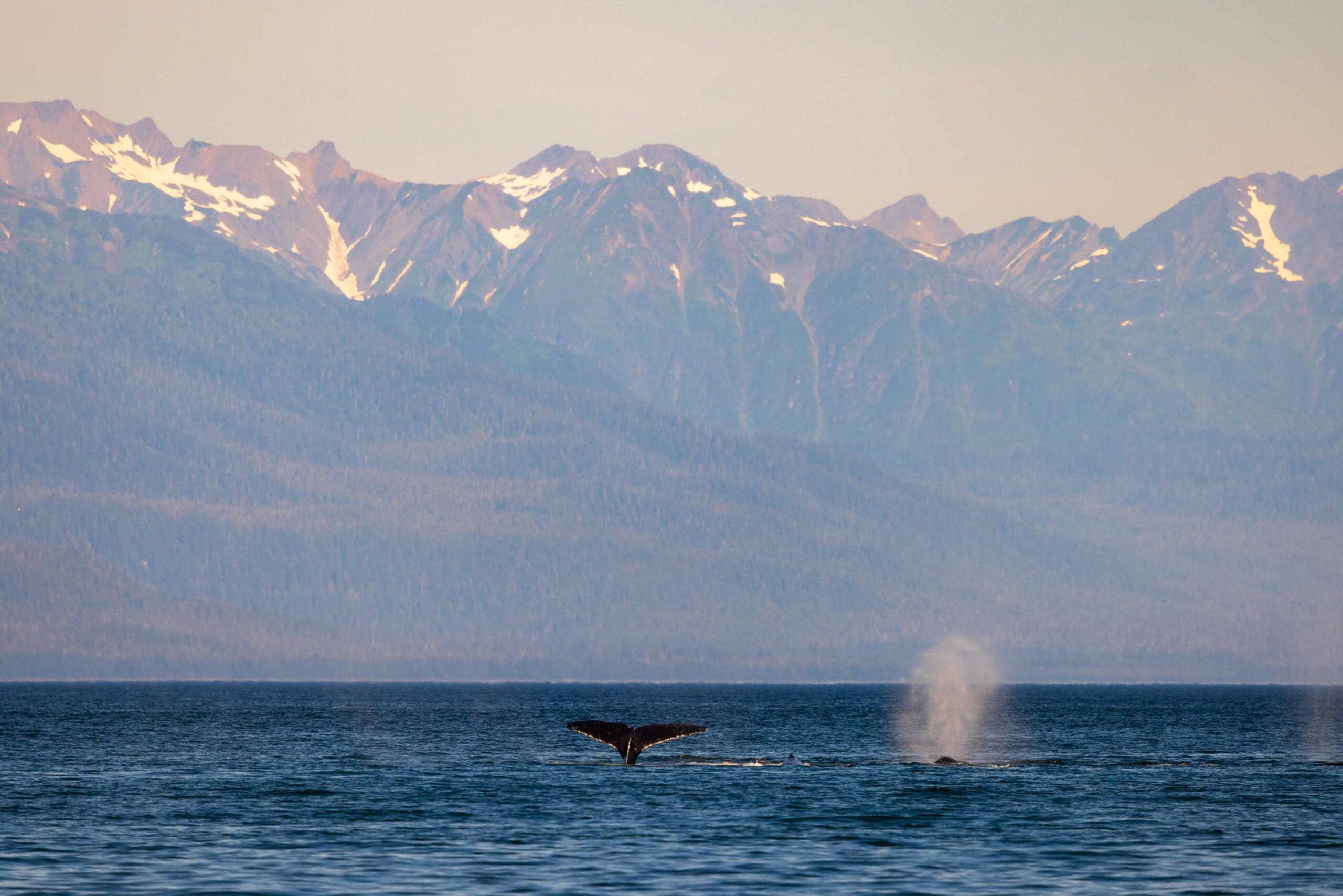
An Unbelievable Whale Watching Tour in Juneau, Alaska
Whales are one of my favorite animals to watch and photograph, and getting up to Juneau to do whale watching has been high on my list for the last couple of years. It’s one of the best places to see whales in the world, thanks to the cold, nutrient-rich waters that Southeast Alaska provides.
Each summer, hundreds of whales make their way into the waters near Juneau, eating as much as they possibly can to bulk up for their many months down south, where they don’t eat much.
The entire trip blew my mind. Below, you’ll hear about my Juneau whale-watching experience, what to expect on the tour, camera settings, and, at the end, all my professional photos. I definitely think this is one of the best things to do when you visit Alaska, but I’ll leave that up to you.
My Experience Whale Watching in Juneau, Alaska
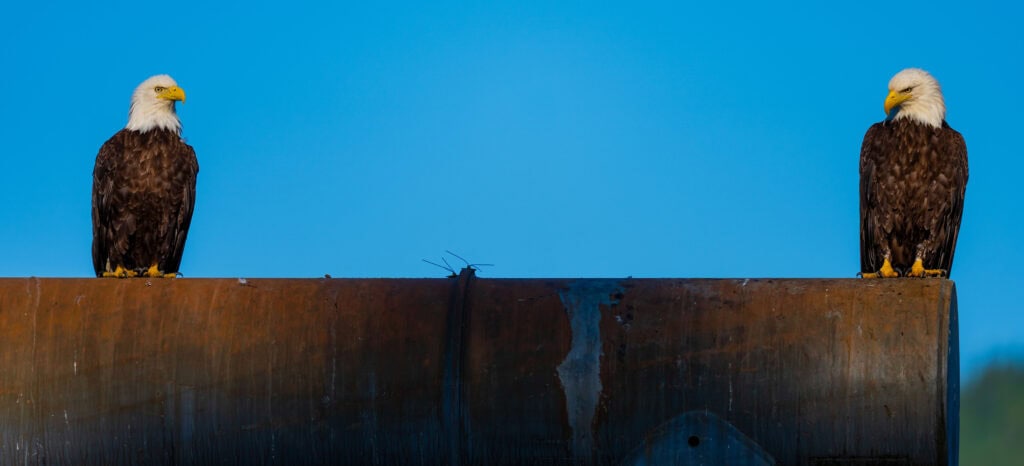
I got to Auke Bay a bit early and meandered around, photographing some of the bald eagles nicely perched on top of poles and signs. Once the bus arrived with the cruise ship people, we headed down the gangway to a brand new Polaris catamaran that Harv and Marv recently added to their whale watching fleet.
After a quick intro brief, we were off. As we pulled out of the harbor, we ooh-ed and ahh-ed at the massive yachts tied up belonging to some billionaire. (And then we saw Mark Zuckerberg’s support yacht off in the distance.)
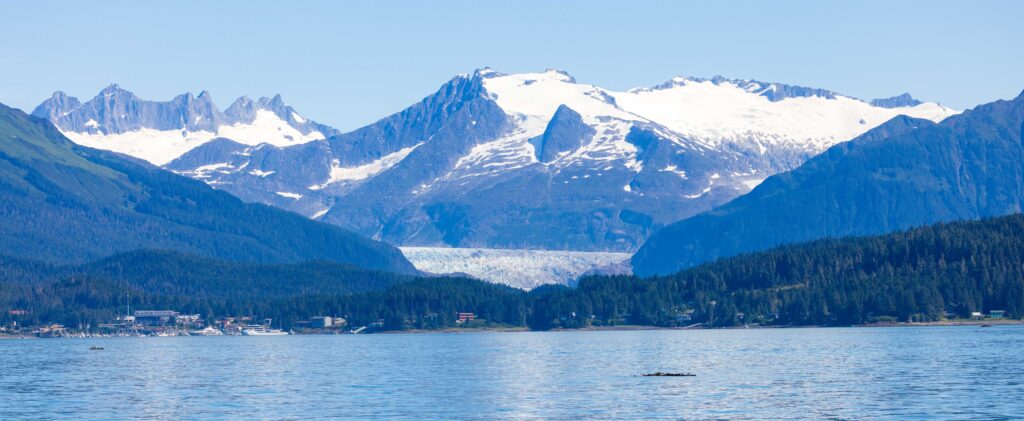
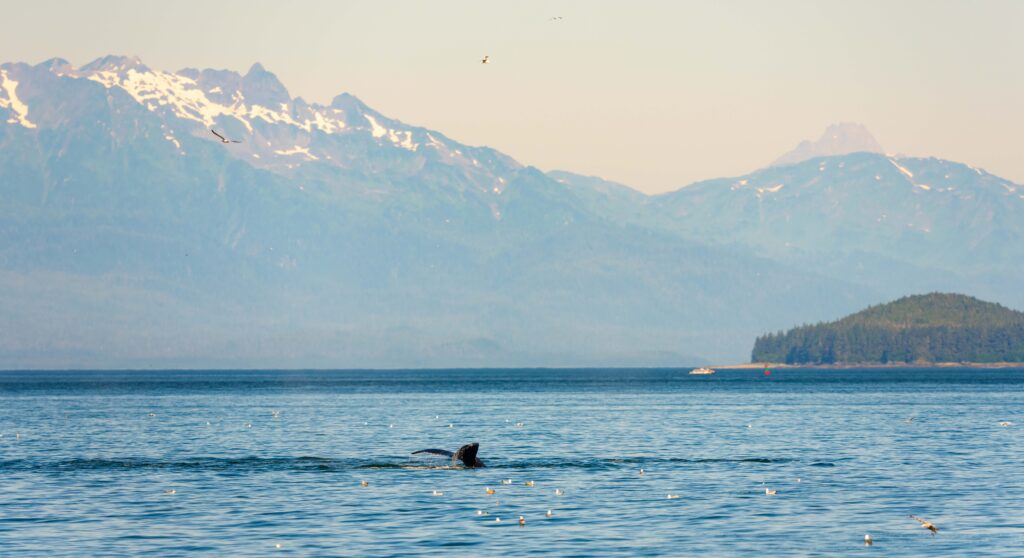
As we hit full speed, the mountains of the Inside Passage came more into view. And we were so lucky. We had a bluebird day, without a cloud in the sky. Estimates say Juneau receives only 44 sunny days per year. I somehow got four of them!
Whales in Juneau
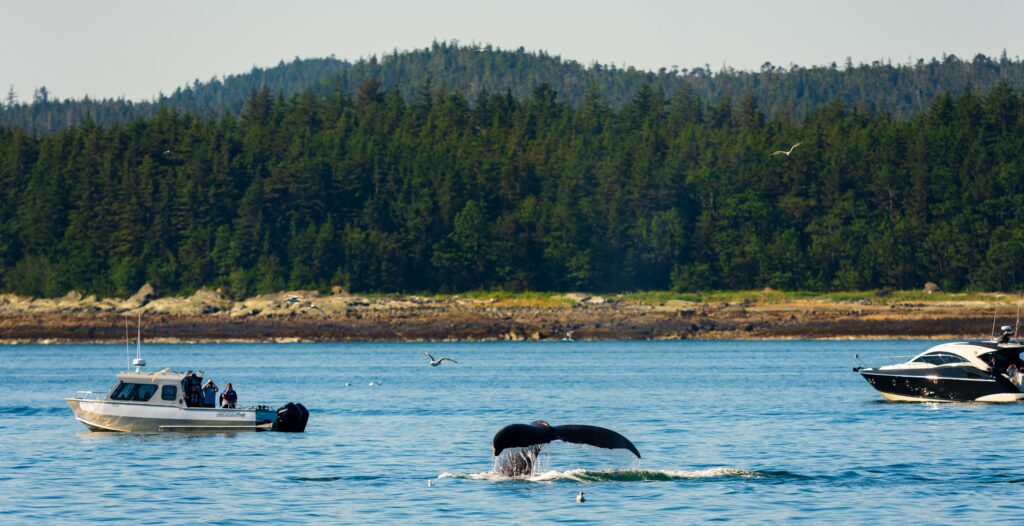
Forty or so minutes after we left, we reached a spot with 6-10 other whale watching boats floating. It was show time!
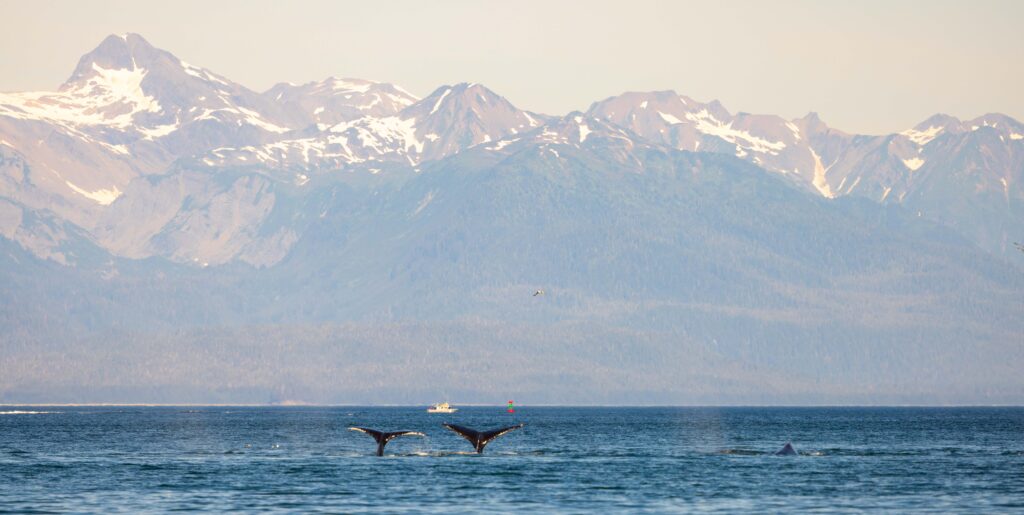
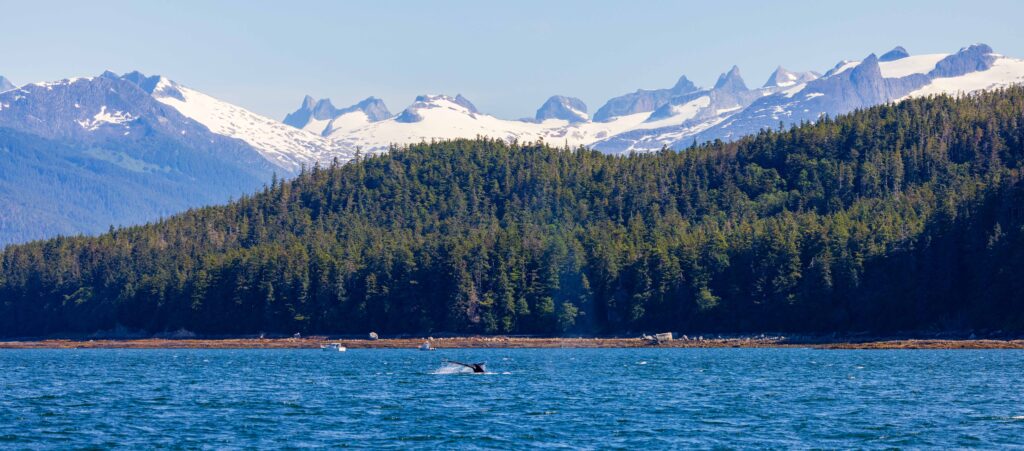
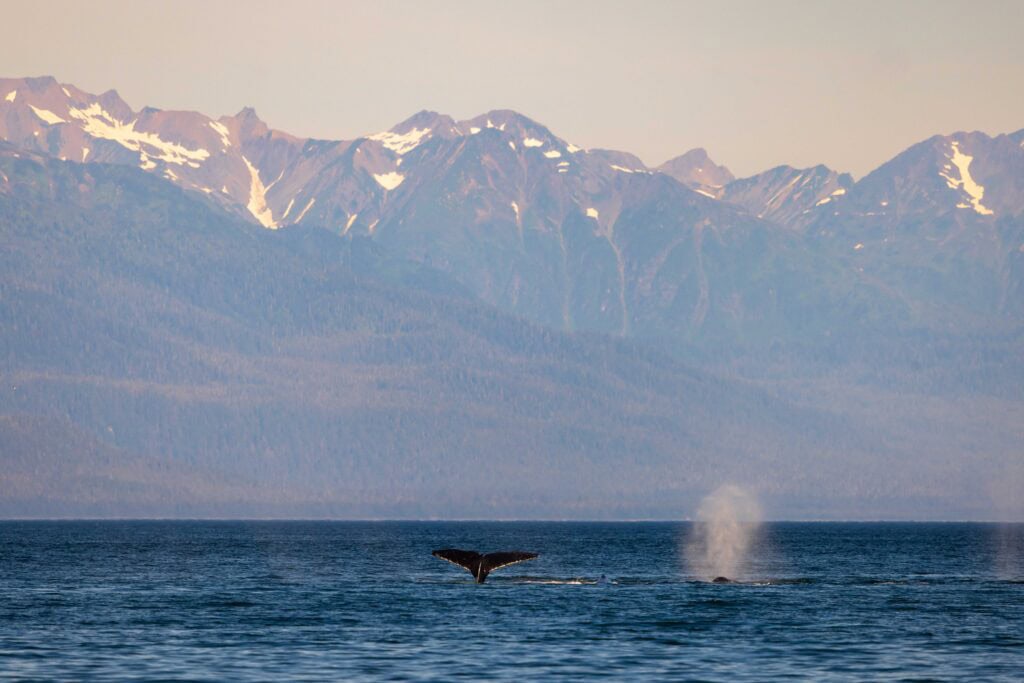
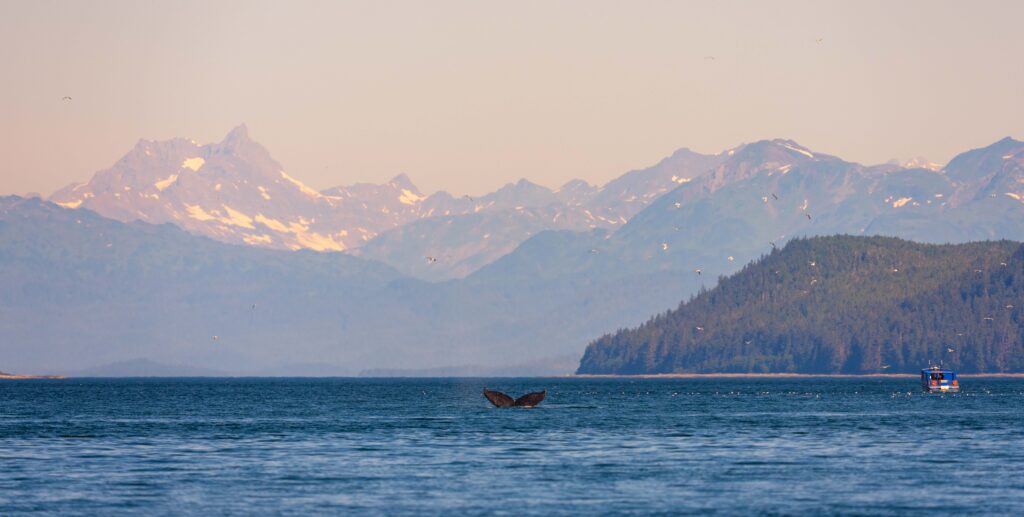
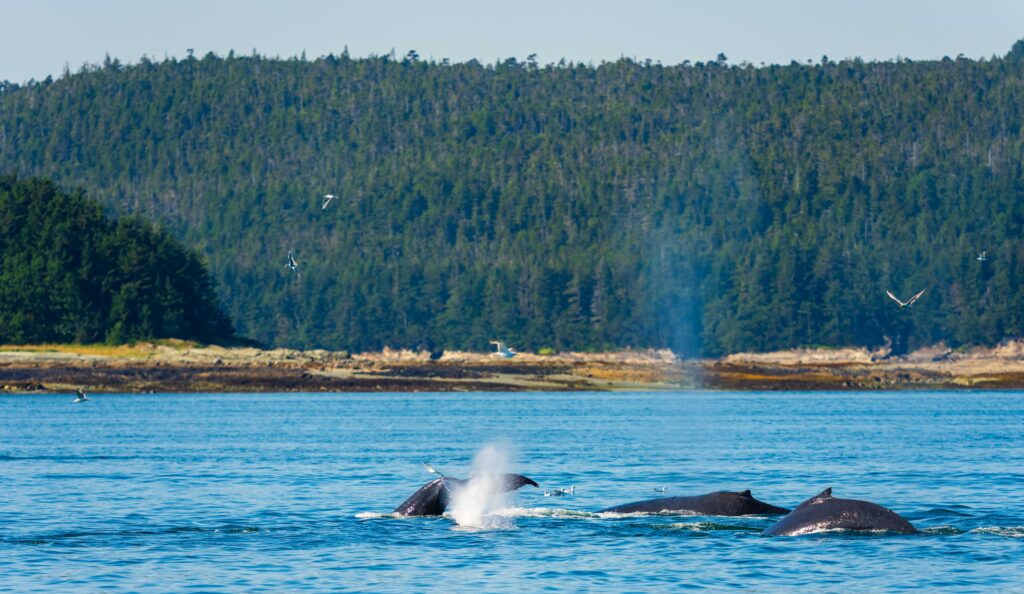
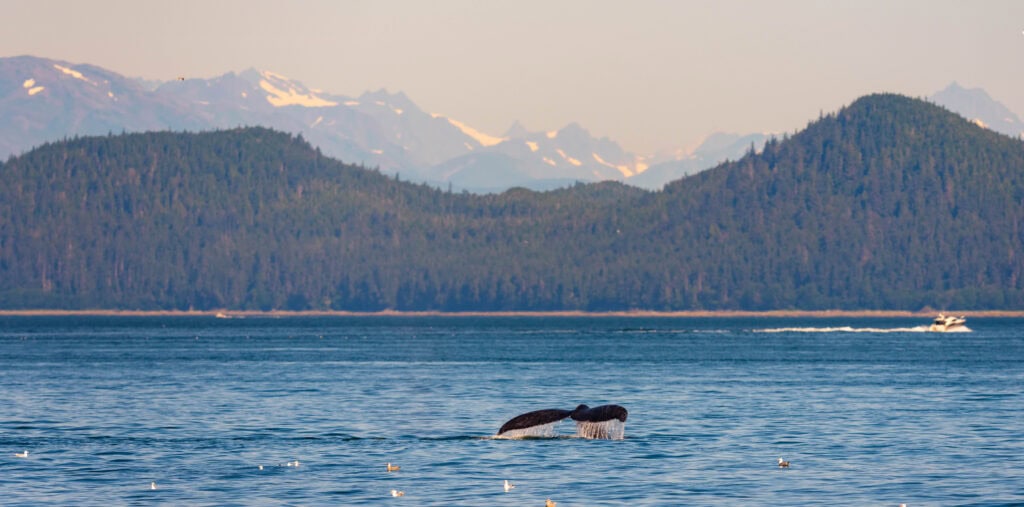
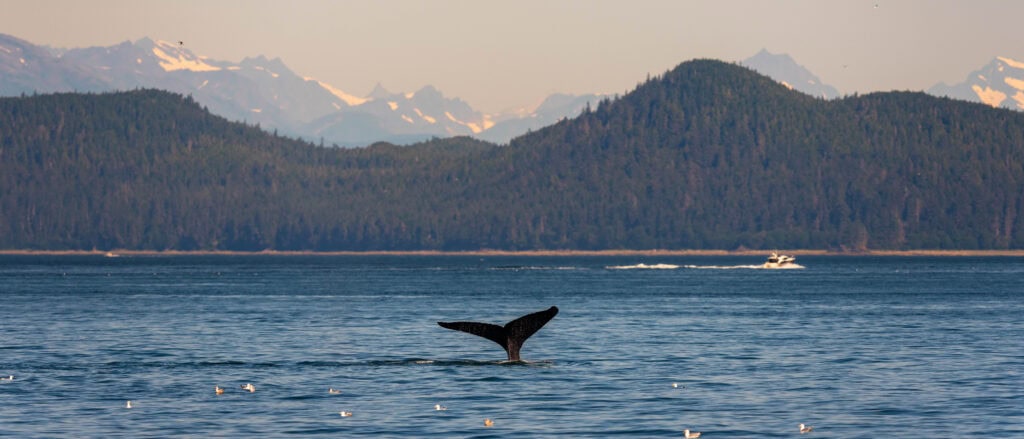
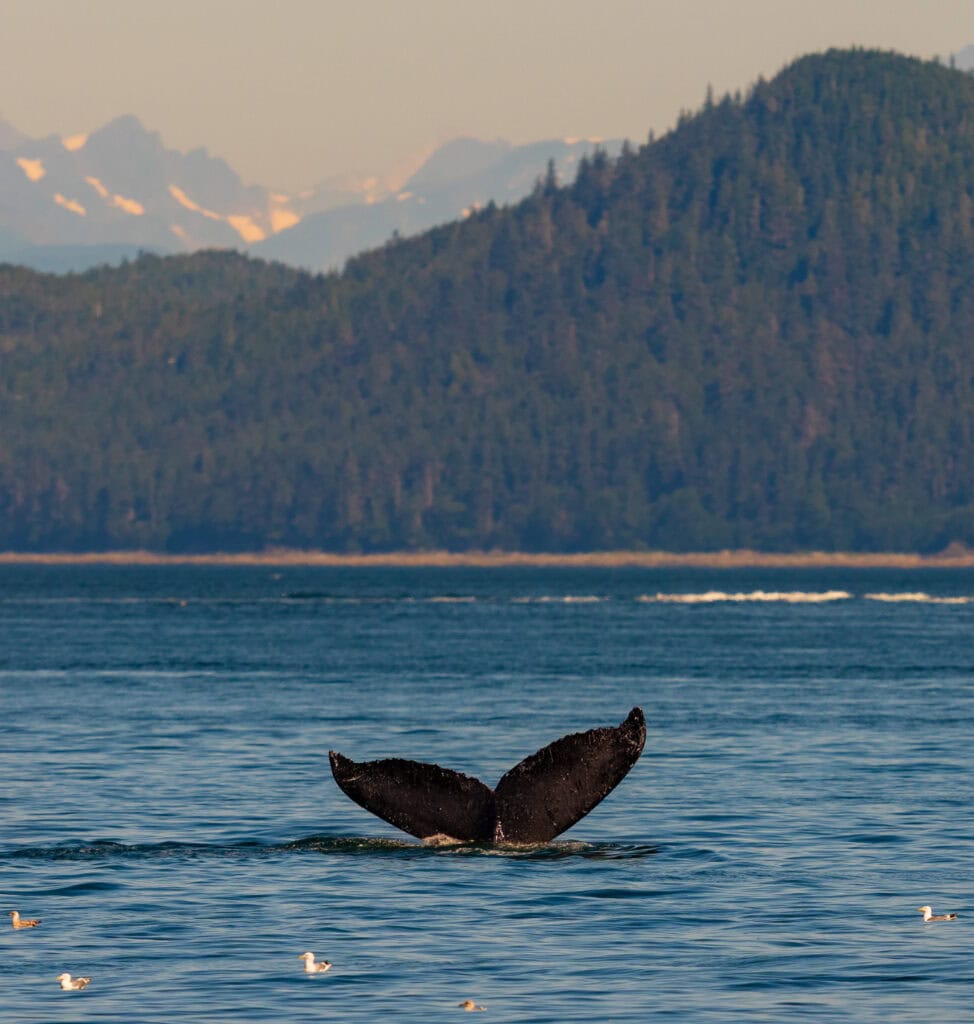
Once the boat powered down, they let us out onto the bow and the top. At first glance, we counted a group of seven humpbacks mingling near the surface. Then they dove, each giving us a nice fluke show.
Before long, the incredible happened. The sole reason I came to Juneau.
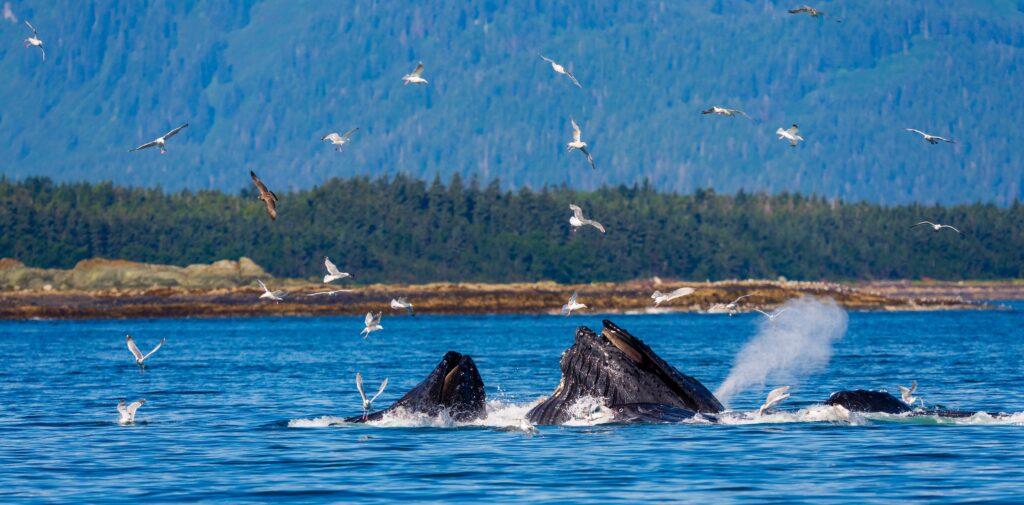
Bubble net feeding.
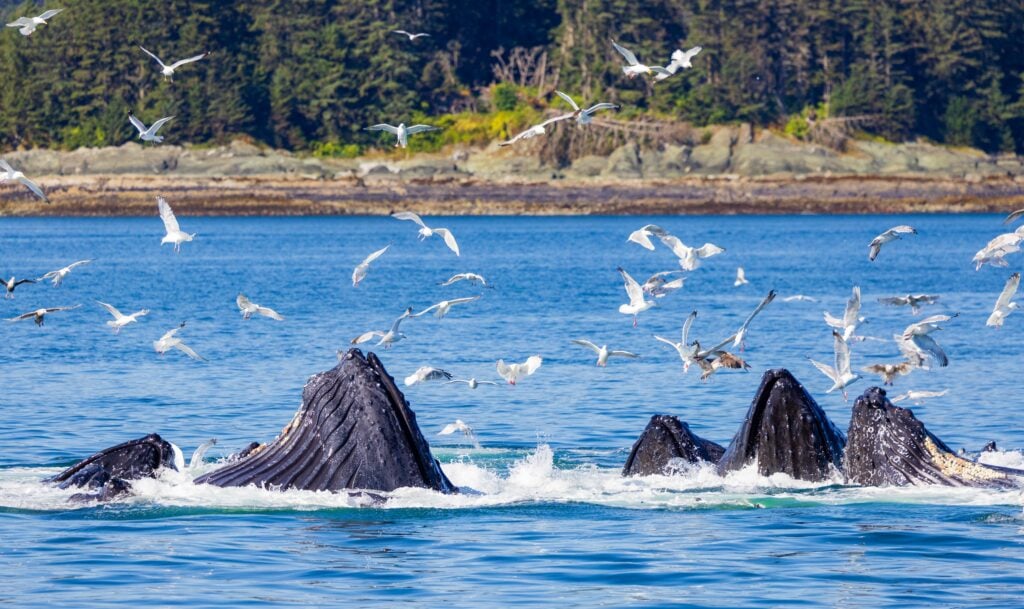
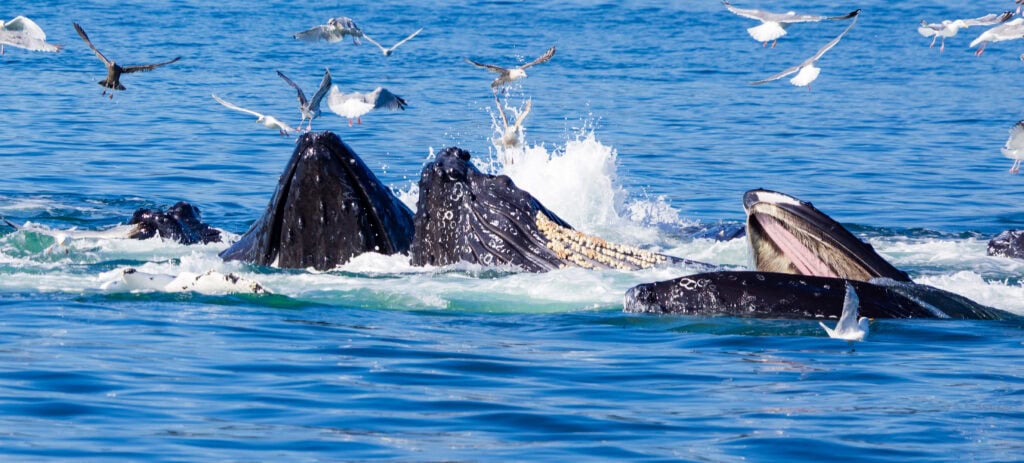
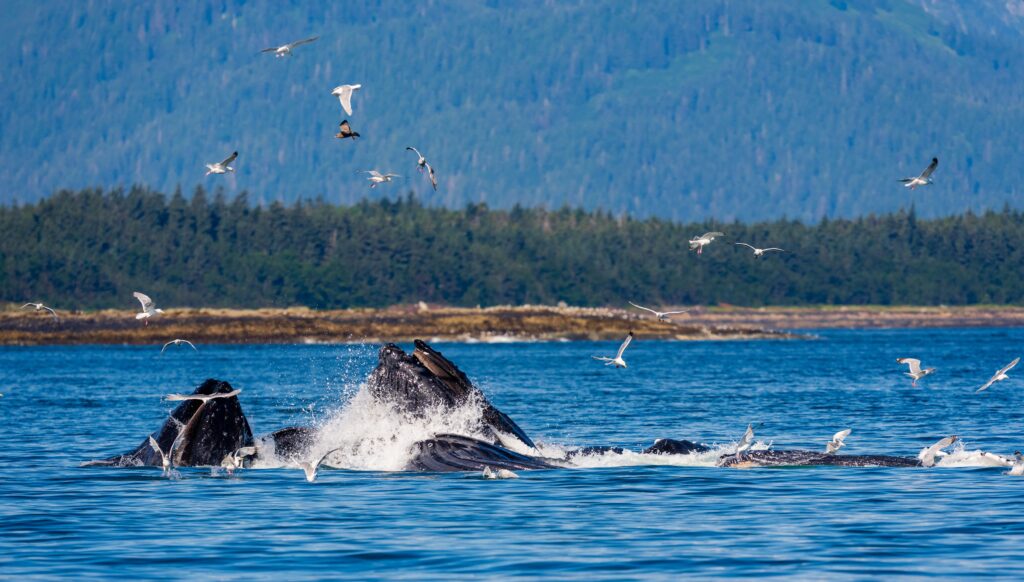
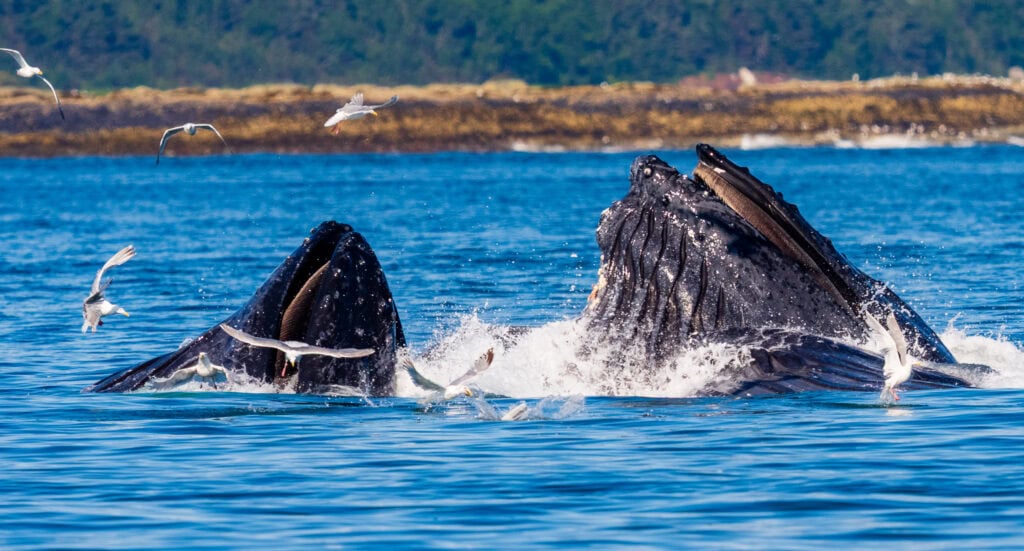
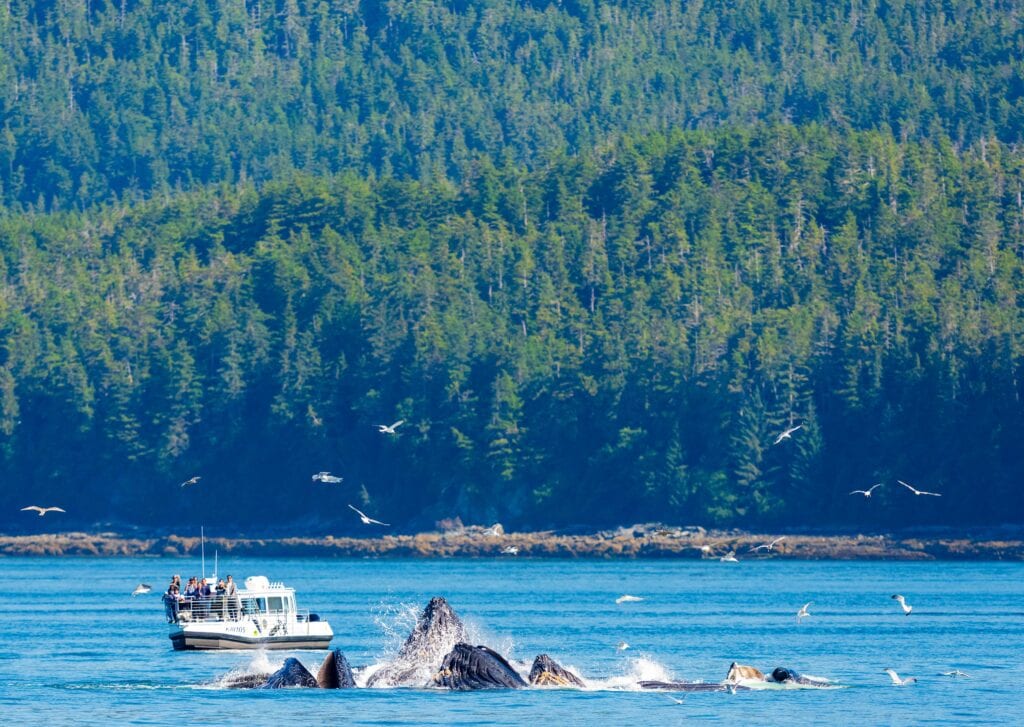
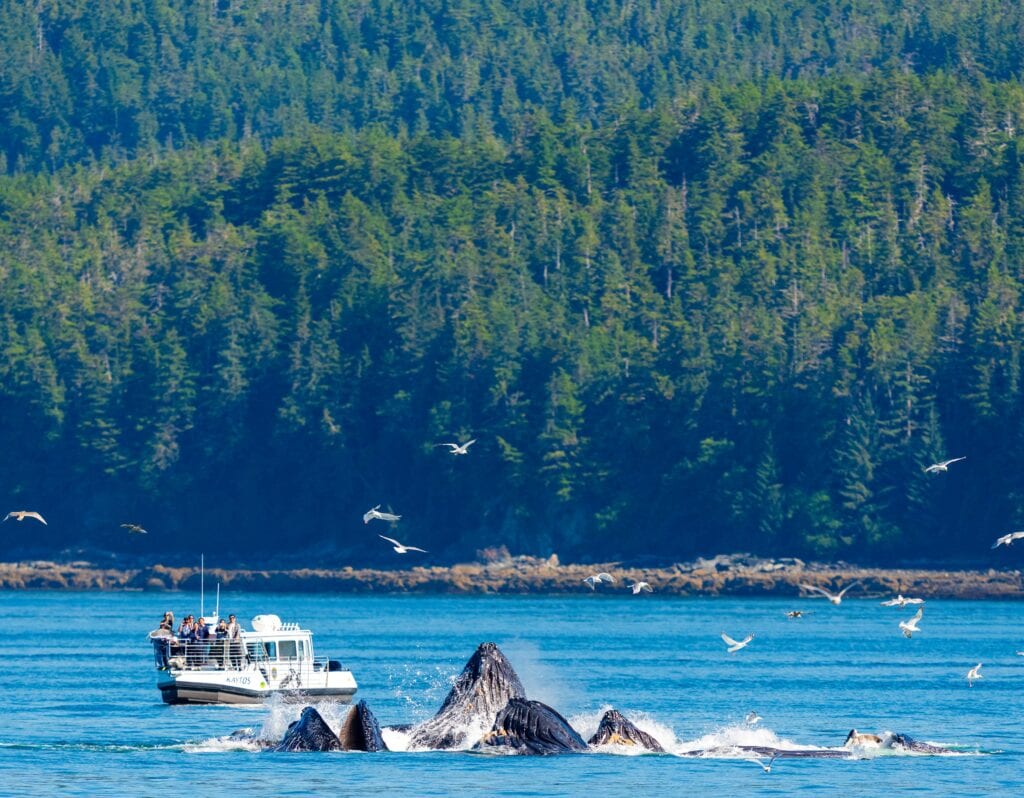
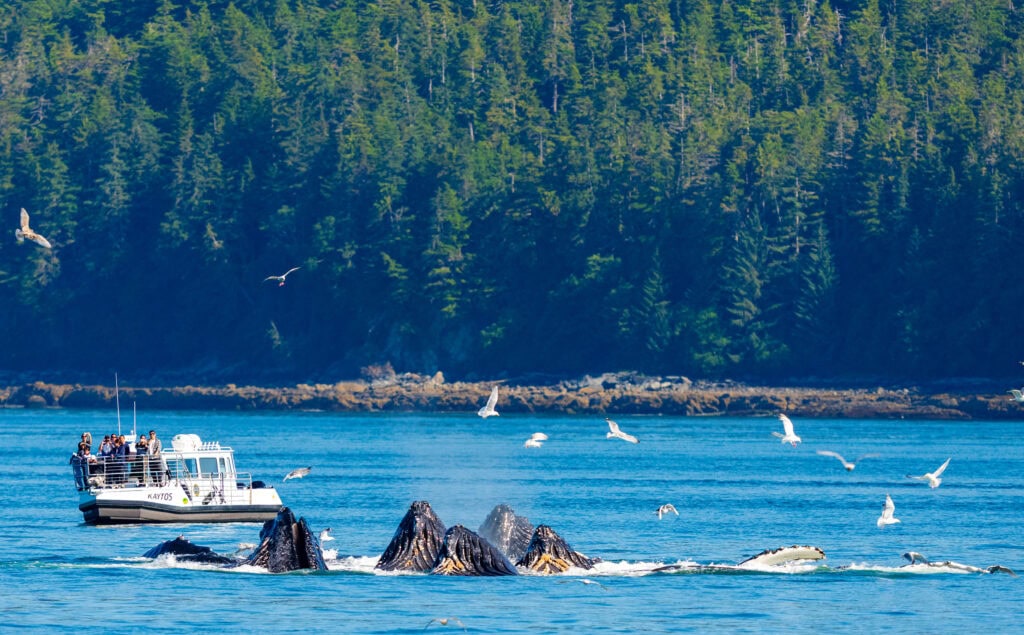
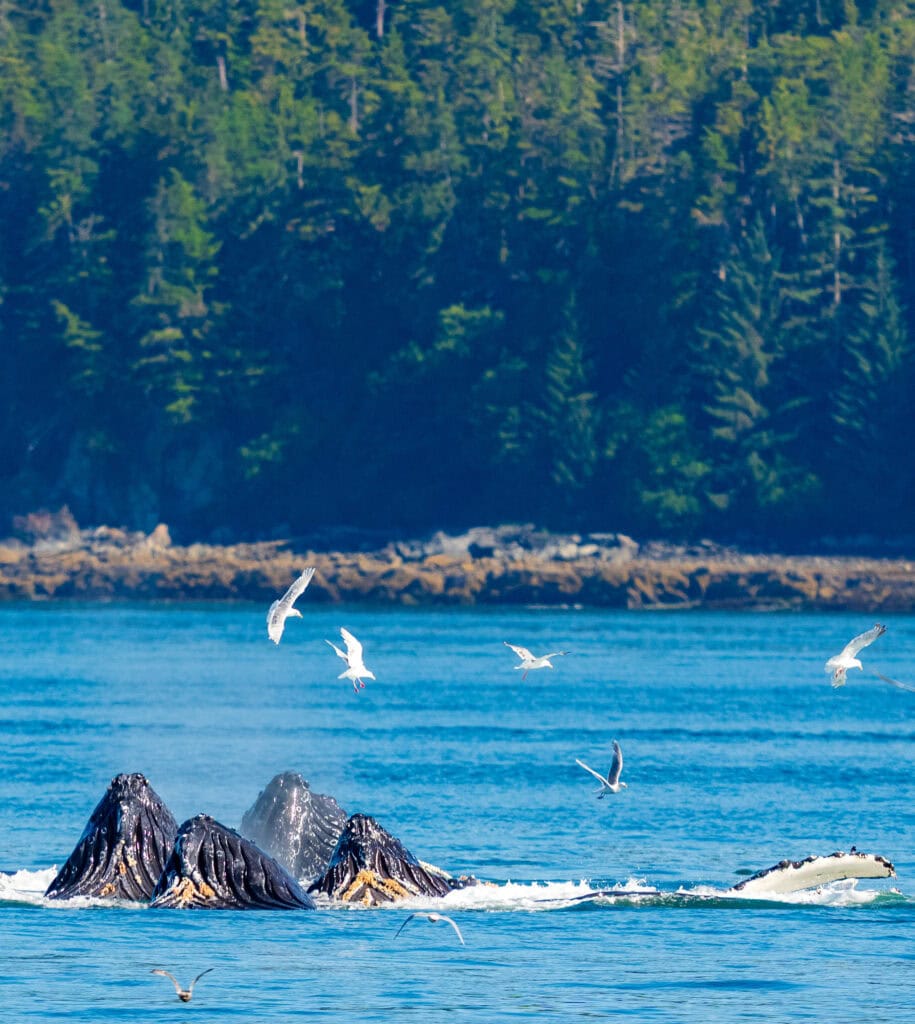
The birds started to circle, before diving in unison. And at the same time, three, four, maybe even five giant mouths emerged from the water, scooping up the trapped and confused fish.
It was chaotic. Yet, also beautiful. And it’s not a quick up-and-down. The humpbacks stayed above the surface for a handful of seconds (or longer; time slowed down as I watched) before returning to the dark ocean.
For years, thanks to the NatGeo documentaries I’ve watched, I’ve wanted to see and photograph bubble net feeding in person. I didn’t have high hopes on this trip, as it is incredibly rare – only about 5% of humpbacks know how to do it – but I took a shot anyway. And it somehow paid off.
What is bubble net feeding?
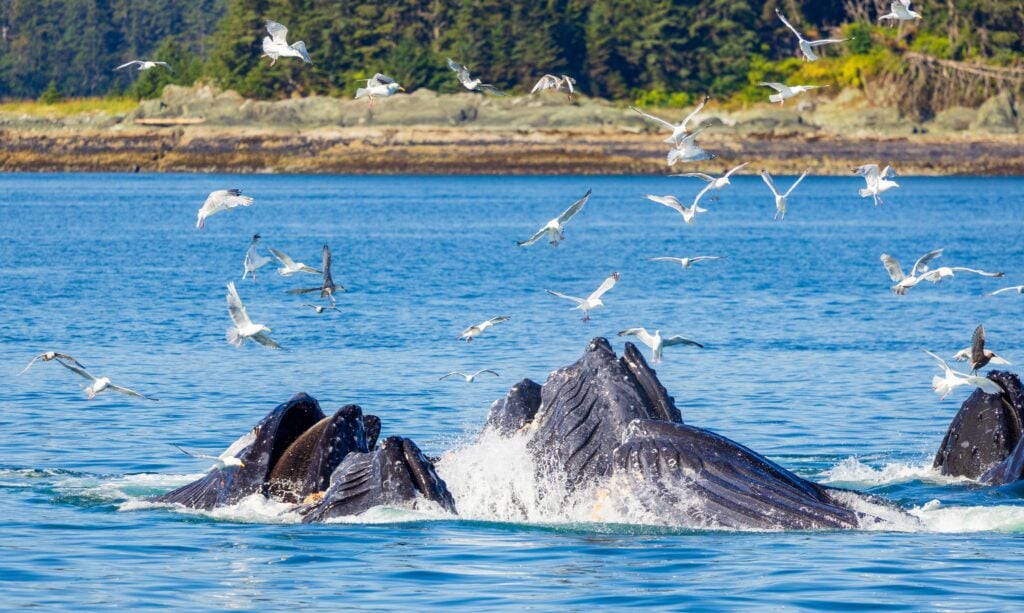
Bubble net feeding is a rare act done by humpbacks because it requires communication and teamwork. The quick gist is that one or more whales swim in a tight circle, blowing bubbles to the surface and creating a circle of bubbles that trap and confuse the fish inside. Because they don’t know what to do, they stay in this small area.
From here, the rest of the whales come up from below, eating all of the dazed fish and baitballs.
Bubble Net Feeding in Juneau
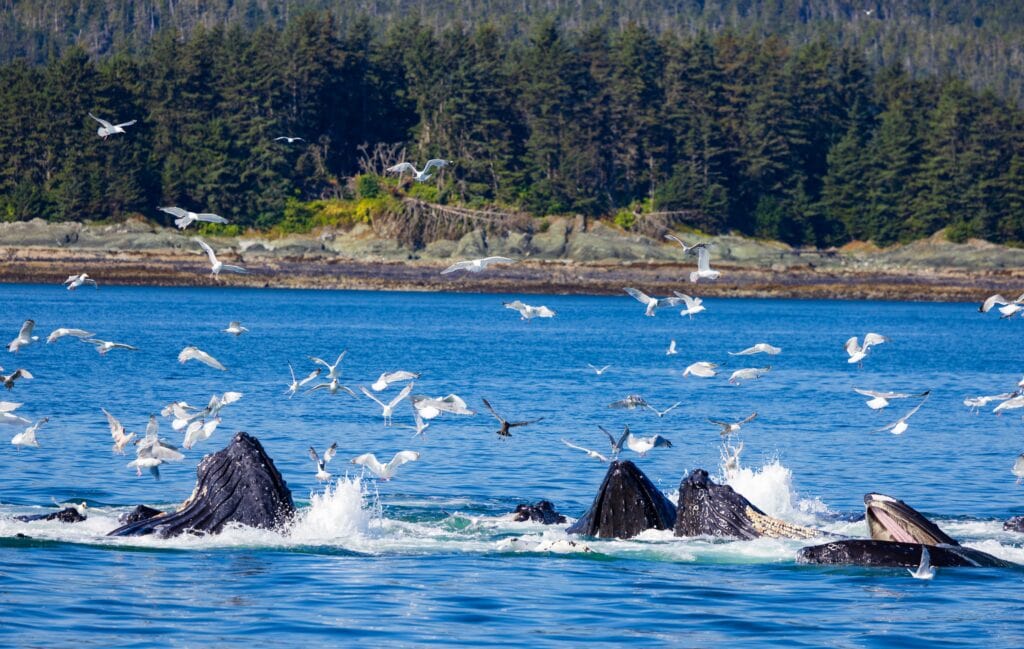
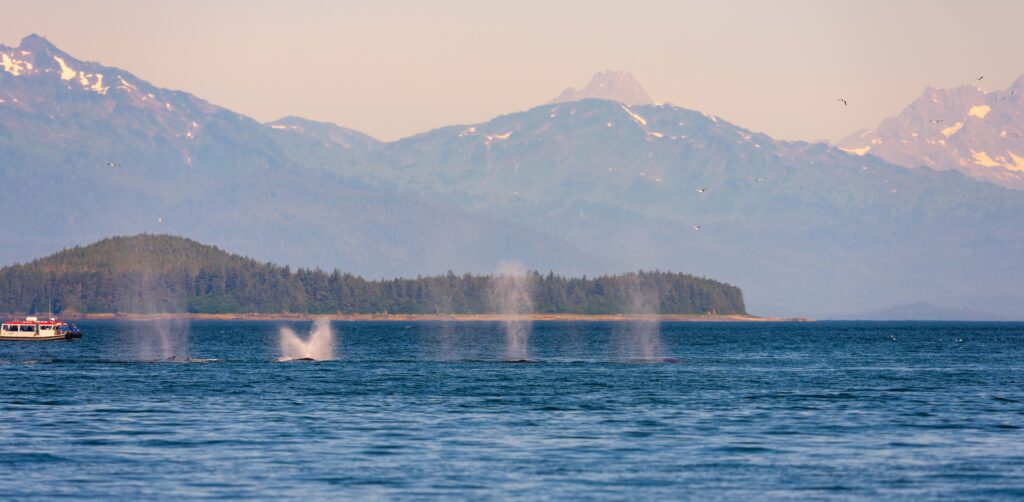
I estimate we stayed with this active group for almost an hour before heading out. In total, we got 4-5 bubble net feedings in all! It was phenomenal! I got so many incredible photos of them lunging above water, tail flukes with mountains in the background, and so many spouts.
I learned later that this is a group from the Icy Straight near Hoonah, and they’re experts in bubble net feeding. The local Juneau whales haven’t figured it out yet. But there is hope. Apparently one of the locals has been seen taking part in it with this other group and has actually tried to do it solo.
Juneau Locals and Steller Sea Lions
After we left the Icy Strait group, we found the only calf in the region and stayed with it, mom, and another adult humpback. They were pretty boring, if I’m being honest – though the calf did give us a pectoral fin slap or two.
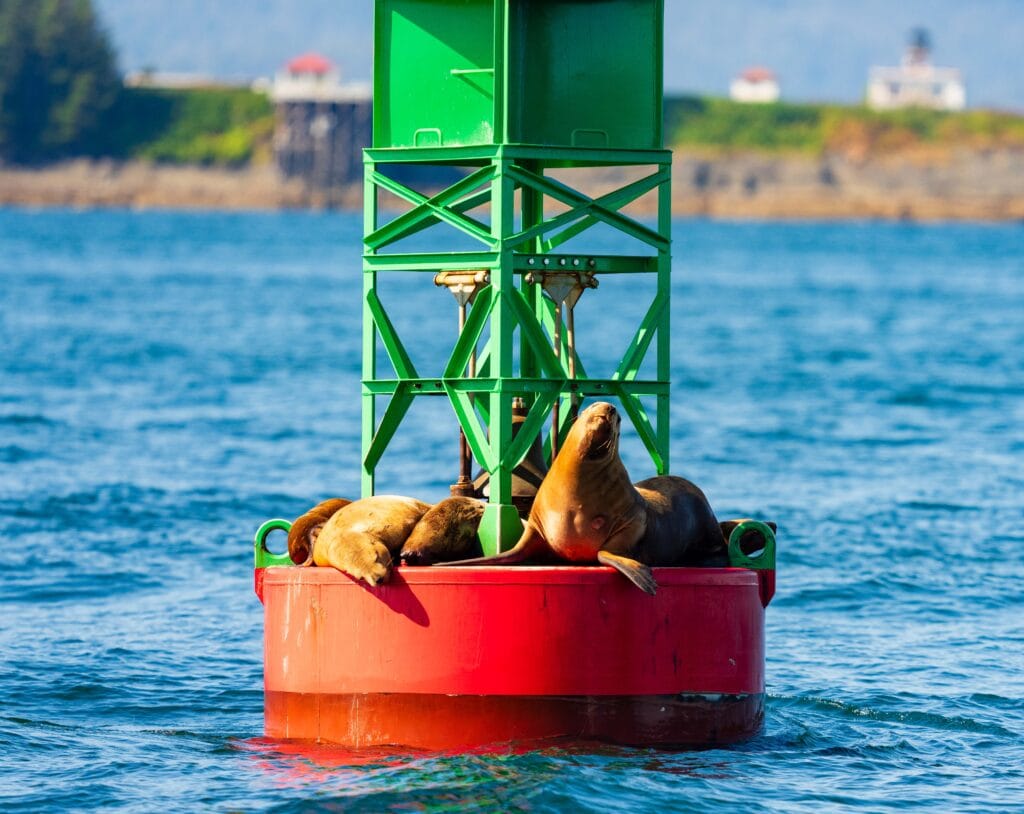
After about 20 minutes with them, we went to check out stellar sea lions hanging out on a buoy. Only females can fit on it as the males are too big.
Circling them slowly gave us some nice views. From there, we started back to Auke Bay. I was a little bummed we didn’t stop back at the large group, since they were still bubble-net feeding as we sped by.
All in all, this Juneau whale watching tour was better than I could have hoped for. Seeing bubble net feeding in person, and at a decently close distance, was one of the most amazing in-person sights I’ve ever seen. I’m so thankful I took the chance in Juneau, and it paid off!
Is Whale Watching in Juneau Worth It?
I think it’s pretty obvious, at least from my personal experience, that going whale watching in Juneau was 100% worth it. Seeing the whales work together again and again to successfully implement bubble net feeding was beautiful.
And having a bluebird day (which is rare, I know) made for one heckuva day out on the water.
If you’ve never been whale watching before, you would have a fantastic time whether or not you’ve seen the Icy Strait group, as being close to whales will blow you away. As someone who has gone whale watching over half a dozen times, I have a high bar compared to most, so the rest of the trip was sort of boring for me.
Still, for the layperson coming to Juneau, getting out on the water, learning about whales, and seeing them makes this totally worth it, and you won’t regret it a bit.
Easy Booking: Expedia.com | Hotels.com | VRBO | Booking.com | Airbnb.com
Need Gear: Find Gear at REI
Find Awesome Tours: Viator.com or GetYourGuide.com
First time here? Stay in touch by following on IG: @Alecoutside and my newsletter
Iceland on your bucket list? Get my Iceland guide + 144 pinned locations on Google Maps
Please stay safe out there and follow Leave No Trace principles as best you can.
What makes Juneau so special for whales?
The Inside Passage, where Juneau resides, is a haven of humpback whales during the summer months. From May through September, an estimated 600 whales journey north to the Southeast Alaskan waters to eat as much food as possible. Some researchers think they eat a ton of food per day.
What makes this area so special is that, like Hawaii in the winter, you’re basically guaranteed to see whales on your trip. That said, I didn’t come to Juneau just to see whales – I’ve done that plenty in my life. I came hoping to see the iconic and rare bubble-net feeding.
And as you read above, I got that. It was incredible, and we got to witness it at least four times.
What you need to know before you book a tour
When is the best time to go whale watching in Juneau?
Summer is prime whale watching season in Juneau and across Alaska! From May through September, you’ll have thousands of whales in the nutrient-rich Juneau waters. Experts say July and August are peak season, before they head south to the warmer waters of Hawaii, Mexico, or even Central America (like Costa Rica).
How much do tours cost?
Tours vary, but most are in the $160-$220 range per person. The one I took with Harv and Marvs cost $159 on their 49-person catamaran. They have smaller boats that hold either 6 or 18 people, but those cost more to have a more intimate experience on the water.
How long are the tours?
This is where it’s a bit funky. Because all of these include a cruise ship pick up, they include that drive time in the “tour time.” For example, the one I took says three hours on the water, but it’s a 4-hour tour. Now, Harv and Marv’s boasts are the only company offering three hours on the water, versus the two hours of other companies.
Still, I think our tour was only 2.5 hours, as we didn’t leave the harbor’s slow zone until 9:20 and returned to the no-wake zone around 11:45. But they count loading and unloading as “on the water time,” so it’s probably not much different than other companies who might count actual on-the-water time as being out with whales. Alas, semantics, I guess.
Where do the tours launch from?
Most, if not all, Juneau whale watching tours start from Auke Bay, about 25 minutes north of downtown/the cruise terminals. Because I wasn’t on a cruise, I self-transported to the meeting area. However, the tour company should offer a bus from the cruise ships.
For those who take a morning/midday whale watch and are looking for lunch/dinner afterward, Forbidden Peak Brewery is across the street from the harbor and has tasty beers.
What should I bring on board?
You’ll want a bottle of water (though they offer small water bottles), snacks, a hat, sunglasses, binoculars, a phone, and a camera. I had a bluebird day, so I didn’t need a jacket, but if it’s a little misty, bring a rain jacket and an extra layer to stay warm.
Should you expect bubble-net feeding?
Only 5% of whales know how to do bubble-net feeding, so it is incredibly rare. The naturalist onboard said the Juneau local whales don’t know how to do it, so you shouldn’t expect it. However, whales from Icy Straight, near Hoonah, know how, and they just so happened to be visiting.
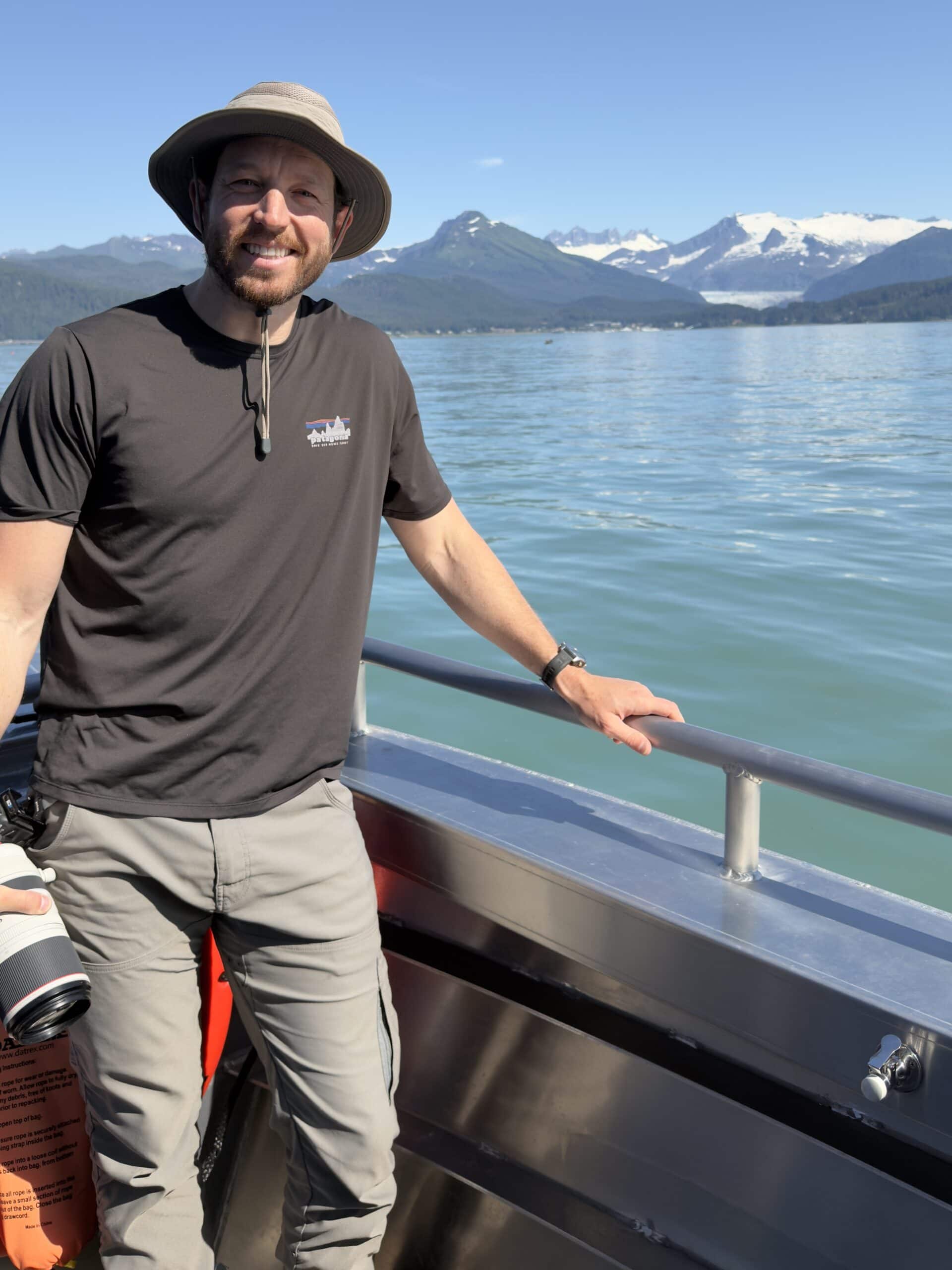
Photo tips for Whale Watching in Juneau
Recommended lens for whale watching
Because boats have to power down their engines once they are at 100 yards (300 feet) of a whale, you will want a longer lens to get good shots. I recommend a 100-500 (or 100-400) as a versatile lens that lets you get close-up shots while still including more of the landscape when you back out to 100mm.
I had the Canon 100-500mm, as well as the Sony 400mm, when I wanted only to get close-up photos.
Recommended settings to use
Your lighting will always determine what your settings are, but these are what I would start out with:
- Shutter Speed: 1/800- 1/1,500
- Aperature: f/4-f/7.1
- ISO: Put it on AUTO to save your shots and
- High Speed Continuous
- Subject Recognition: Animals
Professional Photos of Whales from Juneau
Looking to add prints to your home? Click here to purchase from my photography website and support my work.
Lodging in Juneau
I know most people visit Juneau, Alaska by cruise ship, so you may not need the map below. But if it helps you find a place to stay, great!
I opted for the less expensive Wyndham Travelodge right by the airport. Nothing fancy, but it did the job. They also have a free shuttle to and from the airport, and they can drop you off at the harbor/ferry terminal.
Final Thoughts on Whale Watching in Juneau, Alaska
I had a FANTASTIC time whale watching in Juneau! My dream of seeing bubble net feeding came true, and I’ll never forget it. We had a magnificent day on the water and couldn’t have asked for a better crew or experience! If you get out on the water, I hope you have a similar experience and leave with a huge smile.
This was another 10/10 experience in Alaska. It still surprises me at every turn.
Until next time, adventurers, stay safe.
Follow on social media: TikTok || Instagram || Facebook || Newsletter | YouTube