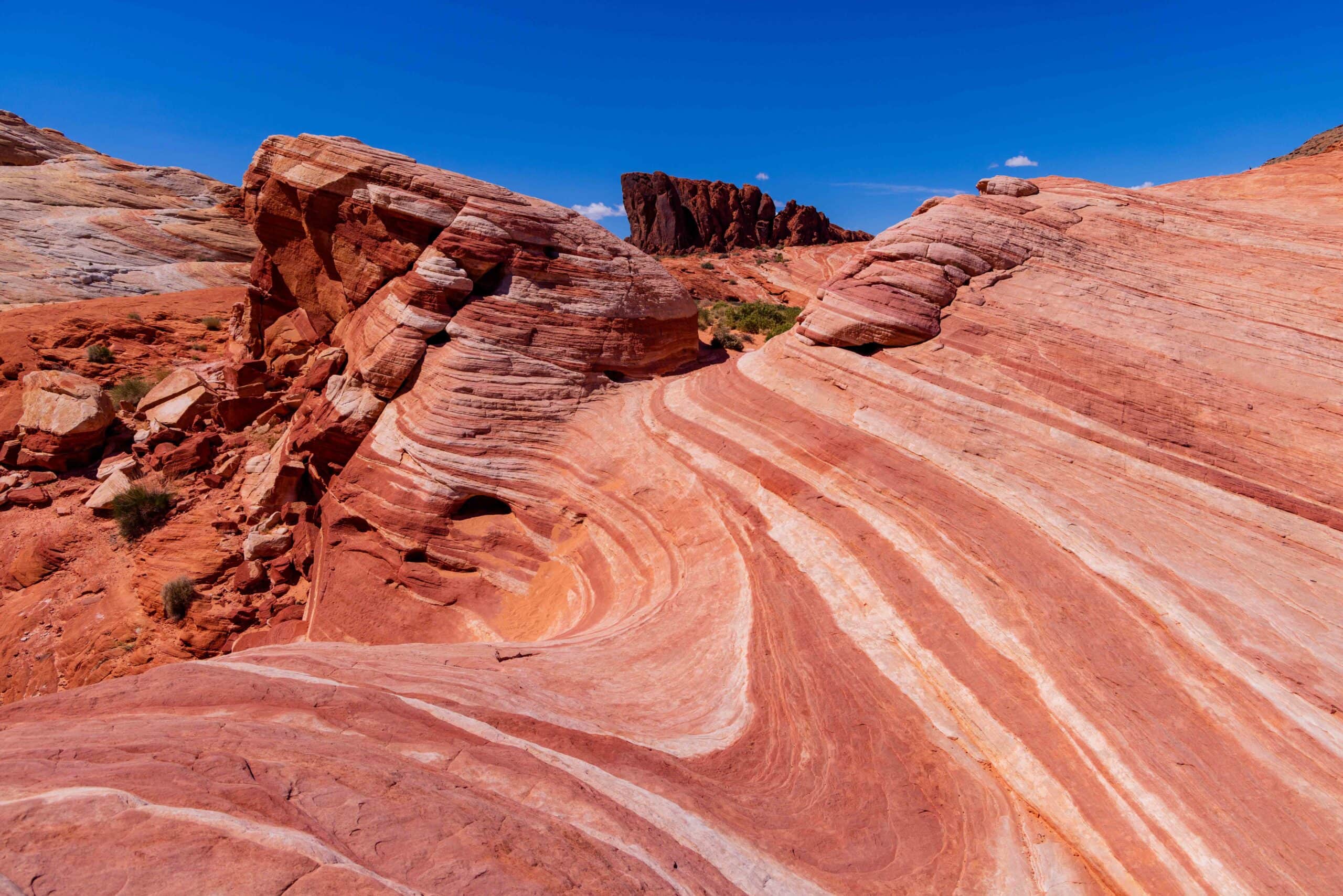
Valley of Fire State Park Photos: Best Spots to See
In May 2024, I spent a memorable day exploring Valley of Fire State Park with my parents, wandering among fiery red rock formations and wave-like sandstone swirls. Just an hour outside Las Vegas, this Nevada gem feels worlds away from the Strip, offering surreal desert landscapes that photographers and outdoor lovers dream of.
From iconic formations like the Fire Wave and Elephant Rock to hidden gems like Pink Canyon and the Seven Sisters, Valley of Fire delivers one jaw-dropping scene after another.
Below, I’m sharing my favorite Valley of Fire State Park photos, images that capture the park’s raw beauty and might inspire you to plan a trip of your own.
Many trails in the park close from May 15 to October 1 to reduce the need for hiker rescues, as summer temperatures routinely exceed 100 degrees.
If you plan to visit in the summer, arrive before 7:00 am and finish your hike by 11:00 am.
One Minute Key Details for Visiting Valley of Fire State Park
- Getting there: about an hour northeast of Las Vegas via I-15 to NV-169.
- Cost: $10 per vehicle for Nevada residents, $15 for out-of-state vehicles, and $2 per bicycle. The entrance booth is staffed roughly 9am to 4pm; outside those hours, there’s a self-pay envelope station at the gate.
- Hours: sunrise to sunset for day use, year-round.
- Camping: $20 a night for Nevada-plated vehicles, $25 for out-of-state, plus $10 a night for a site with hookups. The park has 72 combined campsites across two campgrounds, bookable through Reserve Nevada. Registered campers can move around inside the park outside the sunrise-to-sunset window, which day visitors cannot.
- Trail closures: several trails, including the White Domes Loop and the Fire Wave/Seven Wonders Loop, close every year from May 15 through September 30 because of heat. The park has documented repeated search-and-rescue calls and fatalities on these exact trails in summer, so you can’t talk your way around the closure. If you’re visiting during the shoulder months around the closure, plan to be on trail before 7am and off by 11am. The park also closes entirely for maintenance from December 1 through 14 each year.
- Best season: February through April, for the reasons above: mild temperatures, no trail closures yet, and light angles that favor the Fire Wave and White Domes formations more than the flatter overhead sun of summer.
- Days needed: one full day covers the main formations if you drive efficiently between them. Two days gets you a sunrise session at Fire Wave and a separate sunset session at Elephant Rock without rushing either one.
Valley of Fire State Park Photos
Why you’ll enjoy photographing Valley of Fire State Park
This place has some serious hype, but it is also pretty dang awesome. The colorful rocks, the wicked formations, and gnarly textures and patterns make it a gem of the desert southwest. I didn’t know how much I’d enjoy the place, but after a quick visit, I really enjoyed exploring the area.
My photos aren’t the best, but I was there midday with my family, and hopefully I’ll come back to enjoy a good sunrise and sunset.
For those looking to maximize their time while still getting in a good hike, I recommend combining Fire Wave and the 7 Wonders Loop. It makes for a nice two-mile loop.
Easy Booking: Expedia.com | Hotels.com | VRBO | Booking.com | Airbnb.com
Need Gear: Find Gear at REI
Find Awesome Tours: Viator.com or GetYourGuide.com
First time here? Stay in touch by following on IG: @Alecoutside and my newsletter
Iceland on your bucket list? Get my Iceland guide + 144 pinned locations on Google Maps
Please stay safe out there and follow Leave No Trace principles as best you can.
Iconic Places to Photograph at Valley of Fire in Nevada
Here are some of the most well-known places to photograph in the Valley of Fire State Park.
Fire Wave
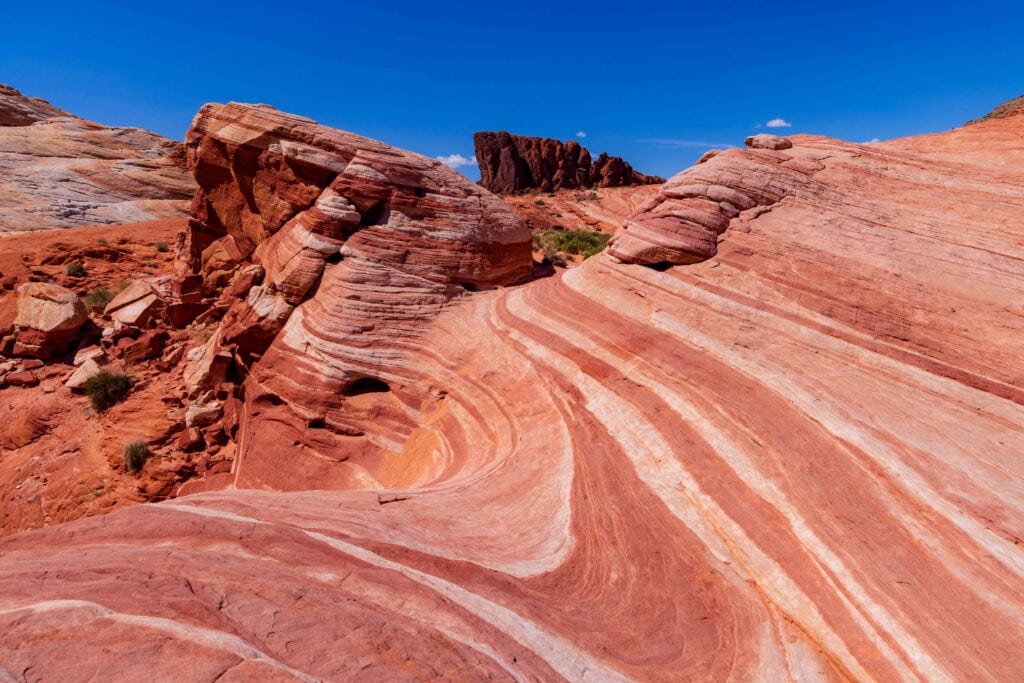
A mesmerizing sandstone formation featuring vibrant swirls of red, pink, orange, and cream, resembling an ocean wave frozen in rock. The easy 1.5-mile round-trip hike leads to the “wave” and is best enjoyed in spring, fall, or winter, as the trail is closed in summer for heat safety.
White Domes Trail

A scenic 1.1-mile loop winding through multi-colored domes and a narrow slot canyon. The trail is moderately easy, with slight elevation change (~177 ft), and even includes remnants of an old movie set, perfect for a variety-packed exploration.
Elephant Rock

A short out‑and‑back trail leads to a natural arch that strikingly resembles an elephant with its trunk. Situated near the east entrance, it’s among the park’s most photographed features, made of Jurassic‑era Aztec sandstone.
Rainbow Vista
An easy ~1-mile out‑and‑back trail that delivers sweeping panoramas of brightly colored sandstone hills. The viewpoint is an ideal stop for photographs, offering striking vistas over the valley below.
Atlatl Rock
Climb a short stairway to view ancient petroglyphs carved up to 40 ft high, depicting the atlatl (a spear-throwing tool). This is one of the park’s most accessible and photogenic rock-art sites. We didn’t have a chance to come up here and see it.
Mouse’s Tank Road (aka Scenic Drive)

Arguably the most famous road shot in the park, this long, winding road cuts through rainbow-colored rocks and is a go-to for leading line photography. Best shot in early morning or late afternoon.
Have you booked your lodging in Las Vegas?
Use Expedia or Hotels.com to find a great deal.
The Seven Sisters

Seven towering red rock formations just off the main road, perfect for wide-angle compositions or astrophotography because of the open sky. A quiet but dramatic stop. A nice spot for lunch or a snack.
The Beehives
Near the west entrance, these large, rounded sandstone formations feature unique cross-bedding patterns that resemble a stack of beehives. Super photogenic at sunrise or sunset with soft, directional light.
Tips for Capturing Stunning Photos at Nevada’s Valley of Fire State Park
Photographing during blue hour or golden hour (or with clouds)
The best way to avoid harsh light is to photograph during golden hour and blue hour. Both happen twice a day. Golden hour is the hour after sunrise and the hour before sunset. Blue hour is the hour before sunrise and the hour after sunset.
During these times, light softens, giving you a magical glow and adding depth and contrast to your photos. When you have clouds in the sky, even at midday, they can diffuse the light and help you create nice-looking photos, even in harsher light.
Need help mastering your camera settings and making your images stand out?
I offer online photo lessons.
Composition tips
These are generic tips, but remember the rule of thirds, place someone in the image to create scale, use leading lines to guide the viewer’s eye through the image, and create contrast. Also, shooting from a higher or lower angle than the average person will set your photos apart from standard shots.
Incorporating at least one of these elements into your Valley of Fire State Park photos will improve their quality.
Gear suggestions
This is what I brought to capture my Valley of Fire State Park photos:
See everything in my photography bag.
DOWNLOAD MY FREE MILKY WAY PHOTOGRAPHY GUIDE
What you need to know to visit Valley of Fire State Park
How to get there from Las Vegas?
Valley of Fire State Park is located about an hour northeast of Vegas. Take Interstate 15 out of the city, and after 30 minutes, you’ll see signs for the Valley of Fire Highway. After you leave I-15, it’s about 15 minutes to the park.
How much does it cost to enter the park?
Nevada residents pay $10 (or can purchase the state park pass), while out-of-state visitors pay $15. Cyclists must pay $2. It is a small price to pay for some awesome Valley of Fire State Park photos.
What time does the park open and close?
Valley of Fire State Park opens at sunrise and closes at sunset. I can’t remember whether there are gates, but it sounds like they want everyone out by dark. It’s open seven days a week, 365 days a year.
Visiting Zion or Grand Canyon National Park? Here are some related articles:
Guide to hiking Angels Landing
Zion to Bryce Canyon Road Trip
20 photos to inspire a Zion visit
3-day Grand Canyon Itinerary
9 awesome hikes at the Grand Canyon
Rim to River Guide (Experienced hikers only)
Can you camp at Valley of Fire State Park?
Yes, camping is allowed. You don’t need a reservation, but it’s recommended, especially on weekends. Campgrounds cost $20 per vehicle plus a $10 fee for utility hookups. If you want great Valley of Fire State Park photos, camping keeps you close to the action for morning and evening photography.
Make sure you have your camping essentials. And here are some easy breakfast meals for camping.
When is the best time to visit Valley of Fire State Park?
Honestly, any time other than summer is the best time to visit and enjoy Valley of Fire State Park for photography. Please avoid visiting during the hottest time of the year, as you will not have fun, and most of the park will be closed. Trying to do things outside when it’s 95-115 degrees is dangerous.
I’d say the best time to visit is February through April. Wildflowers will be beginning to bloom, and the weather is perfect. Plus, the days are starting to get longer, which gives you more time to explore.
How many days do you need?
Unless you’re camping, one day is usually sufficient to visit Valley of Fire State Park. There’s plenty to do to occupy a full day, but not enough to warrant coming back. Remember to pack a lunch and bring plenty of water when you visit. Even in the wintertime, it’s still dry and you’ll need to drink 3L of water per day.
Is night photography permitted in Valley of Fire State Park?
The park’s website states that Valley of Fire is open from sunrise to sunset. I’m unsure if there’s any enforcement or if the gates close. But it doesn’t sound like they want people doing night photography in the park.
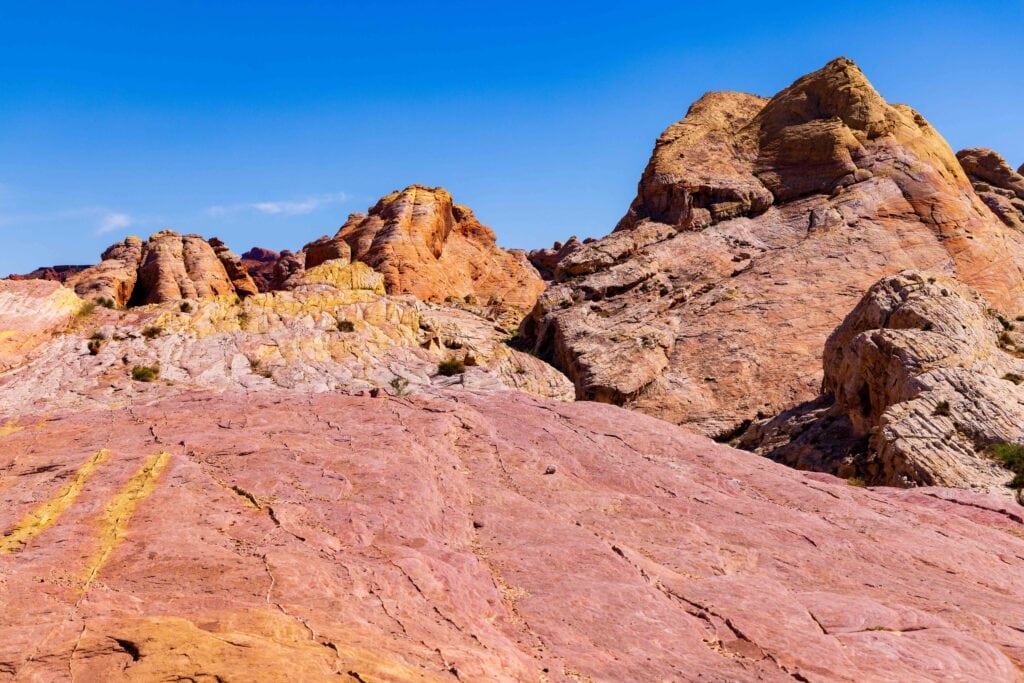
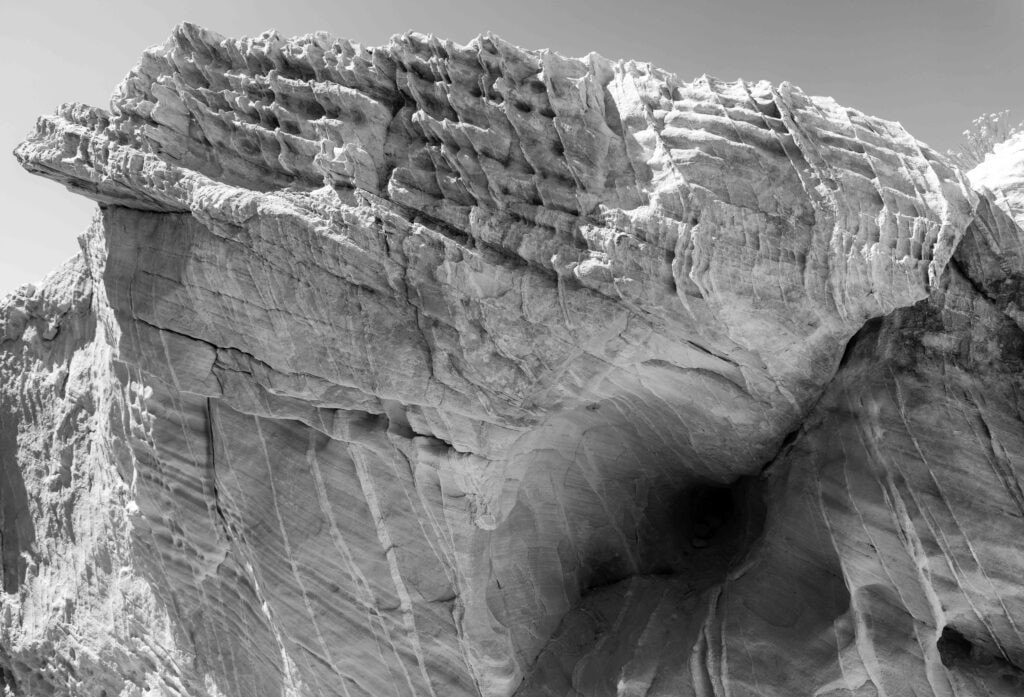
More Valley of Fire State Park Photos






FAQ – Visiting Valley of Fire State Park
Only if you’re a registered camper. Day-use access ends at sunset and the gate closure is enforced, but campers staying at one of the park’s two campgrounds can move around after hours, which is when most of the Milky Way and star-trail shots from the park get made. If you’re not camping, plan your last frame for civil twilight and be back at the gate before it’s fully dark.
Not for personal, non-commercial photography, tripod included. Nevada State Parks requires a photo and filming permit for commercial shoots, weddings, and anything involving paid crews or models. The fee scales from $50 for a small crew to several thousand dollars for a full production, plus a $100-a-day reservation fee for anything beyond the smallest tier, and applications must be submitted at least 30 days in advance with proof of liability insurance. If you’re a hobbyist with a camera and a tripod, none of that paperwork applies to you.
No. Nevada State Parks prohibits drones and any remote-controlled aircraft throughout Valley of Fire, with no carve-out for personal or recreational use that I’ve found. Commercial aerial work has to go through the same photo and filming permit process above, and the operator needs a current FAA Remote Pilot Certificate on file with the application.
February through April, for me. The heat is manageable for a full day outdoors, none of the trails are closed yet, and the lower sun angle of late winter and early spring puts more color into the Fire Wave and White Domes formations than the near-overhead summer sun does. Fall is a close second, once temperatures drop back down after the May-through-September closures lift.
Final Thoughts on Photographing Valley of Fire State Park
I’ll readily admit my Valley of Fire State Park photos aren’t the best I have ever taken. (And nowhere near my best work.) I visited midday with my parents and had a bluebird day, which, as photographers know, can lead to harsh light and sometimes dull photos.
That said, I believe I have a good editing style for making daytime images look nice, and I hope you enjoy the photos here and use these tips when you visit the park soon.
Until next time, adventurers, stay safe.
Follow on social media: TikTok || Instagram || Facebook || Newsletter | YouTube