
Driving in Costa Rica: Is It Really as Scary as They Say?
As our Costa Rica trip neared, I scoured Reddit for tips and insights about driving in Costa Rica. Many were helpful, others, I now realize, either did not apply or were outdated.
This article, too, may fit into the latter categories at some point. But for now, I hope it offers some insight into what it’s like to drive around Costa Rica, some helpful tips, and other random tidbits to help you feel more comfortable on your vacation.
One thing to know, it’s not as bad as everyone seems. If you’re a competent driver, you’ll be good.
One-minute guide to driving in Costa Rica
- Drive on the right side, same as in the USA
- Main roads aren’t filled with potholes. You can breathe a sigh of relief
- Some roads are very steep and winding
- Anticipate much slower driving than in the USA
- Roads are not well illuminated
- Your American driver’s license is all that you need
What it is like driving in Costa Rica
Let’s dive into all things driving in Costa Rica ahead of your next trip!
How were the Costa Rican roads in 2026?
From reading Reddit threads, I was expecting some GNARLY roads and potholes everywhere. I’m happy to report, at least on the roads we drove, they were in great shape – maybe even better than Seattle!
For the most part, on the main roads, they were smooth and allowed us (when possible) to drive at a consistent speed. The one thing you’ll want to know is that when you’re driving into the mountains, they don’t cut switchbacks. Those roads just go up. I’ve never been on steeper roads, honestly, before. And I’ve done plenty of mountain roads across the western USA.
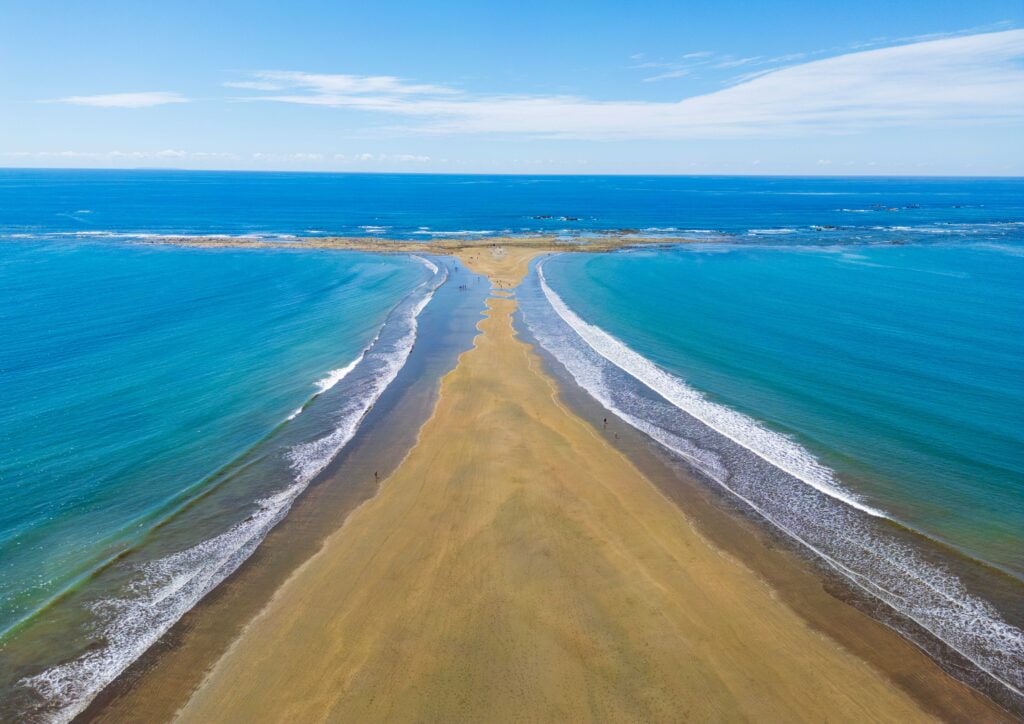
Focus on the time, not the miles to drive.
This one’s huge! If you look at the map and it says 60 miles, our American brains will immediately think 55-60
Where did I drive in Costa Rica?
After getting married in Playa Potrero and taking a shuttle to Tamarindo, we began our Costa Rica road trip there. Our first day was driving to Manuel Antonio, 6+ hours, thanks to construction. From here, we drove down to Uvita, and then all the way up to La Fortuna a few days later.
From there, we ventured into Bajos Del Toro for a night, then down to the SanJoséé airport.
See my recommended Costa Rican itinerary here.
And the best things to do in Costa Rica.
What to know about renting a car in Costa Rica
I’ve also read plenty of horror stories about renting a car in Costa Rica. My experience was the opposite of that. We got it in Tarmindo with National, and they were super easy to work with.
We paid the $15/day fee, but used my credit card’s insurance protections to cover the other insurance without paying for it. They had no problem with that.

Is it safe to drive as an American in Costa Rica?
Nothing in life is 100% of anything, but I can say that I never felt unsafe during our visit to Costa Rica. We didn’t do too much driving at night, though we did the back half of our Uvita-to-La Fortuna trek in the dark, and we also came back from dinners in La Fortuna.
I think the biggest tips would be to stay smart. If something looks suspicious, go with your gut. And to be safe, I wouldn’t pull over or stop at night anywhere that isn’t a restaurant.
Easy Booking: Expedia.com | Hotels.com | VRBO | Booking.com
Need Gear: Find Gear at REI
Find Awesome Tours: Viator.com or GetYourGuide.com
First time here? Stay in touch by following on IG: @Alecoutside and my newsletter
Iceland on your bucket list? Get my Iceland guide + 144 pinned locations on Google Maps
Please stay safe out there and follow Leave No Trace principles to the best of your ability.
What type of car do you need – SUV/4×4/Normal Sedan?
If you’re planning to do the classics such as Manuel Antonio, Tamarindo, La Fortuna, and the San José area, you really don’t need a 4×4 or SUV. The roads are fine enough for a standard car.
Now, if you’re going in the rainy season, an AWD may help make you feel more comfortable and in control. If you plan to visit the mountains, a larger car (i.e., one with a bigger engine) may help you climb steep hills. Still, it’s necessary.
Google Maps vs Waze
Everyone says you should use Waze in Costa Rica. Now, you can use whatever you want, but I’m here to tell you it really didn’t make a difference to us. And if you use Waze, you’ll have to keep your data on.
For Google Maps, we were able to download maps offline and still route our trip without burning through our data plans.
If you’ll be running your data plan the entire time, sure, use Waze. But if you’re going to try to limit connectivity, then use Google Maps.
Driving at night
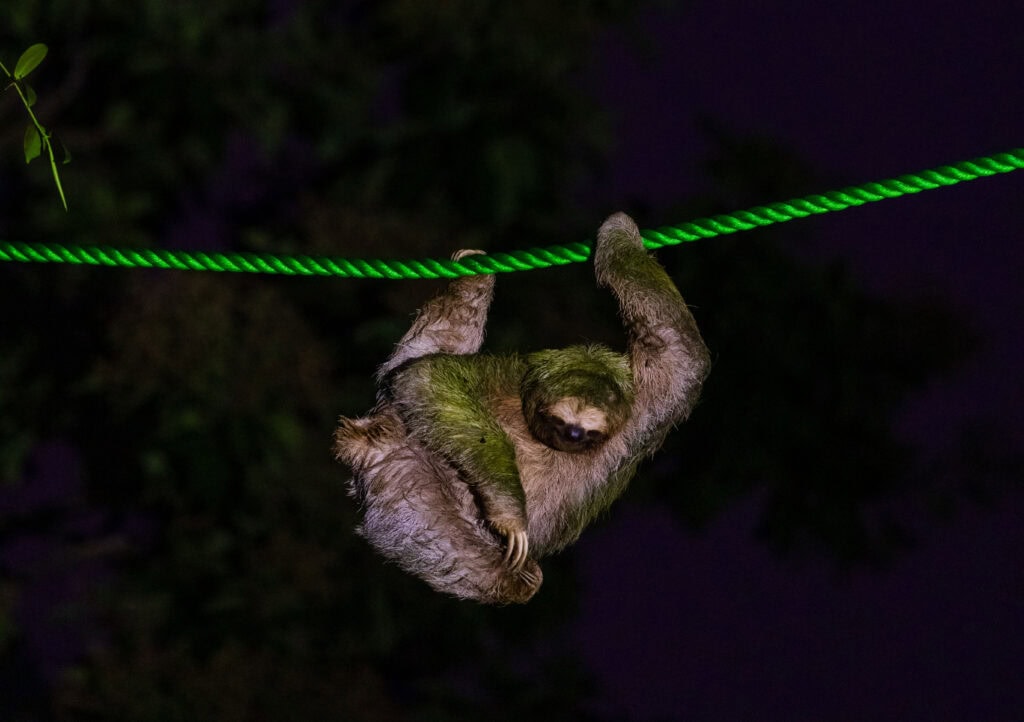
Let’s talk about driving at night. Costa Rica hasn’t developed its infrastructure enough to have streetlights, sidewalks, or reflectors along its roads. (Not talking about SanJosée.) Even crazier, people will bike at night with no lights or reflectors. It’s a frigged death wish if you ask me!
Overall, driving at night is fine, and we did it a lot; people drive with their brights on all the time, which is annoying, but when you realize there are no lights or lane markers, you end up doing it too.
You just have to be extra cautious when driving at night in Costa Rica, because you’ll find people walking along the road without lights. It’s wild that more people don’t get hit.
Learn how to use engine braking
It’s imperative to know how to use engine braking when driving in Costa Rica. This will help you not burn out your brakes on the steep hills across the country.
Looking for E-SIM companies as you visit Costa Rica? I used Airalo. But it’s a bit funky as they don’t tell you when you run out of data. It just stops (annoying). You can buy a 7-day plan, but it won’t last 7 days if you burn through it in a single day.
Random Tips To Remember When Renting A Car in Costa Rica
- Take a video of the entire inside and outside of your rental car
- Try not to leave your car unattended/out of sight with all of your belongings in it
- You’ll use less gas than you think when driving around Costa Rica
- Have extra water and snacks in the car in case you run into construction (and be okay going pee on the side of the road)
- The route from Manuel Antonio to La Fortuna (through San Ramon) is incredibly steep and curvy. Drive safely!
- The rainy season is roughly May through November, with the heaviest rains typically in September and October. It’s far greener, but just be prepared for more weather along the way.
- We had one toll and were able to pay in Costa Rican colones. Super easy.
The Best and Worst Parts of Driving in Costa Rica
Definitely a lot more “worst” than “bests.”
Best Parts
- Quepos to Uvita = only time I felt like I was on an American highway
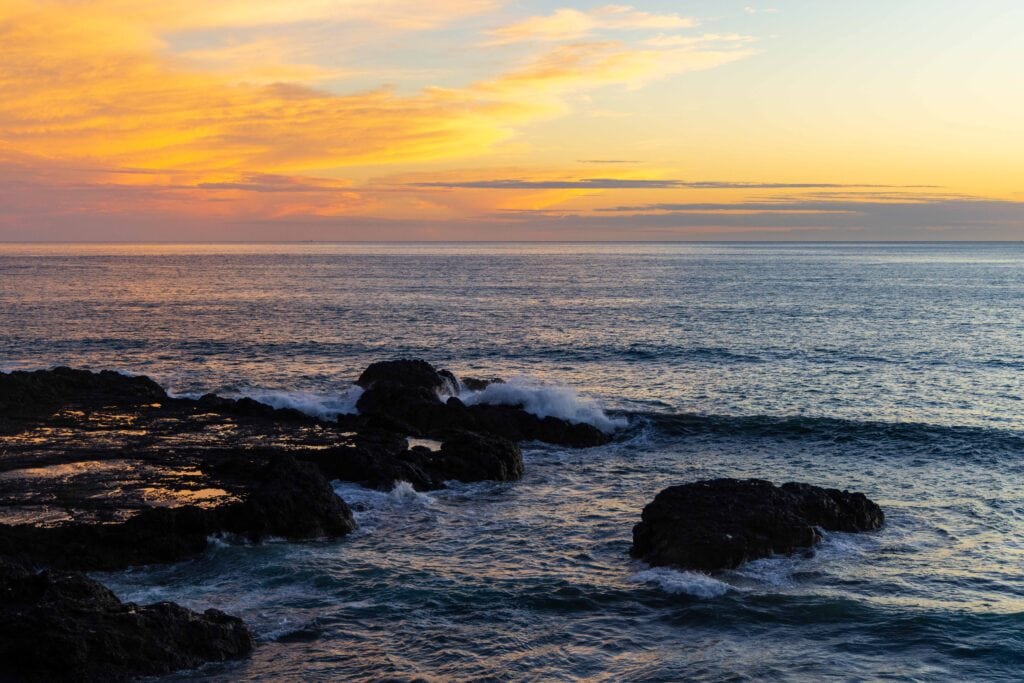
- Having the freedom to stop wherever on our drives. Like watching our final sunset on the drive to La Fortuna. Couldn’t have done that in a shuttle.
Worst Parts
- No turn lanes (left or right) = traffic backed up/slow going through cities
- Single lane roads = slow going, especially if stuck behind a semi-truck
- Switchbacks aren’t a thing = go straight up/down
- The road into Bajos Del Toro from the north = more crater-sized pot holes than I’ve ever seen; we were zigzagging that road
- Lack of visible lines = hard to see where the lanes are, especially at night
Rental car vs shuttle across Costa Rica
Pros of a Car
- Freedom to go wherever, whenever **the big one**
- More efficient and not waiting around for shuttles
- Might be cheaper?
- Lower chance of being car sick
Cons of a Car
- Costs: Expect $50+ per day for a rental car (though offseason rates are low!) We spent $900 for our 10 days. But we were there for the busy season, which sees more expensive rates.
- Paying for gas (gas attendants pump for you)
- Have to deal with sitting in traffic and long driving days while paying attention.
- Having a drive in a foreign country you don’t know
Pros of a Shuttle
- Never have to drive
- The driver should know how to navigate and deal with local customs
- Get to relax/sleep/work while someone else drives
- Might cheaper?
Cons of a shuttle
- You’re unable to travel when you want, always on a schedule
- Might be with other groups who are noisy/annoying
- Might induce carsickness
Things to verify when you rent a car in Costa Rica
- Check the tires for tread depth and grip. You never know when it might rain, and you want good tires
- Check headlights
- Check windshield wiper fluid and wiper quality. Again, if you encounter rain, you want to be able to see
Hotels and Resorts To Stay at in Costa Rica
La Fortuna Hotels
Budget Friendly: Eco Arenal Hotel | Hotel Arenal Lodge | Hotel Campo Verde
Mid Tier: Arenal Observatory Lodge| Baldi Hot Springs | The Royal Corin
Luxury Stays: Tabacon Thermal Resort and Spa | Amor Arenal | The Springs Resort and Spa at Arenal
Manuel Antonio Hotels
Budget Friendly: Alma Vida Hotel | Hotel Coco Beach | Hotel Delfin Playa Bejuco
Mid Tier: Hotel Costa Verde |Gaia Collection Hotels | ECOTICA Boutique Hotel & Spa
Luxury Stays: Tulemar Resort| Makanda by the Sea | Los Altos Resort
Guanacaste Hotels
Budget Friendly: Azul Hotel & Retreat | Hotel Brasilito
Mid Tier: Bahia Del Sol Resort | Margaritaville Playa Flamingo | Borinquen Thermal Resort
Upper Tier Stays: JW Marriott | El Mangroove Papagayo | Hotel Bosque del Mar, Playa Hermosa
Full Luxury Options: Sendero Hotel | Waldorf Astoria | Andaz Peninsula Papagayo Resort | Nekajui Peninsula Papagayo
Final thoughts on what it’s like driving in Costa Rica
My overall assessment of driving in Costa Rica is that it’s nothing scary, but it was annoying how slow and methodical everything was. All I wanted to do was get from point A to point B, which would usually take 30 minutes in America, but it took 65 minutes instead.
After a couple of days, you gave up hoping for faster driving, and it was fine. But dang, it really does mess with your brain when you see something that looks so close on the map, and it takes so long to reach it!
Until next time, adventurers, stay safe.
Follow on social media: TikTok || Instagram || Facebook || Newsletter | YouTube