Rwanda’s Volcanoes National Parks Create Lasting Memories and A Continued Focus on Conservation of Mountain Gorillas
Fifty-five years ago, Dian Fossey first appeared on the cover of National Geographic, bringing newfound awareness to the mountain gorillas who call the Virunga Massif their home. The 1970 issue with her first-person account titled “Making Friends with Mountain Gorillas” was a monumental step in mountain gorilla awareness and conservation efforts to protect these gentle giants.
Today, the efforts to protect the mountain gorillas in Uganda, Rwanda, and the Democratic Republic of the Congo (DRC) have led to their resurgence. Scientists feared they were headed toward extinction by the end of the 20th century, as their numbers had fallen to approximately 240-250 in the mid-1980s.
Now, over 1,000 live in the Virunga Massif area, and a tour guide at the Dian Fossey Gorilla Fund’s Ellen DeGeneres Campus said researchers are in the final stages of a new survey that will provide updated figures on the number of mountain gorillas living high on the volcanoes’ slopes.
All of this is thanks to the conservation efforts in Rwanda, Uganda, and the DRC.
Specifically, in Rwanda, NGO and governmental cooperation have led the charge to protect these animals and support local communities where gorilla poaching was a significant problem. And they are continuing to push for more.
Rwanda’s prime minister, Dr. Justin Nsengiyumva, announced plans to expand the Volcanoes National Park boundaries by 25% at September’s Kwitza Izina 20 (also known as the Gorilla Naming Ceremony).
In addition to expanding boundaries and protections, another solution has been to give back a percentage of trekking permit revenue to the communities, providing much-needed economic support and helping show that gorillas are worth more alive than dead.
Combined, these two initiatives can continue to protect and preserve gorillas in their natural habitat for decades to come.
Gorilla Trekking in Rwanda
Gorilla trekking permits are among the most sought-after activities in Rwanda and one of the main reasons to visit the East African nation. Yet, they’re not cheap nor easy to get. Each trekking permit costs $1,500, and only 96 permits are provided each day.
During my September trip to Rwanda, we had the incredible opportunity to go gorilla trekking. It’s as memorable as people say it is and will leave you inspired and emotional.
With 12 groups of wild gorillas available to the public, each gorilla family is only seen once per day. However, here’s the kicker: you only get to spend one hour with them during your trip.
Volcanoes National Park
After meeting at the Volcanoes National Park staging area, every group is given a guide who will lead them into the mountains on the slopes of dormant volcanoes.
The day before, our group had decided we’d do an easy trek. Other trekking options are available, ranging from medium to hard.
As it turned out, it was actually easy (we were told any trek would be relatively hard), and we walked fewer than four miles round trip – most of it meandering through farm fields before reaching the national park’s boundaries.
Related: Where to stay in Rwanda
Moments after crossing into the national park, we reached the gorilla trackers, who alerted us that the gorilla family we were seeing was very close. We dropped our packs and put on masks (these keep gorillas from getting human germs).
I also pulled out my Sony A9 III and the new 50-150 f/2 lens that I had rented explicitly for gorillas. (The low-light functionality, perfect focal length, and crystal clear captures make this THE gorilla lens.)
Face-to-face with mountain gorillas

At this point, I was so excited. I had no idea what to expect as we walked slowly and quietly into the bamboo forest. Before our group saw anything, the smell reached us. It was pungent.
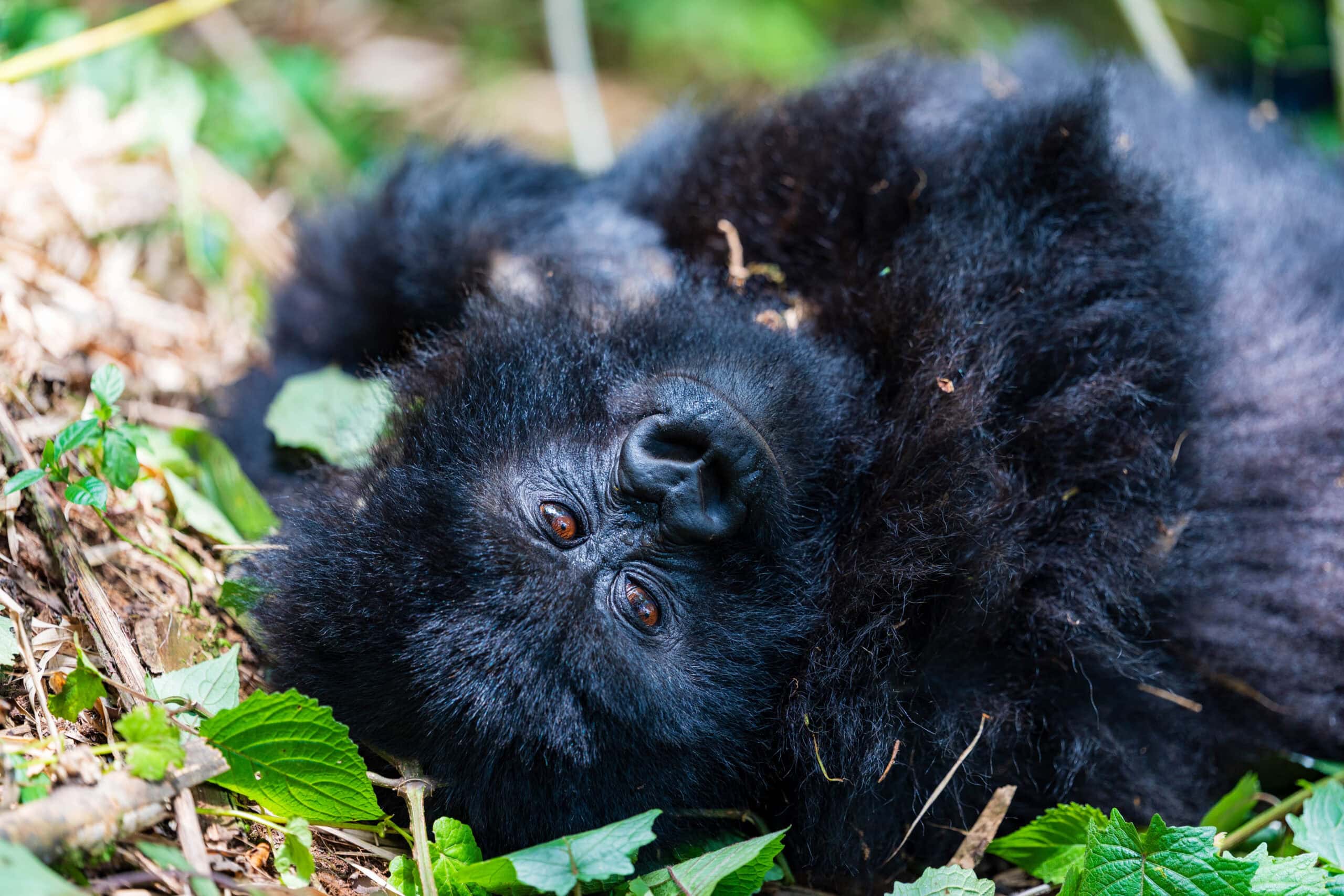
And in the most anticlimactic way, I saw my first gorilla, lying on its back, urinating, with legs wide open. I’ll be honest, it wasn’t how I expected it to go.
But it got better. Way better.
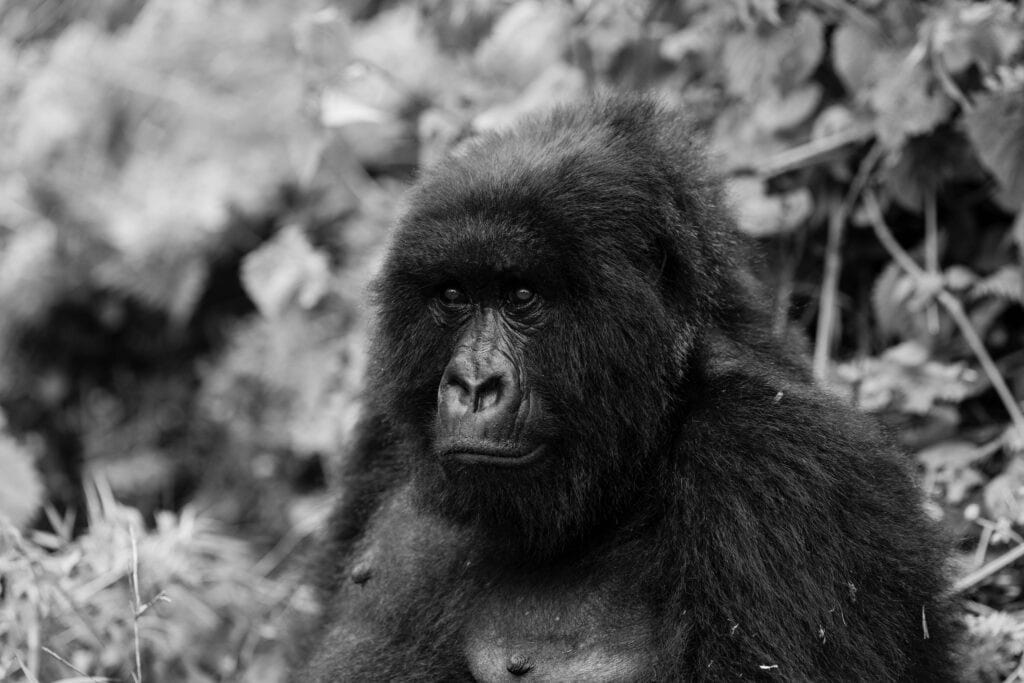
Over the next hour, we encountered 15 of the 18 group members, some as close as a yard. We gazed in sheer awe as a juvenile gorilla bounded by us, stood on its legs, and quickly beat its chest, before running into the woods.
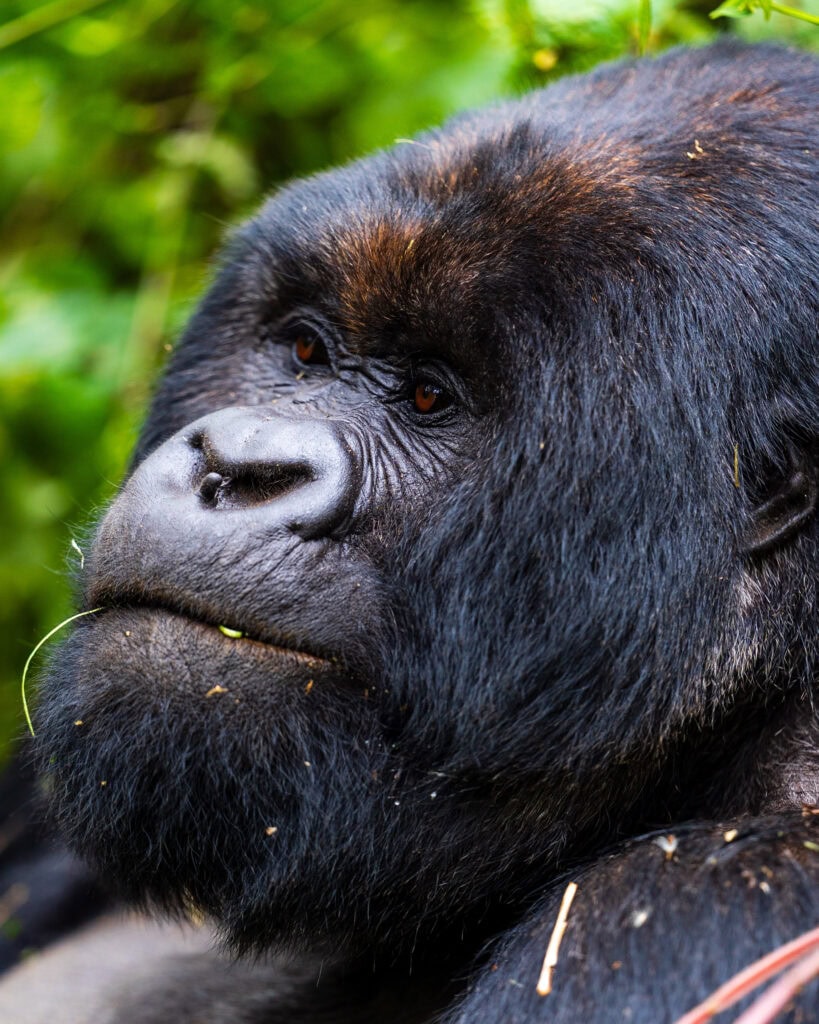


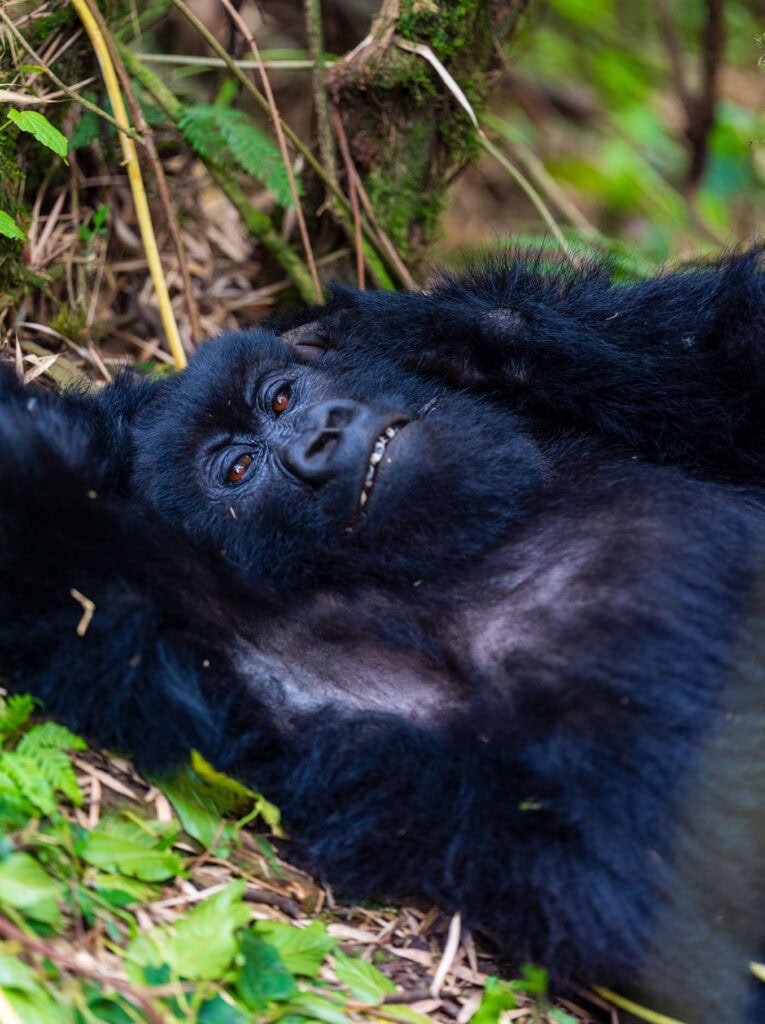
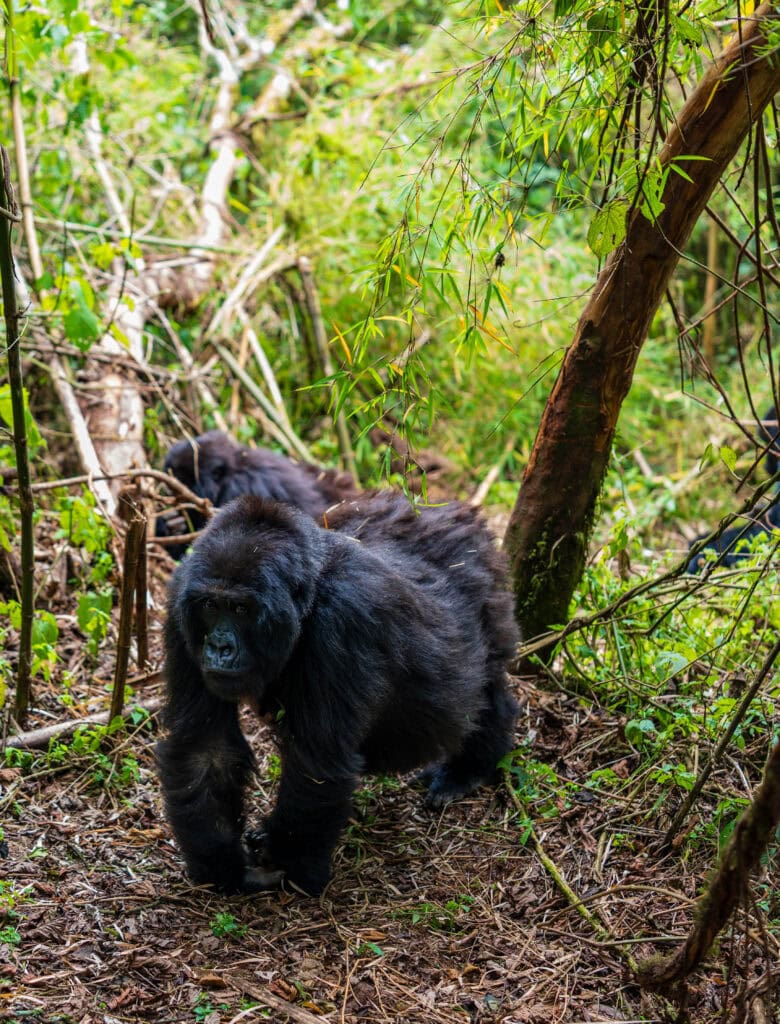


As soon as the seven gorillas near us filed through the bamboo, so did we.
Our tracker, machete in hand, cut a path through the thick forest to keep the trek moving forward. Even so, there was plenty of ducking and maneuvering around stalks as we traversed slippery slopes to rejoin the group.
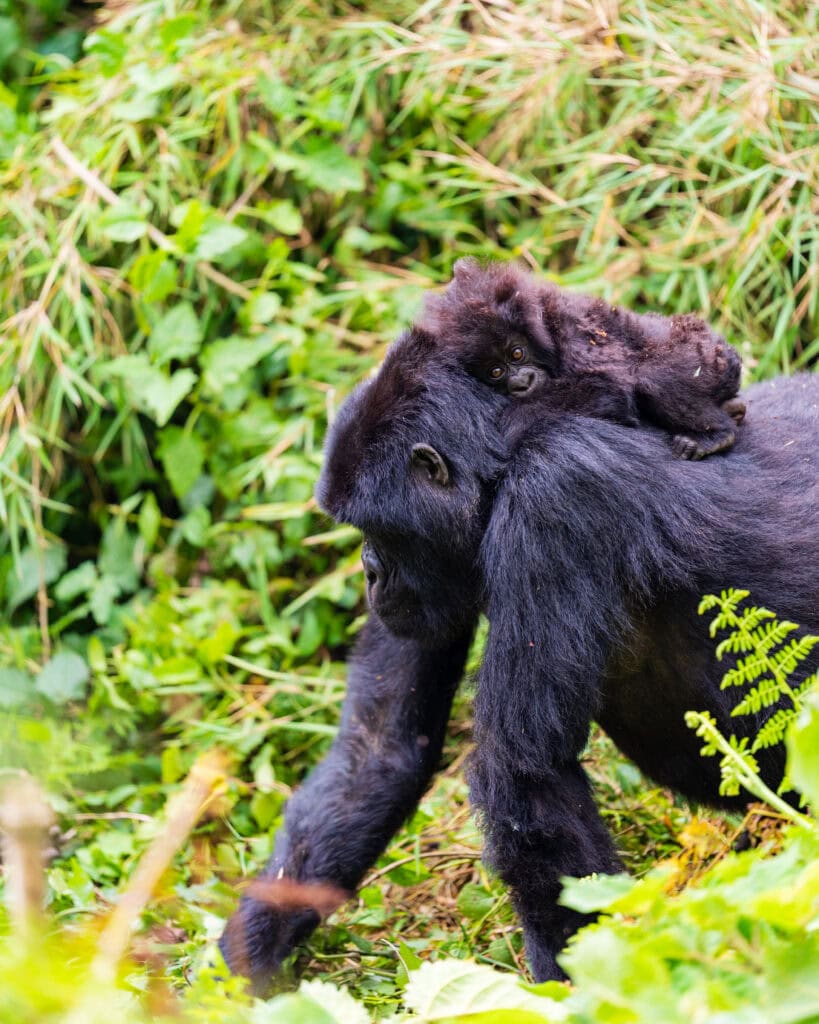
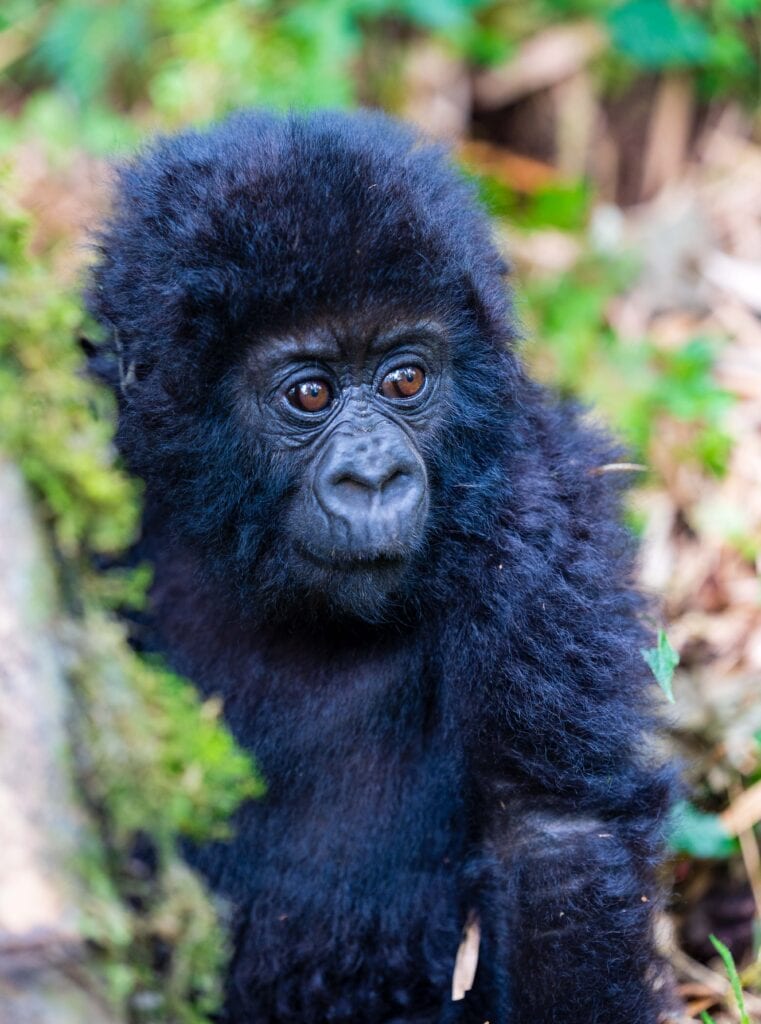
Through the thick of it, we watched a baby gorilla play in the bamboo near our feet, with its mother, watching us with trusting eyes.
That was the most memorable moment of the entire encounter. This mother mountain gorilla sat with us feet from her kid, having no worries at all. What struck me in that moment was that this was the effect of conservation (and habituation).
Decades ago, mountain gorillas surely viewed humans as a threat or, at best, with unease.
Now, there’s a shared bond between the two species, each trusting the other. Gorillas trust humans to protect them, and in turn, they allow people to visit, helping revitalize an economy and region that relies on tourism to flourish.
With so much riding on this shared connection, there’s no other way it can be.
At the end of our hour-long trek, a silverback, the muscular leader of the group, emerged from the forest ridge above us. Below him, and 10 feet in front of me, the baby rode off into the dense forest, on Mom’s back, as misty rain began to fall and the cloud ceiling dropped around us.
Gorillas in the mist, indeed. Forty years after her death, Dian Fossey wouldn’t want it any other way.
Until next time, adventurers, stay safe.
Follow on social media: TikTok || Instagram || Facebook || Newsletter | YouTube