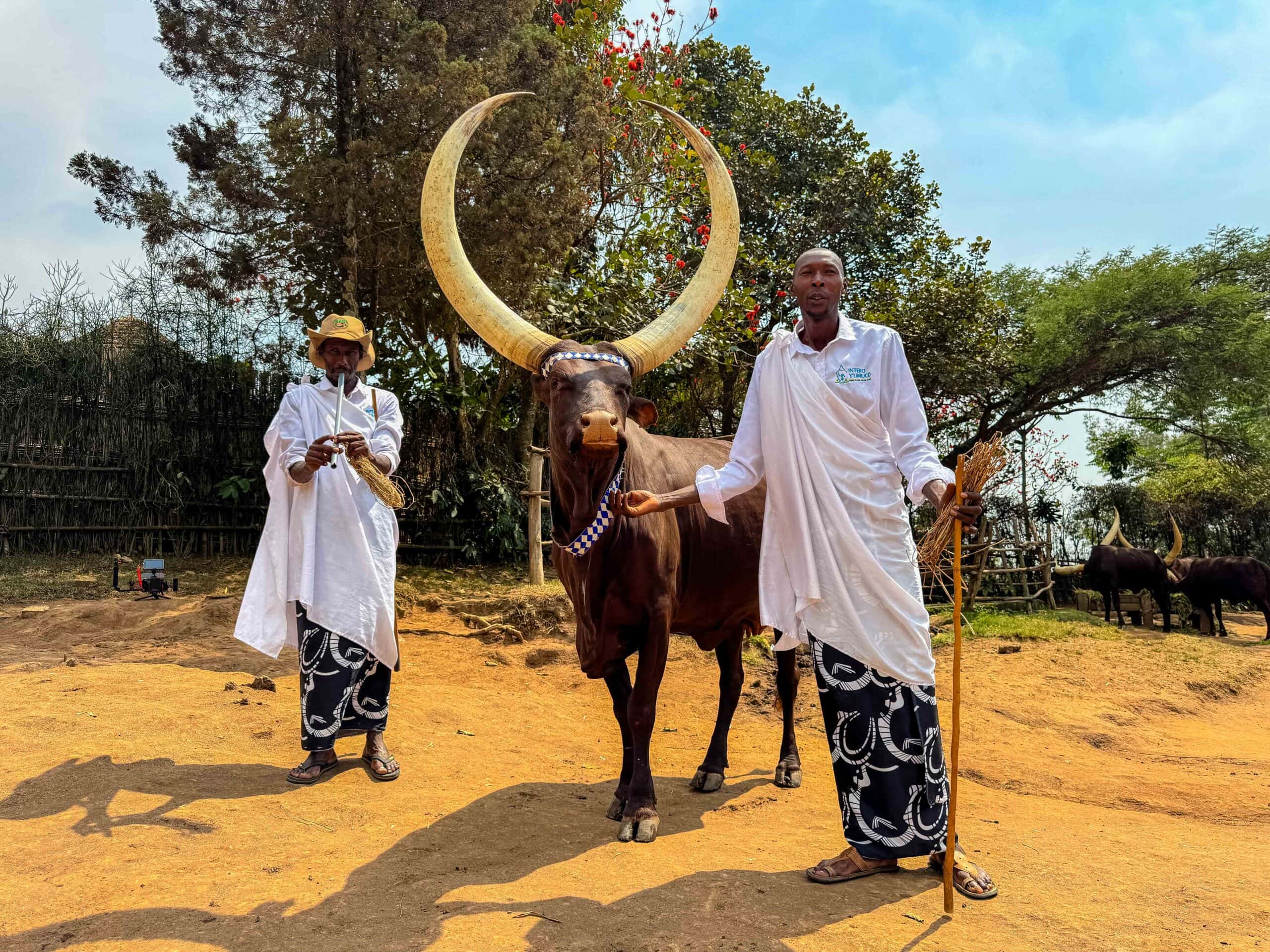
Rwanda Itinerary: How to Spend 10 Days Exploring the Land of a Thousand Hills
As a kid growing up in the Arizona desert, some 9,000 miles away from Africa, I never once envisioned I’d visit Africa. It was just something you saw on National Geographic or in The Lion King. When I learned that I was traveling to Rwanda, I was giddy and a bit blown away.
It was my first time visiting a non-European country. Granted, I think I was most anxious about the 24 hours of flights and what could go wrong. (Thanks to a delay in Chicago, it didn’t take long to miss my connecting flight in Brussels to Kigali.)
Once I landed and started our epic Rwanda itinerary, it was full of stoke and excitement. From seeing Black and White Colobus Monkeys, to ziplining through the forest, to gorilla trekking, and finally experiencing my first African safari, it was the most memorable trip.
This tour is about as close to the one I did as I could find.
Extend the trip and go to Kenya and Tanzania, too!
Inside, you’ll get a daily breakdown of my entire trip to Rwanda. I’m not sure how many people will replicate it entirely. But if you pick and choose from this itinerary, I think you’ll be in great shape and create memories that will last a lifetime!
Easy Booking: Expedia.com | Hotels.com | VRBO | Booking.com | Airbnb.com
Need Gear: Find Gear at REI
Find Awesome Tours: Viator.com or GetYourGuide.com
First time here? Stay in touch by following on IG: @Alecoutside and my newsletter
Iceland on your bucket list? Get my Iceland guide + 144 pinned locations on Google Maps
Please stay safe out there and follow Leave No Trace principles as best you can.
10-Day Itinerary Across Rwanda
Let’s dive into this Rwanda Itinerary. One thing I would like to note is that the costs mentioned throughout the article are for international visitors. If you fall into a different category, it’ll be less expensive. That said, if you book a tour, such as with Viator, for example, it’ll be more costly, as you’re paying for a driver.
PS: Costs here do not include tipping guides or porters. The general idea is $5-10 for porters. $15-$20 for guides. They take USD or Rwandan Francs.
Day 0: Arrive and Decompress
If your travel to Rwanda was anything like mine, you’ll need some time to decompress. A delayed flight out of Chicago meant that our connecting flight in Brussels was missed. This led to 90 minutes of chaos. However, we were eventually provided a hotel in Brussels and then rearranged our first/last day in Rwanda.
Most flights leave Brussels in the morning and arrive in Kigali in the evening. So, don’t plan for much happening on your first night.
Hotel for the evening: Blu Radisson Hotel in Kigali. Find it on Expedia | Book on Booking.com
I created this map to show where things are across Rwanda.
Hopefully, it helps with visualizing your Rwanda Itinerary. We went clockwise across the country.
Day 1: Visit the Genocide Memorial and See Kigali
After a long travel day, it’s nice to do something that doesn’t require a lot of energy and is flexible based on how you’re feeling. Now, the Genocide Museum requires mental effort, sure, but there’s no physical exertion needed.
Also, if you happen to have a situation like mine, it’s easy to bump it back to another day.
Now, for the memorial itself. Oh boy. As expected, it is heavy and somber, but damn did they do a good job. It presented an incredible timeline of life under colonialism, then the buildup, the three months of genocide, and now life after.
The memorial is divided into two parts: an outdoor memorial and the museum. (If you’re short on time, you can skip the outside portion, but I do recommend you pay your respects at the Mass Graves.) I’d also opt for the audio tour. It provides context to the outdoor memorial and its symbolism. It also offers additional context throughout the museum.
Overall, your visit should take between 90 minutes and two hours. There’s a place to sit down once you’re done to digest it and sit with your thoughts.
I’ll be honest, I was in a weird place (understandably) afterward. Seeing so much death, destruction, despair, and hate will shake you.
COST: $20 (Book here.)
Hotel for the evening: Blu Radisson Hotel in Kigali Find it on Expedia | Book on Booking.com
Day 2: King’s Palace Museum, Ziplining, Canopy Walk in Nyungwe National Park


Starting in Kigali, this was a long day of driving, but thankfully, we broke it up by going to the King’s Palace Museum and learning about Rwanda’s history before and during colonization. They did a fantastic job with the tour.
Seeing the huts and houses of the past, and then where the king lived in the 1950s and 1960s, was fascinating.
COST: $10
Ziplining in Nyungwe National Park
Now, this was the fun part. We left the flatter and drier conditions and headed into the mountains and rainforest of Nyungwe National Park.
Today called for ziplining and walking on the canopy bridge. The ziplining is pretty new (summer of 2025). It consists of three lines, each progressively longer, with the final zipline spanning over half a mile.

The first zipline is located directly at the visitor center staging area. The most challenging part of the experience is the hike from the middle to the final zipline. So, if you plan to do it, be ready for a semi-steep, albeit short trek.
Overall, it was super cool! I’ve only done short ziplines before, so getting the opportunity to see the forest from hundreds of feet above the valley floor is a memory and feeling that will stick with me.
COST: $100 USD
Canopy and Zipline tour with private driver
Canopy Tour + Ziplining and Ropes Course
Canopy Walk

A short walk from the final ziplining platform is the Nyungwe National Park canopy walk. It’s a 160-meter-long, 70-meter-high suspension bridge situated above the forest’s canopy. These are two things I highly recommend for your Rwanda itinerary.
COST: $40 USD
Book a canopy tour and waterfall day
Hotel for the evening: Kivu Marina Bay Hotel
Find prices for activities throughout the national park
Day 3: Ropes Course and Black and White Colobus Monkeys

This was another great day in Nyungwe National Park, as it was our first primate trek of the trip. After driving on a bumpy dirt road for a while, we finally reached our starting spot.
Under a cloudless sky with warm temperatures and higher humidity than I’m used to, we set out through a tea leaf farm towards the forest. We walked about a mile in all, going halfway down the slope to where we were almost eye level with the Black and White Colobus Monkeys 100 yards away in the trees.
For the next hour, we watched as they groomed each other, jumped from branch to branch, and tended to their babies. It was a wildly impressive trek, and I loved every moment of it. (Well, except for having to hold my heavy camera lens.)
This is one that I highly recommend and isn’t too pricey!
Ropes Course
I think we had to kill some time in the late morning and did the Nyungwe National Park’s Ropes Course. This was enjoyable, but nothing particularly special. If you have younger kids or believe the ziplining may be out of your comfort zone, the ropes course is the perfect activity.

Cost: $60 for monkeys, $35 for ropes course
Hotel for the evening: Kivu Marina Bay Hotel
Day 4: Chimpanzee Trekking
Initially, this was supposed to be earlier in the trip, but our chimpanzee group got into a fight and didn’t want to see humans. (LOL.) So, the group that we ended up seeing was on the shyer side.
Unfortunately, that meant we had a less-than-ideal chimp trek, which isn’t uncommon. It is one of the least successful animal treks you can attempt in Rwanda. Before you go, you need to know there is a chance you will not see chimpanzees. (Or you could spend an hour with them and have an incredible time.)
We woke up at 3:30am and drove for two hours to reach our starting point. From here, we hiked at least a mile uphill, where we found the chimps for the first time. And for 90 seconds, we somewhat saw chimpanzees through leaves and branches.
And that was it. I landed zero in-focus photos.
Over the next two hours, we trekked through the forest after them. We went up hills, down steep ravines, and up even steeper ones, trying to chase after them. But we never caught up to them.
The cons are obvious. We didn’t have much of a trek to talk about.
Still, it was impressive to do a chimpanzee trek and see how the rangers collaborate with the trackers to give guests the best chance to see the chimps.
So, should you do this trek? I’m not sure.
It’s probably the hardest, or second-most challenging, primate trek. You need to be in good hiking shape and be okay with not seeing them. If you’re up for a high-risk, high-reward adventure, go for it!
Just know, you may come away with nothing.
COST: $200
Book a 3-day chimpazee and gorilla trek
Hotel for the evening: Kivu Cleo Hotel
Day 5: Coffee Experience and water activities around Lake Kivu

The Lake Kivu region of Rwanda is known for its coffee production. This is a nice way to spend a quieter day without hiking or traveling too far. I can understand wanting to pack your Rwanda itinerary full every day. But having a day in the middle to catch up on sleep isn’t a bad idea.
If you’re still looking to stay active, renting kayaks or taking a boat tour is another great way to enjoy your time near the water.
Coffee plantation experience plus hike
Lake Kivu Boat Cruise
Hotel for the evening: Lake Kivu Serena Hotel
Day 6: Golden Monkeys Walk in Volcanoes National Park and Dian Fossey Museum
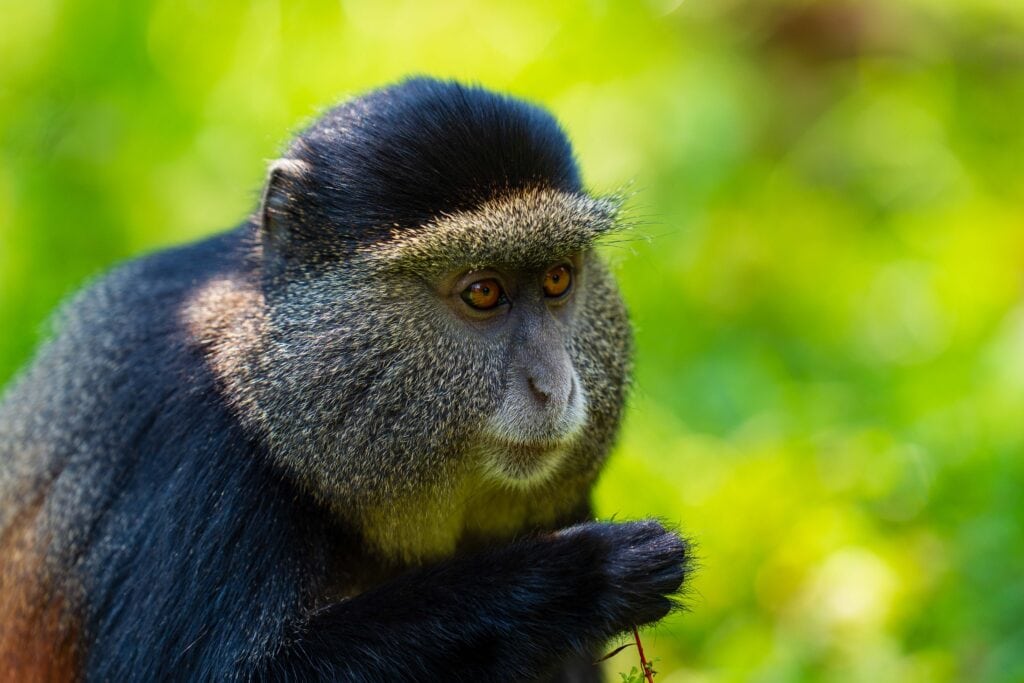
Compared to the Black and White Colobus Monkey trek, the Golden Monkey trek was a piece of cake. We walked less than a mile through farm fields to the edge of the Volcanoes National Park boundary.
Here, we met the trackers, put on our masks (to keep the monkeys from getting sick), and were led into the area where they were. Almost immediately, they came out of the trees to seemingly greet us. I’m not sure if that’s typical. But for the next hour, they ran around us, sometimes closer than a meter away.
I honestly loved this experience and was stoked it was on our Rwanda itinerary. It felt more intimate, and as a photographer, I didn’t feel rushed or constricted.
Cost: $100
Ellen DeGeneres Campus, Dian Fossey Fund

You can do this before or after your gorilla trek. I personally think going beforehand provides you more appreciation for the mountain gorillas, their conservation, and Dian Fossey’s role in it all. We had a private tour that lasted an hour. You don’t need one, though.
It can be self-guided, and it goes into great detail about who Dian Fossey was, has a replica of her “home” in the Virunga Massif, and provides a breakdown of her favorite mountain gorillas.
The museum is so well done and should be one of those things you don’t skip when visiting Rwanda.
Hotel for the evening: Five Volcanoes Boutique Hotel
Day 7: Gorilla Trekking Volcanoes National Park

After a long buildup, it was time for the grand event. Trekking for mountain gorillas in Rwanda. Our group chose an easy trek after hearing that all treks are relatively hard. Well, ours was actually super easy.
Book your gorilla trek here – permit included.
We walked less than two miles to reach the gorilla family. Here, we spent an hour with them, as they weaved in and out of bamboo stalks and bushes. This part wasn’t easy, though. Our trackers were cutting through the thick forest with machetes as our group of six went up and down slippery slopes and through dense vegetation.
You can read my full account above or watch my YouTube video. But overall, it was an incredible experience. Getting to spend an hour with wild animals that are so similar to yourself is truly remarkable.
Gorilla Trek Experience (cost includes gorilla permit, plus car/driver)
Private driver to your gorilla trek (permit not included)
Cost: $1,500 per person
Hotel for the evening: Five Volcanoes Boutique Hotel
Day 8: Visit a local community near Musanaze with a cultural experience
While the wildlife is what draws people to Rwanda, it’s important to find a way to connect with the community. I recommend visiting the Red Rocks Cultural Center.

We started around 9:00 a.m. with a walk-through of the community. Previously, our only exposure was what we saw while driving. And then we were staying in pretty nice hotels, which is not a great representation of life in Rwanda.
This tour got us on the ground and in the middle of everyday life. Next, we went to a local market. It was packed and bustling.
From here, we returned to the Red Rocks Cultural Center and participated in local dancing and music, as well as creating banana beer. From peeling the bananas to smashing them up, we all had the chance to watch and participate in the process.

Rwanda has three types of bananas: the ones we Americans are used to, smaller ones that are very sweet, and a third type that is used for banana beer.
Once we completed all the steps before letting it ferment, they brought out the actual banana beer. I assume it has to be an acquired taste because I didn’t really like it. However, I said the same thing about beer a decade ago.
From here, we drove across the country to set us up for our final excursion, an African Game Drive in Akagera National Park.
COST: Banana Beer $26 (2+ people), Village Walk $19
Hotel for the evening: Mantis Epic Hotel & Suites, Nyagatare
Day 9: Safari Game Drive in Akagera National Park
This was my first safari and I was STOKED!
We were up before 7:00 am and on the road by 8:00 am. It took us about two hours to go from the hotel in Nygatare to the west entrance. Here, we received a brief overview of our game drive, which included a reminder that we were not allowed to exit our vehicle for any reason.
Quick History of Akagera National Park
A brief historical lesson, as it shows the uniqueness of this area. Prior to the genocide, this was a flourishing natural area.
But with the genocide displacing so many people, the late 1990s saw human and animal conflict as humans moved into the nearby areas. (Lions were eating the cows.)
As a result, the local population began to poison the lions. In less than five years, they eradicated every lion in the area. Rhinos were also poached to zero.

This obviously had a negative impact on the area and on tourism.
Starting around 2010, the country and NGOs began reintroducing lions and rhinos, creating a new Big Five Safari attraction.
I say all of this because this safari is currently not exactly like others you’ll see in Africa. But most places don’t kill off their lions.
So, you have to view this as a baby safari that will get better with time. Maybe in 15-30 years, Akagera will be able to rival its neighbors in Kenya and Tanzania as more time passes from the atrocity of the genocide.
My Safari Experience
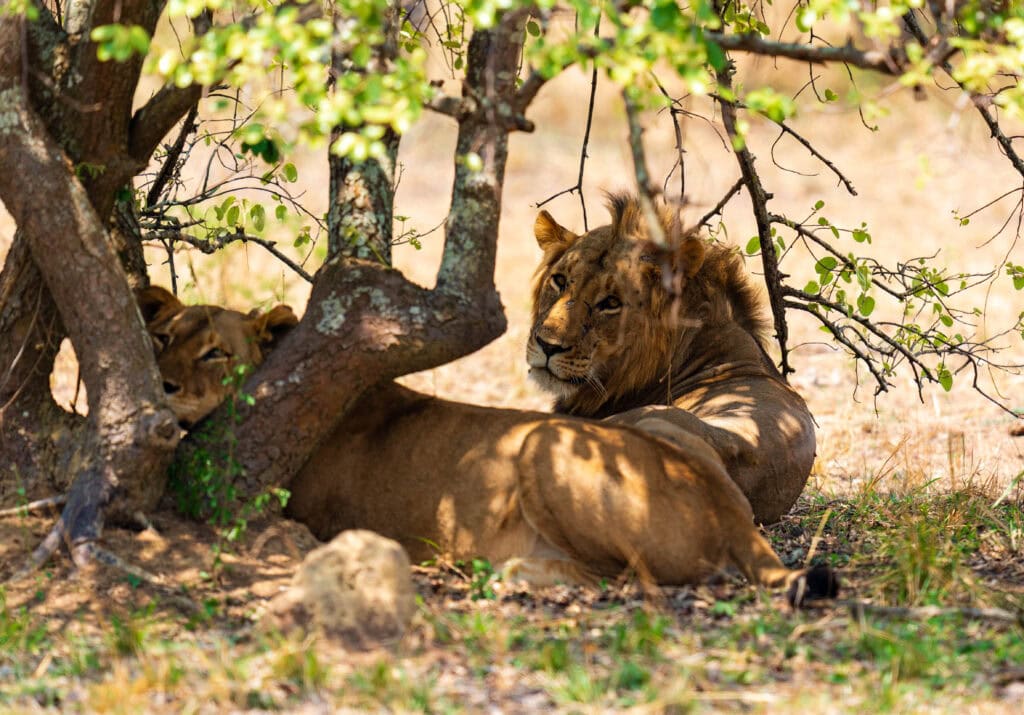
I had a great, great time on the safari, even if I found it to be underwhelming at points. We saw a lion couple, tons of hippos, giraffes, zebras, antelope, and more! However, we also experienced stretches where we didn’t see anything.
I honestly don’t know what you’re supposed to see on safaris. It was the end of Rwanda’s dry season, which showed. Most of the animals were near the water, and the rest of the hills were pretty dry and brown.

Still, searching for wildlife and photographing wildlife that I had never seen before was thrilling. Our tour guide, Junior, was incredible, and I thoroughly enjoyed spending time outside in Rwanda. Unfortunately for my bank account, I now want to go back to Africa for more safari trips!
Evening at the hotel
That evening, our buffet dinner was mouthwatering. It had all types of meat, breads, veggies, and treats. 10/10 approved. A local dance/music group was also there to provide an authentic cultural experience. They were fantastic!
Hotel for the evening: Mantis Akagera Game Lodge
Day 10: Morning Game Drive, Boat Tour on Lake Ihema, and Return to Kigali
Our final full day of our Rwandan Itinerary! I asked our guides if we could do an early morning game drive before our Lake Ihema boat tour. They said yes, and oh boy was it worth it.
Book a Game Drive and Boat Tour

Morning Game Drive
Our morning started a little slow, but picked up quickly. Our group of three started with Cape Buffalo and a very colorful Grey Crowned Crane.
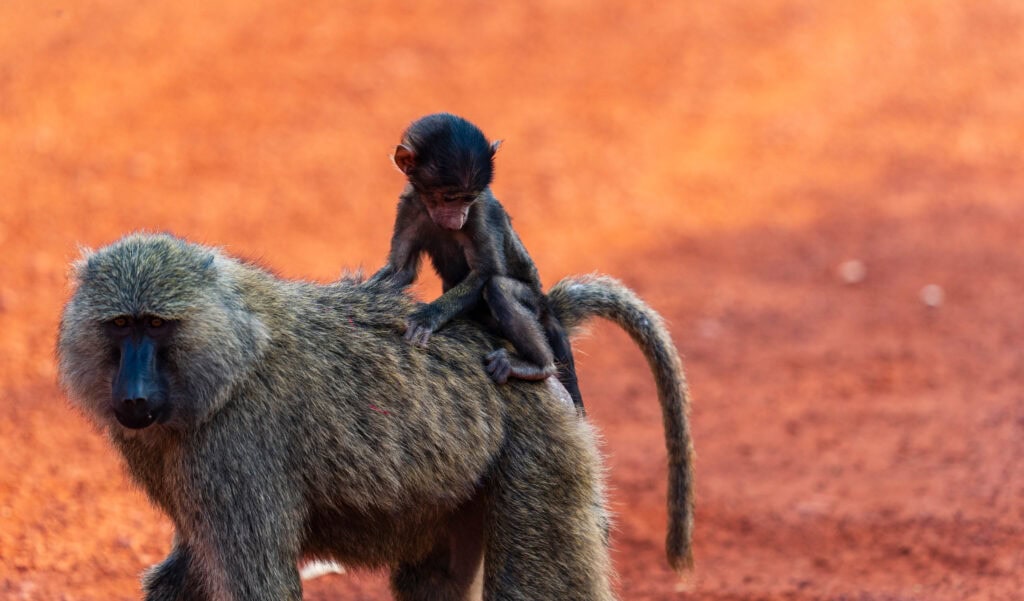
Then we found a massive family of baboons making the dirt road a playground. From here, we spotted some giraffes before learning that we had actually passed elephants.
At this point, we hadn’t seen them yet, and it was high on everyone’s list.
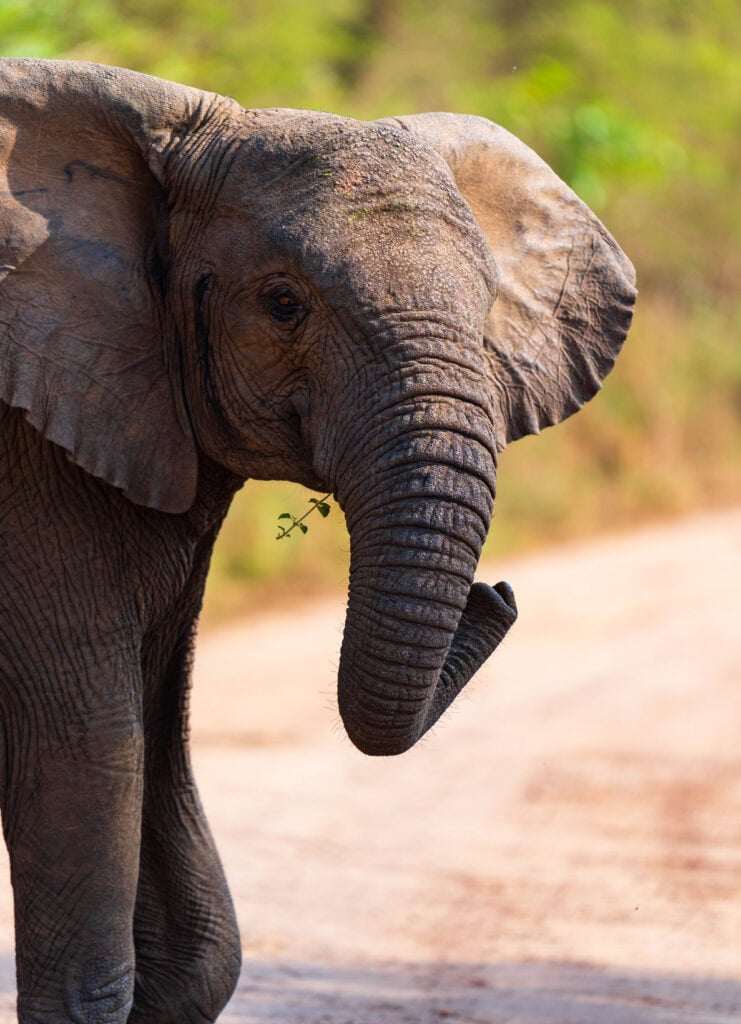
We U-turned and headed back a mile, where we saw just a couple grazing on the side of the road, but we could hear more in the bushes out of sight. Our driver turned off the car and waited for more to cross the road in front of us..


Jackpot.
Over the next 30 minutes, over 25 elephants of all sizes crossed in front of our vehicle. It was absolutely extraordinary. You never expect to see that many at once, and to see it with your own two eyes blew me away!
Lake Ihema Boat Tour
Going into this, I called it the hippo tour, which is funny because we didn’t see any hippos. But we did see an elephant bathing itself. After spending 20 minutes with it, we headed to the island a mile offshore, which is home to hundreds of birds and Nile Crocodiles.
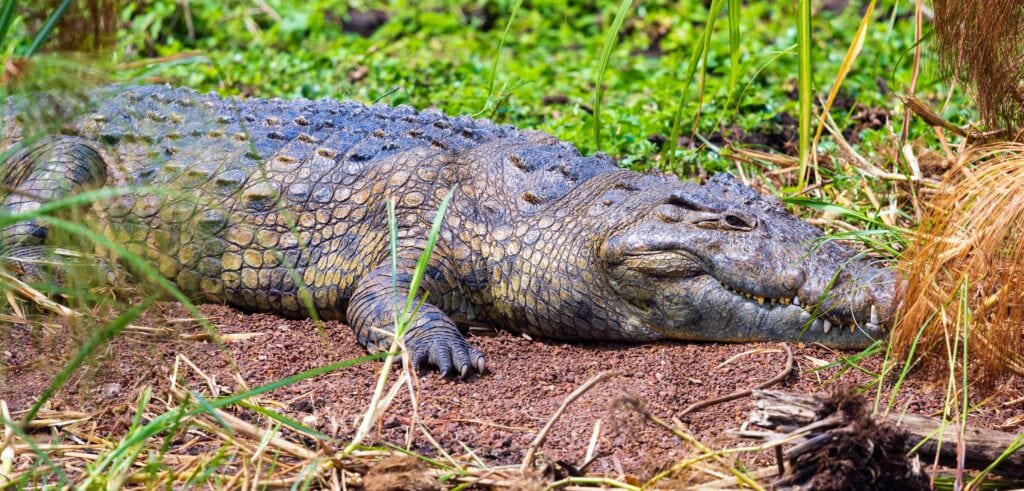
Floating ten feet off land, we saw some beautiful birds, and later on, as we rounded a corner, a mother crocodile and a dozen young ones. These smaller ones were the size of your forearm. We learned that only one or two of them would actually reach adulthood.
And just around the corner from them was a massive adult male sunbathing. The size of its claws and jaws was impressive. Definitely wouldn’t want to be on the receiving end of that.
Hotel for the evening: Blu Radisson Hotel in Kigali
Day 11: Flying Home on the last day of your Rwanda Itinerary
Our flight out of Rwanda wasn’t until 8pm that evening. So we had the entire day to explore and sleep in. Due to our flight mishaps on the way in, we went to the genocide memorial at this time. We also stopped at Kivu Noir for coffee and grabbed a bag.
It’s some damn good coffee!
For your flight out, one thing I will note is that there is no food service in the Kigali Airport. There is, however, a Priority Pass Lounge.
Most people with a mid-tier credit card should have access to it. It’s highly worth visiting, as the airport didn’t seem to have air conditioning either, and we were pretty hungry.
Going in there was a total game-changer.
How many days should you spend in Rwanda?
If you’re traveling from North America, I recommend spending at least 8 days in Rwanda. You’ll have a full day of travel on both ends of your trip, so you want to make the trek worth it. Additionally, your first day of your Rwanda itinerary may be a bit disorienting due to jet lag.
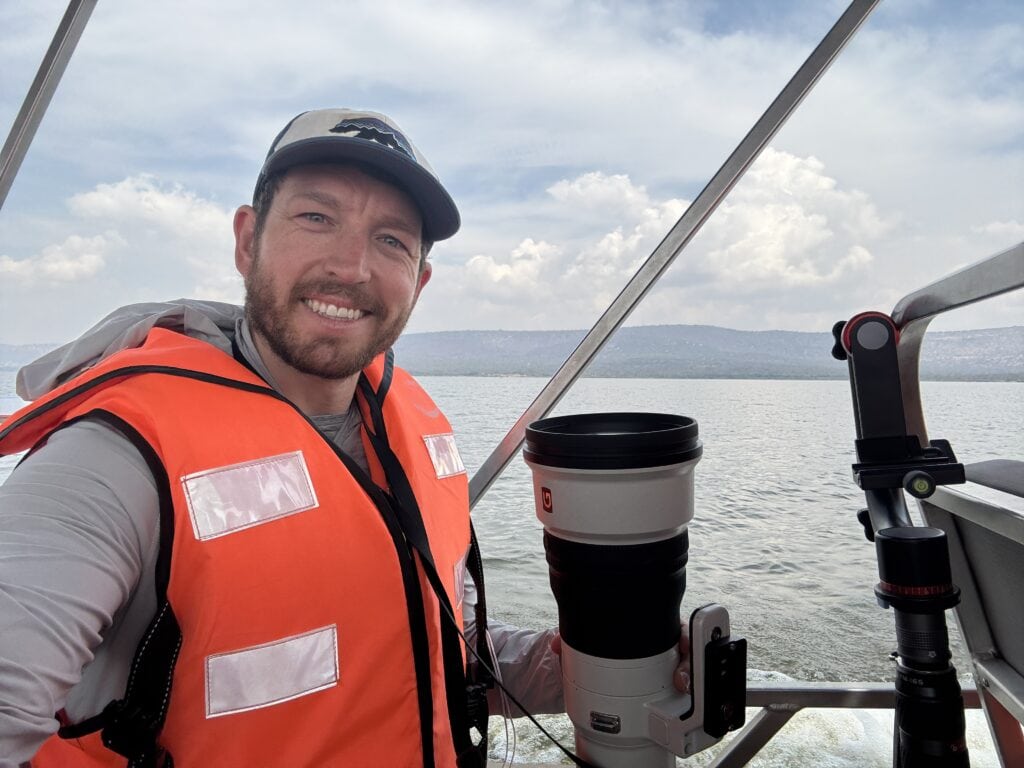
My trip was obviously go, go, go. I’m not sure you need to do everything we did. However, it was a pretty badass trip, and getting to see almost the entire county was incredible.
What is the estimated cost for a whole trip to Rwanda?
As with all things, it depends. However, if you plan to stay in above-average hotels throughout, as well as participate in gorilla trekking, you can expect a total cost of between $5,000 and $8,000. This increases with more trekking excursions or staying at luxury lodges.
Another way to increase or decrease prices is to go with a private guide or a group shuttle. If comfort is a priority, a private car may be the best option for your trip.
I had ChatGPT run a quick mock expense report for a Rwanda itinerary to show a ballpark figure.
- Flights: $1,400 (midpoint)
- Gorilla permit: $1,500 per person
- Accommodation (6 nights mid-range): $2,060 (example mix: 2 nights Volcanoes $900; 2 nights Akagera $800; 2 nights Kigali $360).
- Driver/transfers (6 days @ $100/day): $600.
- Akagera park fees & activities: $200 (2-day entry + small boat/game drive extras).
- Meals, tips, porters, misc: $600
- Visa: $50 per American (Canadians are free)
Estimated total ≈ $6,580 (rounded) — which sits inside the earlier $5,000–$8,000 headline range for a “nice hotels” trip.
A few more tips for your upcoming Rwanda itinerary
- If you’re okay venturing out of your hotel, you’ll be able to find local food for far cheaper. Most hotel restaurants catering to Westerners charge significantly higher prices.
- Beer is generally more affordable than wine.
- Gas looked to be around $5 a gallon.
- I drank bottled water the entire time (other than one night near Volcanoes). All was good. Drinking water in Kigali seems to be decent, but it is still suggested to drink bottled water. And once you leave the city, the quality of water treatment declines.
- My flight route was: Denver – Chicago – Brussels – Kigali.
Vaccines and Mosquitoes for your Rwanda Itinerary
As I mentioned earlier, we were in the dry season, so the mosquitoes were far less of an issue than I realized. Honestly, I hardly even saw them and only had one bite. Still, I went in with guns blazing to be protected.
Three to four weeks before the trip, I visited a Travel Clinic in Denver to get my Yellow Fever vaccine, Malaria Pills, and diarrhea meds – just in case. Thankfully, never had to touch those.
The Yellow Fever vaccine is not cheap, but it also lasts a lifetime. We’ll call it an investment. For Malarai, it wasn’t too bad, and I took a daily pill each day I was in Africa, along with two days before and seven days afterward.
I suggest consulting with your doctor about what they recommend before you visit.

Final Thoughts on your Rwanda Itinerary
Spending 10 days in Rwanda was one of the most incredible trips I’ve ever taken. As it was my first time in Africa, I was constantly amazed by this new area. Growing up in Arizona, we didn’t learn much about Africa, and I was two years old when the genocide happened.
For me, this trip to Rwanda opened my eyes to new cultures, new people, and new lands. Throughout our Rwanda itinerary, seeing the extraordinary wildlife was the highlight. But that isn’t the only thing that will stick.
What will stick is the friendliness and generosity of each Rwandan we met. You always wonder how people will treat you in a foreign country – especially when you don’t look like everyone else. At least for me, everyone had a smile on their face and was super friendly and willing to help.
And in our current climate, that’s as good as it can get.
Until next time, adventurers, stay safe.
Follow on social media: TikTok || Instagram || Facebook || Newsletter | YouTube