These are the Best Cameras for Wildlife Photography
Wildlife photography is one of the most demanding types of photography. Subjects move fast, light changes constantly, and you’re often shooting from far away in unpredictable weather. That means your camera needs to be fast, reliable, and able to lock focus instantly.
Not all mirrorless cameras are built for this. Below are the best cameras for wildlife photography, chosen based on autofocus performance, burst speed, image quality, durability, and real-world usability.
The top portion is the best of the best. And unfortunately for all of us, they cost a lot of money. But further down, there are more affordable options for those who don’t have five, six, or seven thousand dollars to drop on new cameras.
Browse the top wildlife cameras on the market.
What to Look for in a Wildlife Camera
Before jumping into specific camera recommendations, it’s worth understanding what actually matters for wildlife photography.
- Fast, intelligent autofocus (animal and bird eye AF is a significant advantage)
- High burst rates to capture fleeting action
- Strong high-ISO performance for dawn and dusk shooting
- Weather sealing for rain, snow, and dust
- Lens ecosystem with quality telephoto options
What do I value the most?
If I were to rank what I look for most in a camera, autofocus and tracking would be number one. You can have the best megapixels or fastest shutter, but if your image is blurry, nothing else matters.
From there, frames per second and megapixels can be interchangeable for me, unless you are photographing something where a fraction of a second matters most.
Easy Booking: Expedia.com | Hotels.com | VRBO | Booking.com | Airbnb.com
Need Gear: Find Gear at REI
Find Awesome Tours: Viator.com or GetYourGuide.com
First time here? Stay in touch by following on IG: @Alecoutside and my newsletter
Iceland on your bucket list? Get my Iceland guide + 144 pinned locations on Google Maps
Please stay safe out there and follow Leave No Trace principles as best you can.
Best 3 Cameras for Wildlife Photography
Sony A1 (or A1 II)
The Sony A1 is one of the most capable mirrorless cameras ever made, and for wildlife photography, it sets the benchmark.
Built around a stacked full-frame sensor, the A1 delivers speed, outstanding autofocus accuracy, and excellent image quality. It excels at tracking fast-moving animals, particularly birds in flight, even against busy backgrounds or in challenging light.
This is the camera you choose when you want zero compromises and complete confidence in the field.
Why it’s great for wildlife:
- 30 fps continuous shooting
- Exceptional animal and bird eye AF
- High-resolution files with strong dynamic range
- Deep lineup of native wildlife lenses
Downside: Price — this is a professional-level investment.
Find it on Amazon. Check out the A1 II.
Personal Thoughts After Using It in Churchill
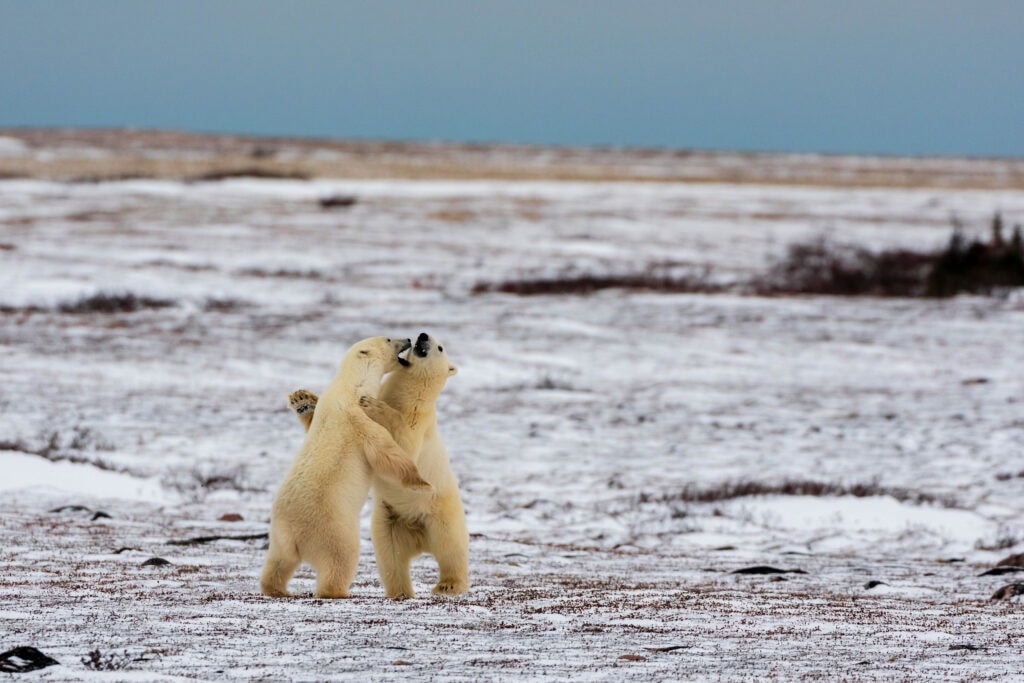
I used this in Churchill, Manitoba, to photograph polar bears in November of 2025. It’s an incredible camera for both photo and video. The MP’s are perfect to crop with, and the video is top-tier as well. Plus, at 30FPS, it’s a step above others, but when coupled with the MPs, it’s a great combo. There’s a reason this camera is so expensive, and it’s worth the money (or I say… I only rented it).
Sony A9 III
The Sony A9 III is a game-changer for wildlife photography thanks to its global shutter sensor—the first of its kind in a full-frame mirrorless camera.
Unlike traditional sensors, the global shutter eliminates rolling shutter entirely, meaning no distortion when photographing fast-moving animals or birds in flight. Combined with Sony’s class-leading autofocus, the A9 III is one of the most reliable cameras ever made for capturing split-second wildlife moments.
For action-heavy wildlife shooters—especially birds—the A9 III offers a level of consistency that’s hard to match.

Why it’s exceptional for wildlife:
- Global shutter eliminates rolling shutter
- Up to 120 fps burst shooting
- Industry-leading animal and bird AF
- Zero blackout shooting
Downside: Lower resolution than the A1 and premium price point.
Personal Thoughts After Using It in Africa
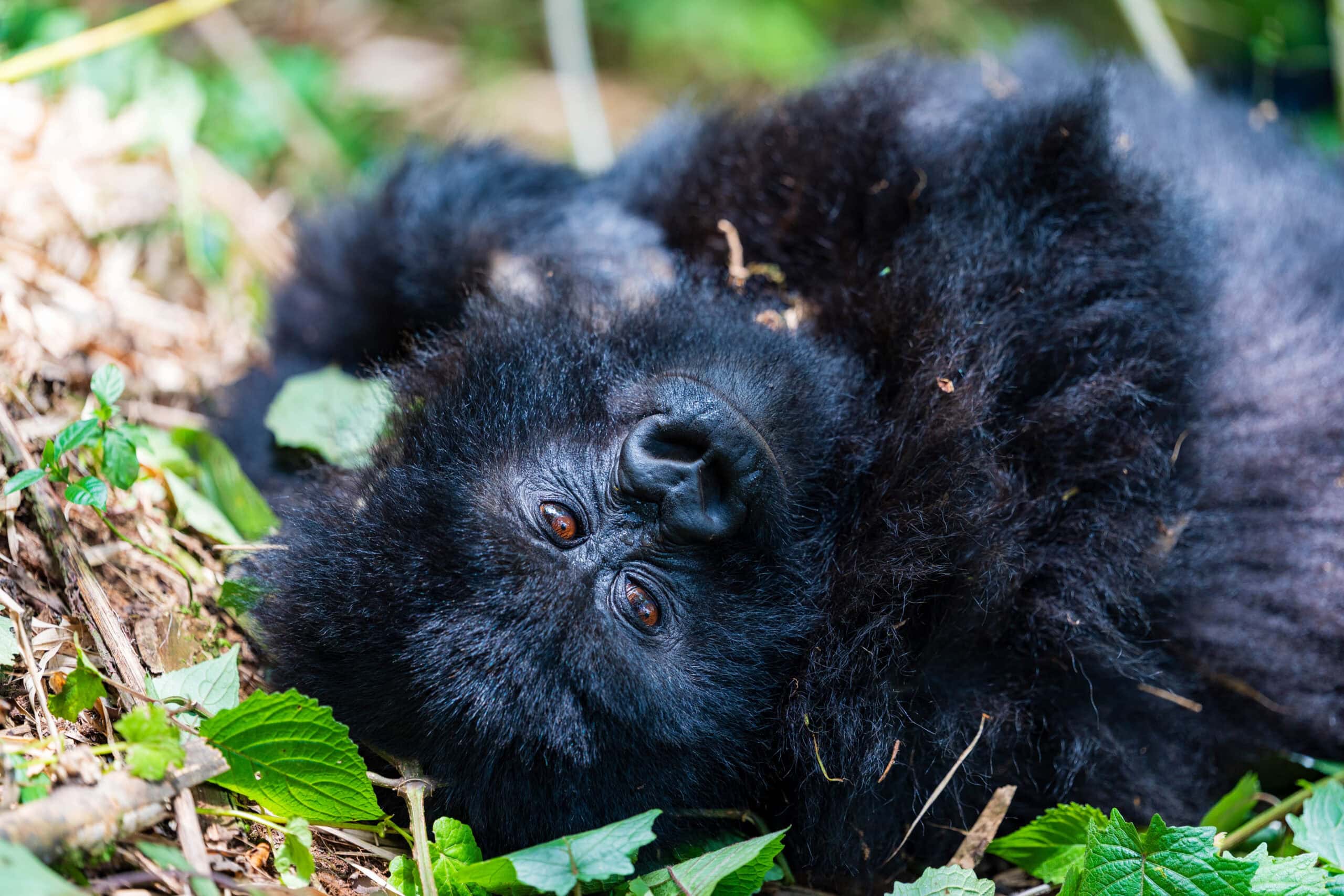
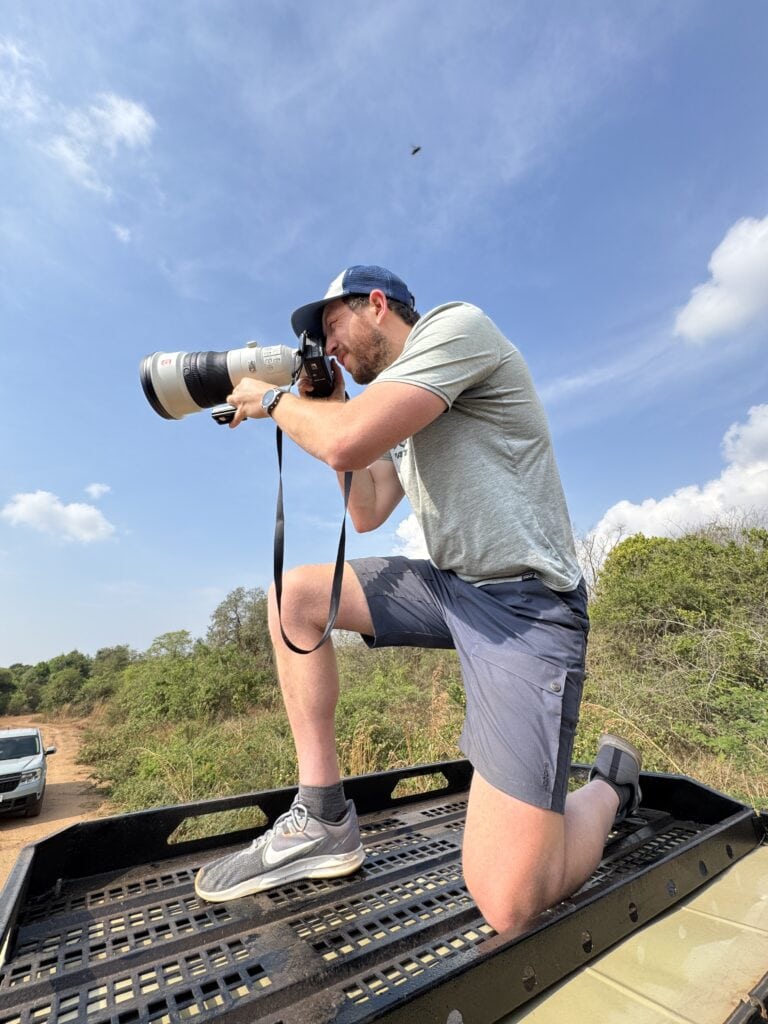
I tested the A9 III for the first time during my 2025 trip to Rwanda, including gorilla trekking, monkeys, and a safari. I’d never experienced a shutter speed system this fast, and holy smokes, it’s like being next to a machine gun!
One thing to note is that you will rack up an immense number of photos if you have it on H+… which I don’t think I ever did because who needs to take 500 pictures in 5 seconds!? The only downside to this camera is the 24MPs. It makes it harder to crop in, so you’ll want to pair this with a long lens.
Canon EOS R1
The Canon EOS R1 is Canon’s flagship professional mirrorless camera, designed for demanding genres such as wildlife, sports, and photojournalism.
With a stacked full-frame sensor, blazing-fast performance, and Canon’s most advanced autofocus system to date, the R1 is designed for photographers who need absolute reliability in unpredictable environments. Its subject recognition and tracking are among the best Canon has ever produced.
This is the camera for wildlife professionals who value speed, durability, and autofocus consistency over sheer megapixel count.
Why professionals choose it:
- Extremely fast and accurate subject tracking
- Built for harsh environments
- Excellent low-light performance
- Seamless integration with Canon RF super-telephoto lenses
Downside: Large body and premium cost.
Related Articles:
Best Camera Memory Cards
Need a new lens for wildlife photography? Here are my picks.
Best Cameras on the Market
Best Hybrid Mirrorless Camera for Wildlife Photography
Canon EOS R5 (or R5 II)

The Canon EOS R5 has become a favorite among bird and wildlife photographers, and for good reason. Its subject detection autofocus is incredibly sticky, and it tracks birds reliably even during erratic flight.
The 45MP sensor gives you plenty of room to crop when subjects are distant, while still maintaining excellent image quality. Combined with Canon’s growing RF telephoto lineup, the R5 is a powerful tool for wildlife photography. Additionally, this is one of the more affordable camera bodies on the market
Why wildlife photographers love it:
- Outstanding bird-eye autofocus
- High resolution for heavy cropping
- Excellent weather sealing
- Strong RF super-telephoto lens options

Downside: Battery life can be limiting on long shooting days.
Find it on Amazon. (21% off) Check out the Canon R5 II (11% off)
This has been my primary camera since 2022, and I still love it. It has the MPs, FPS, and video capabilities to cover everything I do. Sure, it might be beginning to fall behind with newer autofocus systems coming onto the market. But for the price point, it’s a no-brainer.
Plus, it’s not too big or heavy, which allows me to bring it on backpacking trips.
Best High-Resolution Camera for Wildlife
Sony A7R V
The Sony A7R V is designed for wildlife photographers who prioritize detail, cropping flexibility, and image quality over extreme burst speed. With a 61MP full-frame sensor and Sony’s latest AI-driven autofocus system, it’s especially well-suited for photographing distant wildlife where getting physically close isn’t an option.
While it doesn’t match the raw speed of the Sony A9 III or the all-around balance of the Sony A1, the A7R V excels in situations where resolution matters most. It performs exceptionally well for wildlife shooters who want to produce large prints or extract fine detail from heavily cropped images.

Autofocus performance is a significant improvement over previous A7R models. Subject detection and animal eye AF are far more reliable, even when shooting complex scenes like animals moving through brush or birds perched in cluttered environments.
Why it’s strong for wildlife:
- 61MP full-frame sensor for heavy cropping
- Advanced AI-based animal and bird autofocus
- Excellent dynamic range and image quality
- Strong weather sealing for outdoor shooting
Downside: Slower burst rates compared to action-focused wildlife cameras.
Find it on Amazon. (21% off)
Personal Thoughts After Using It in Alaska
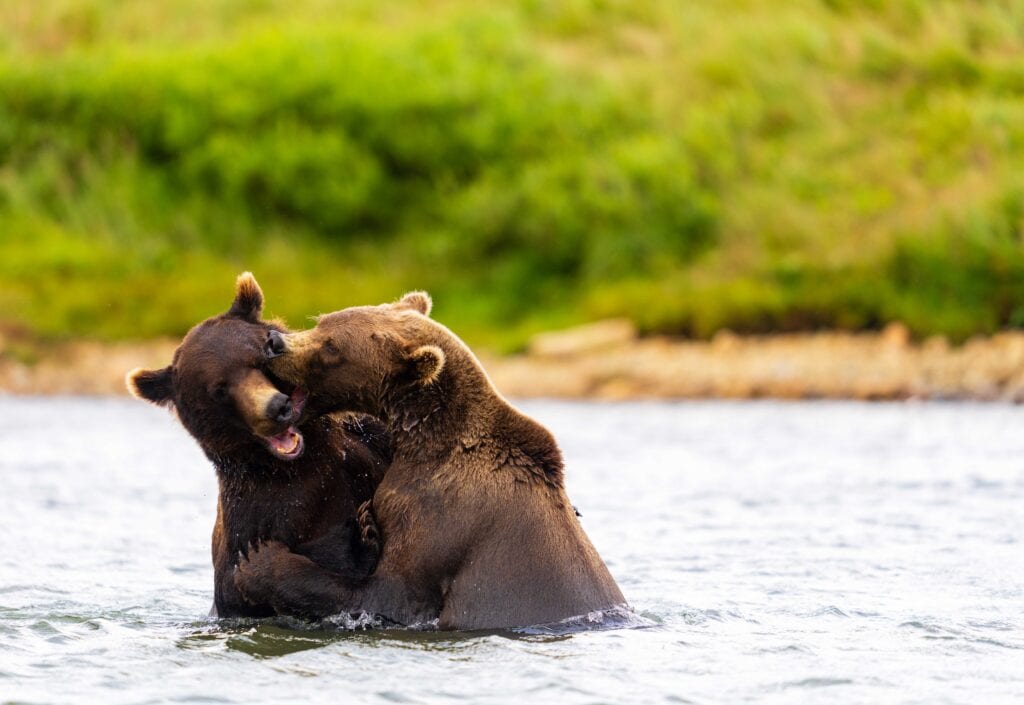
You’ll want to weigh the pros and cons of a slower shutter speed. For me, going bear watching in Katmai National Park, the bears aren’t moving too fast, so having a somewhat slower FPS wasn’t a big deal. Now, if you’re doing bird photography or some animal that moves incredibly fast, you may want to opt for a different body. Still, you can’t go wrong with 61MPs. The cropping ability is fantastic.
Best Budget-Friendly Camera for Wildlife Photos
Sony a6700
If you want excellent wildlife performance without spending full-frame money, the Sony a6700 is one of the best options available.
Its APS-C sensor gives you extra effective reach—ideal for wildlife—while still delivering fast autofocus and impressive tracking. For hikers, backpackers, and travel photographers, the smaller size and lighter weight are prominent advantages.
This camera consistently punches above its weight in wildlife situations.
Why it’s such a strong value:
- APS-C crop factor for added reach
- Fast, accurate subject tracking
- Compact, weather-resistant body
- Excellent price-to-performance ratio
Downside: Smaller sensor limits extreme low-light performance.

Best Full-Frame Wildlife Camera on a Budget
Nikon Z6 II
The Nikon Z6 II is a dependable full-frame option for wildlife photographers who value image quality and durability without needing ultra-high resolution.
While its autofocus isn’t quite as advanced as Sony’s or Canon’s flagship models’, firmware improvements have made it far more capable for wildlife photography. Nikon’s ergonomics and weather sealing also make it a solid choice for long days in the field.
Best features:
- Strong low-light performance
- Excellent build quality
- Comfortable handling with long lenses
- Increasingly strong Z-mount wildlife lenses
Downside: Autofocus tracking lags slightly behind top competitors.
Top Lightweight Mirrorless Camera for Wildlife Travel
Fujifilm X-H2S
For wildlife photographers who travel frequently or hike long distances, the Fujifilm X-H2S is an outstanding option.
Its stacked APS-C sensor allows for breakneck readout speeds and impressive burst shooting, while keeping the overall system smaller and lighter than full-frame alternatives. It’s particularly well-suited for remote trips and adventure-focused wildlife photography.
Why it shines for travel wildlife:
- Up to 40 fps electronic shutter
- Excellent subject tracking
- Smaller lenses than full-frame systems
- Reliable performance in cold and wet conditions
Downside: APS-C sensor offers less depth-of-field control than a full-frame sensor.
Excellent Entry-Level Mirrorless Camera for Wildlife
Canon EOS R7
The Canon EOS R7 is one of the best entry-to-intermediate wildlife cameras available today.
With an APS-C sensor, fast burst rates, and excellent autofocus, it offers many features found in higher-end cameras at a much more affordable price. It’s a great stepping stone for photographers getting serious about wildlife.
Why it’s ideal for beginners:
- Fast and reliable animal autofocus
- APS-C reach advantage
- Strong performance for the price
- Access to Canon RF lenses
Downside: Limited low-light performance compared to full-frame bodies.
Full-Frame vs APS-C for Wildlife Photography
Choosing between full-frame and APS-C is one of the most significant decisions wildlife photographers face. Both formats are capable—but they excel in different situations.
APS-C Cameras for Wildlife
APS-C cameras are popular among wildlife photographers who prioritize reach, portability, and affordability. The crop factor effectively extends your focal length, making distant subjects easier to frame.
APS-C advantages:
- More effective reach for distant wildlife
- Lighter bodies and lenses
- Lower system cost
- Often faster burst rates
APS-C is especially appealing for bird photography, hiking-focused shooters, and travel wildlife work.
Full-Frame Cameras for Wildlife
Full-frame cameras excel in low light and dynamic range, making them ideal for early-morning and late-evening wildlife activity.
Full-frame advantages:
- Better high-ISO performance
- Improved subject separation
- Greater dynamic range
- Better flexibility for large prints
If you shoot in challenging light or want the highest possible image quality, full-frame is the better choice.
Best Lenses for Wildlife Photography
For wildlife photography, lenses matter just as much, if not more, than the camera body.
Wild animals rarely allow close access, so long focal lengths, fast autofocus, and image stabilization are essential. An excellent wildlife lens can dramatically improve your results, even on a mid-range camera body.

Recommended Wildlife Focal Lengths
- 100–400mm – Versatile for large animals and closer encounters
- 200–600mm – Ideal for birds and distant wildlife
- 400mm / 600mm primes – Best image quality and subject isolation (Unfortunately, these are wildly expensive and cost-prohibitive for most)
Mirrorless Wildlife Camera Comparison Table
Here’s how the top wildlife cameras compare.
| Camera | Sensor | Burst Rate | Autofocus | Weight | Best For |
|---|---|---|---|---|---|
| Sony A1 | Full-frame | 30 fps | Animal & Bird Eye AF | 737g | Best overall wildlife |
| Sony A9 III | Full-frame (Global Shutter) | 120 fps | AI Animal & Bird AF | 702g | Fast action, birds |
| Canon EOS R1 | Full-frame (Stacked) | 40 fps | Advanced Subject AF | 920g | Professional wildlife |
| Sony A7R V | Full-frame | 10 fps | AI Animal & Bird AF | 723g | High-resolution wildlife |
| Canon EOS R5 | Full-frame | 20 fps | Animal Eye AF | 738g | Birds in flight |
| Fujifilm X-H2S | APS-C (Stacked) | 40 fps | Subject Detection AF | 660g | Travel wildlife |
| Sony a6700 | APS-C | 11 fps | AI Subject Tracking | 493g | Budget & hiking |
| Canon EOS R7 | APS-C | 15 fps | Animal AF | 612g | Entry-level wildlife |
| Nikon Z6 II | Full-frame | 14 fps | Hybrid AF | 705g | Value full-frame |
If you prioritize resolution for cropping, the Sony A7R V stands out, while action shooters will prefer the Sony A9 III or Canon EOS R1. That said, the best bang is the Sony A1 II, with top-tier MPs, above-average FPS, and great video capabilities.
My Choice for the Best Camera for Photographing Wildlife
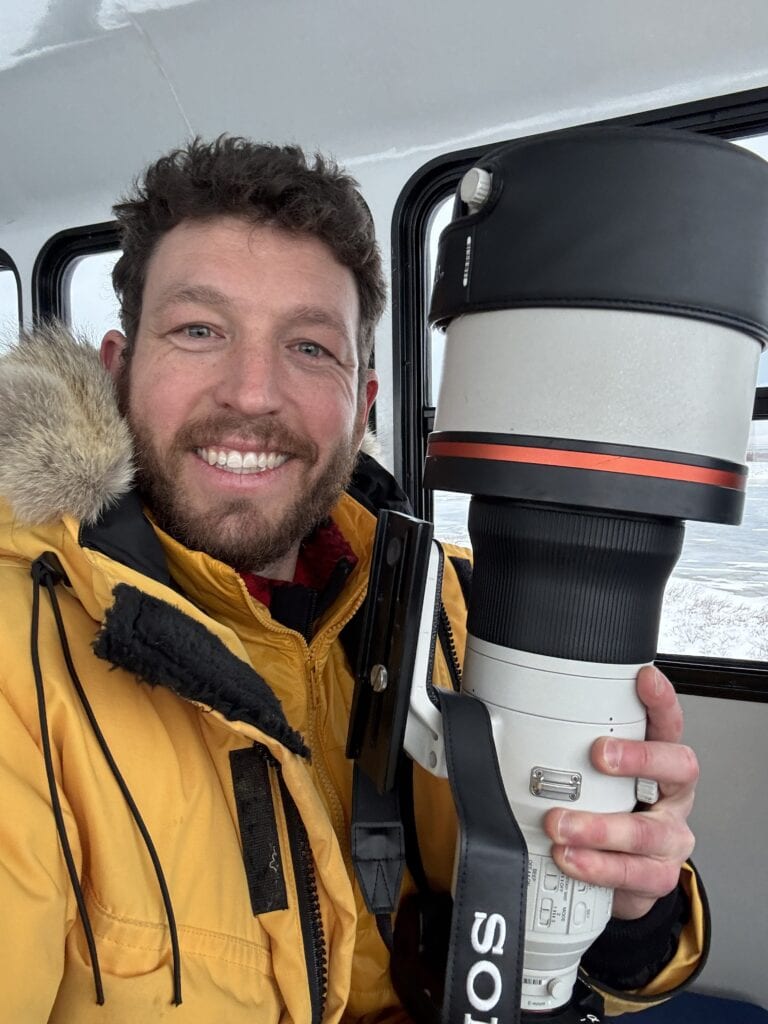
If you’re in the Canon ecosystem and want the best bang for your buck, go with the Canon R5; for those in the Sony world, the A7r4 (or A7r5 for more money). Both of these have fallen in price, now that they are a few years old. I love my R5, and it’s really helped me create wonderful photos over the years.
Still, Sony is rock solid, and you can’t go wrong with them.
My biggest piece of advice is to stick with your camera system. Going from one to another will cost A) tons of money and B) you’ll never recoup the cost of your lenses.
Final Thoughts on the Best Cameras for Wildlife Photography
In the end, the best camera for wildlife photography is the one you have. This can be your phone, an old DSLR, or a nearly $7,000 state-of-the-art camera like the A1 II. Now, obviously, if you’re looking to create the best picture, a top-of-the-line option is the way to go.
That said, most of these are not within most people’s budget – and that’s okay. You don’t NEED the best if you’re not doing this professionally. I would never suggest that anyone go into debt to fund a hobby.
What matters is that you go outside, connect with nature, and create memories that you will cherish forever. If you do that, regardless of the camera quality or type, you’ve won the game.
Until next time, adventurers, stay safe.
Follow on social media: TikTok || Instagram || Facebook || Newsletter | YouTube