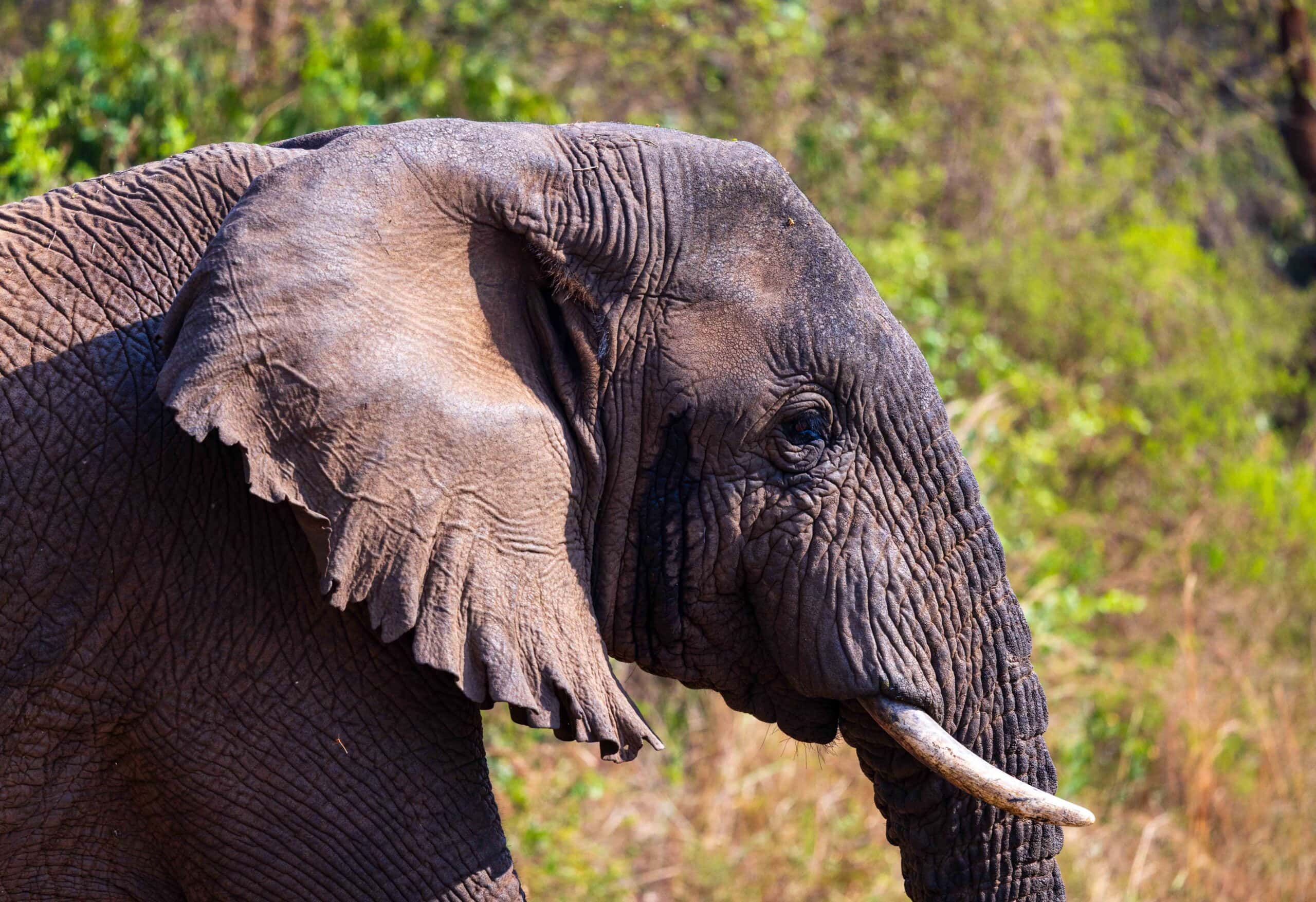
These are the Best Camera Lenses to bring on an African Safari
I recently went on my first African Safari in Rwanda’s Akagera National Park. It was a thrilling photography experience, and one that I look forward to repeating in other parts of Africa. I did a ton of research on cameras and lenses.
Below is everything I learned and experienced on our game drives. I hope this information helps you better understand the best camera lenses for an African safari.
This is one of those trips that you want to get perfect. I know I did. And I genuinely think you’ll find this really helpful!
Easy Booking: Expedia.com | Hotels.com | VRBO | Booking.com | Airbnb.com
Need Gear: Find Gear at REI
Find Awesome Tours: Viator.com or GetYourGuide.com
First time here? Stay in touch by following on IG: @Alecoutside and my newsletter
Iceland on your bucket list? Get my Iceland guide + 144 pinned locations on Google Maps
Please stay safe out there and follow Leave No Trace principles as best you can.
Ranking the best lenses to bring on an African Safari
1. Sony, Canon, or Nikon 400mm f/2.8

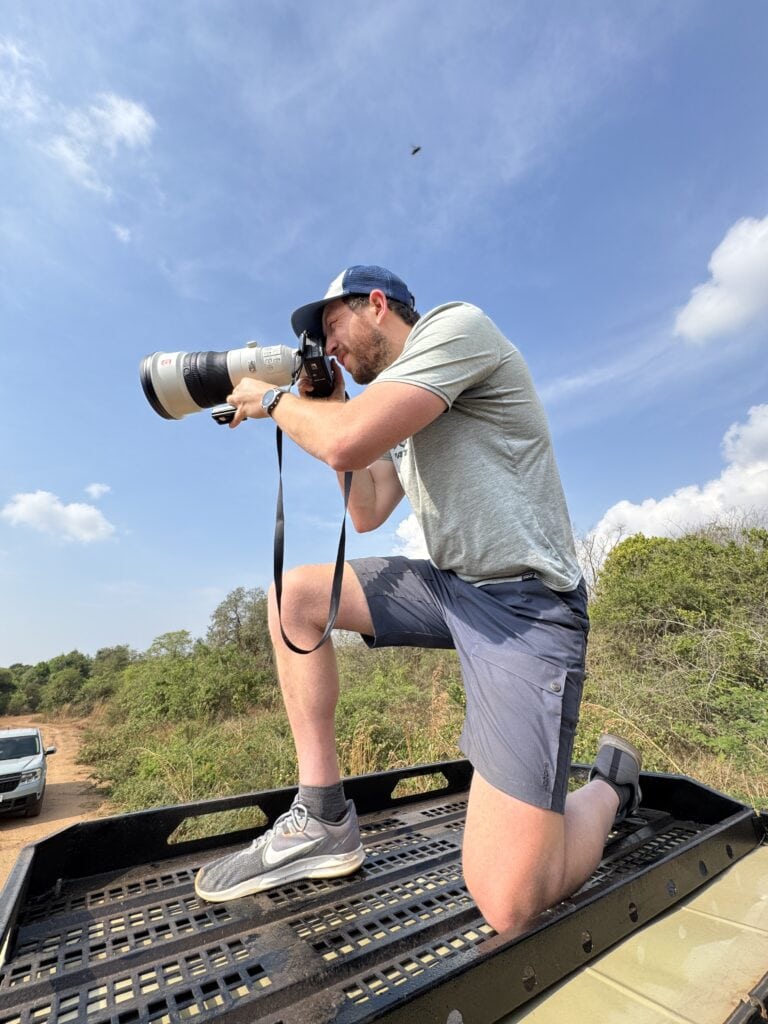
A 400mm f/2.8 is a powerhouse for wildlife photography and my choice for the best camera lens for an African safari. The fast aperture lets in plenty of light, making it excellent for early morning and late evening when animals are most active. Its shallow depth of field beautifully isolates subjects from busy backgrounds, producing creamy bokeh.
However, this lens is heavy, expensive, and best suited for photographers who plan to shoot primarily distant or elusive wildlife. Expect prices to range from $10,000 to $13,000, depending on the brand and generation.
Why I chose this one: When it comes to flying to Africa, I had to find a way to minimize the number of bags and gear. With the Sony 400mm f/2.8, I was able to get it into my camera bag, freeing up another carry-on for other accessories and clothes in case my bag got lost. (Almost did.)
The 400 is an INCREDIBLE lens, and after using it in Alaska in 2024, I wanted to bring it to Rwanda. The images are so sharp; the low-light capabilities make it my go-to for being in the forest or mornings on a game drive.
2. Sony, Canon, or Nikon 600mm f/4
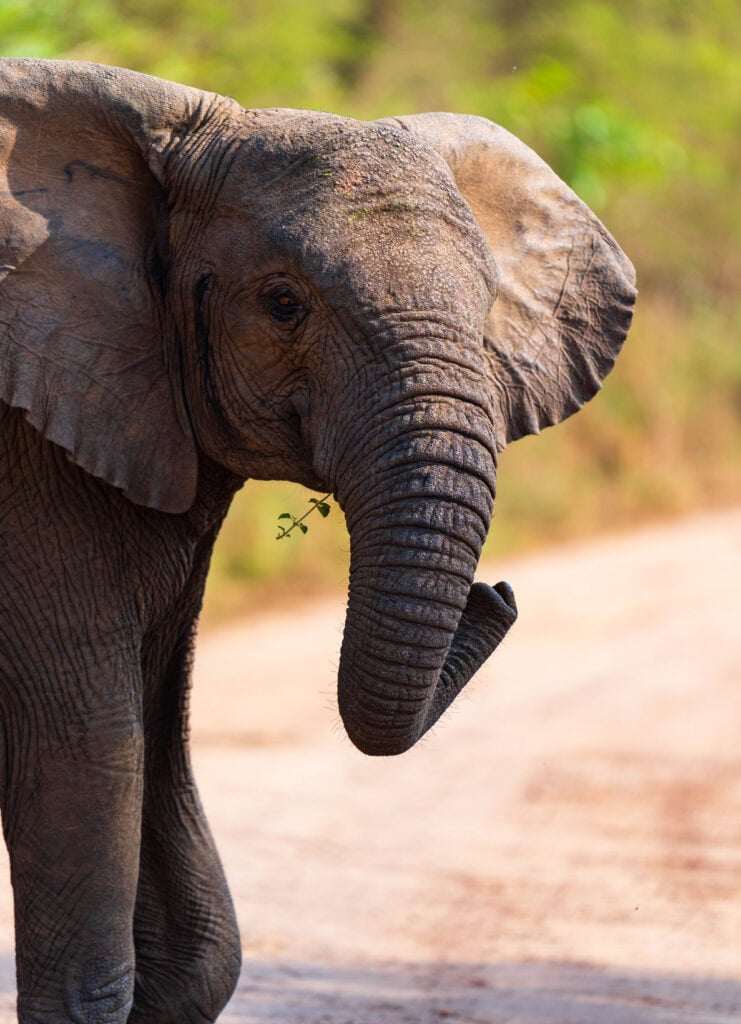
The 600mm f/4 is the ultimate long-reach lens for safari work. It allows you to capture far-off animals, birds, and small details without disturbing the scene. Its large aperture helps maintain fast shutter speeds in low light, though it comes with significant size, weight, and cost.
Many professional wildlife photographers rely on this focal length when photographing in open savannas. These typically cost $11,000 to $14,000 new.
Get it for Canon.
Get it for Sony.
Get it for Nikon.
My two cents: The sheer size of this was why I went with the 400. But one day, I look forward to testing out the 600mm prime lens. I’ve seen friends use it, and my gosh, the pictures are to die for. If you’re going to do more daytime safaris, going with this would be perfect, as the f/4 won’t limit you. However, there is no doubt that this is among the top-tier camera lenses for an African safari.
RELATED: The Best Mirrorless Cameras on the Market
3. Canon 100-500 f/4.5-7.1
A 100–500mm zoom lens provides tremendous versatility for a safari. It covers everything from animals near the vehicle to those grazing in the distance, all without requiring a lens change. The variable aperture means it’s not the strongest performer in dim light, but it’s much lighter and more portable than big primes.
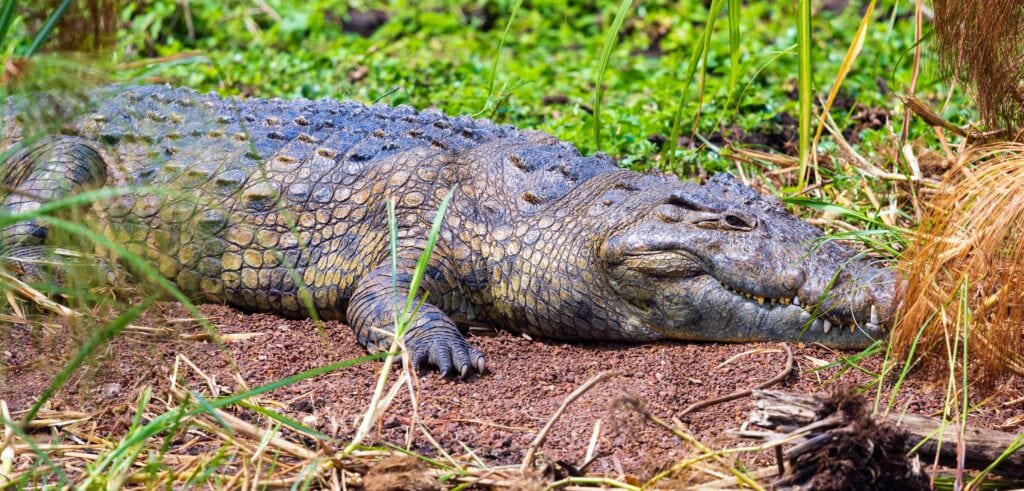
These lenses typically cost around $2,700 to $3,000, offering an outstanding balance of reach, flexibility, and image quality.
Get this Canon telephoto lens.
Why I chose this one: This is one of two on this list that I actually own. It’s a fantastic lens, granted, I’m a bit annoyed the aperture goes down to 7.1. However, for midday safaris, this lens is a real standout. I really enjoy the wide focal range, and getting up close at 500 is awesome.
When elephants walked in front of us on our game drive, they were too close for the 400. I quickly swapped to the R5+100-500 and nailed some really cool shots.
4. Sony, Canon, or Nikon 100-400
The 100–400mm zoom is one of the most popular safari lenses thanks to its balance between size, reach, and price. It’s sharp, reasonably compact, and can capture everything from close-up portraits to far-off wildlife.
While you might sometimes wish for a bit more reach, this lens is extremely practical and easier to handle than bulkier options. Expect to spend roughly $1,200 to $2,800.
Get it for Canon.
Get it for Sony.
Get it for Nikon.
Get it for Tamrom.
Get it for Sigma.
My two cents: All the brands make this lens, but the new RF lenses for Canon have moved to the 100-500 above. I think the 100-400 is a perfect lens if it is in your budget range. The apertures for most of these are only f/5.6, giving you a lot more low-light opportunities. (And don’t be afraid to bump the ISO when you need to.)
5. Sigma or Tamron 150-600 5-6.3
The 150–600mm zoom offers excellent reach at a relatively affordable price. It’s a favorite for travelers who want to photograph distant wildlife without carrying a massive, expensive prime.
The slower aperture limits low-light performance, but under bright safari skies, it performs beautifully. Prices generally range between $1,000 to $1,500, depending on construction and weather sealing.
Get this from Tamron (Canon)
Get this from Sigma (Sony) (Canon)
My two cents: The Tamron version was my first telephoto lens, and it’s legitimately a superb lens! The only reason I got a new one was that the autofocus was inconsistent between 350-500 after a few years, and I couldn’t risk not getting good shots on my Katmai bear trip in 2024.
This is a fantastic, budget-conscious camera lens that would work amazingly for an African Safari.
6. Sony 200-600
This is another super-telephoto zoom lens built for wildlife photography. The 200–600mm gives you even more reach on the long end, ideal for safaris where animals tend to keep their distance.
It’s a bit heavier than the 150–600mm but often offers better build quality and consistent sharpness across the range. Most models fall between $2,300 – $2,500.
My two cents: Similar to the above, this Sony lens would be great if you’re not looking to rent a prime lens or you don’t have five figures to spend on your own. I have friends who own this, and they love it. It has the reach to get close-up shots, and I’m sure you will be stoked with all your images.
7. Sony or Canon 300mm 2.8
A 300mm f/2.8 is an excellent mid-range prime that offers beautiful image quality and strong subject separation. It’s great when animals are a bit closer or when you want to add a teleconverter for more reach.
It’s also easier to handhold than the longer, heavier 400mm or 600mm lenses. Expect a price around $7,000 for modern versions.
Get this Sony lens on Amazon
Get a Canon EF Version on Amazon
My two cents: Not cheap by any standards, but it’s much less expensive than the 400 prime. You could combine this with a 2x converter to extend your length. However, this is a much easier lens to travel with and will still yield exceptional shots. The 2.8 aperture is excellent if you’re going to have low-light opportunities or want that sweet, sweet bokeh.

8. Canon 100-300 f/2.8
A 100–300mm zoom is perfect for scenes where wildlife is nearby or for capturing the environment around the animals. It’s smaller, lighter, and easier to manage than longer lenses, making it a wise choice for handheld shooting from safari vehicles.
While you’ll lose some reach, the trade-off in portability is worth it for many travelers. These typically cost $10,500.
My two cents: Versatility is king here, but you’ll pay a pretty penny for it. With a 2.8 aperture throughout, this lens is expensive, but it’s also a dream lens for a safari. If you pair this with a high megapixel camera, allowing you to crop in, it might be the only one you need for your trip.
It’s hard to argue that this isn’t one of the best camera lenses for an African safari.
9. Sony, Canon, or Nikon 70-200 f/2.8 (+ a 2x converter)
This is one of the most versatile lenses in photography and an excellent companion on safari. The wide f/2.8 aperture performs well in low light, providing beautifully blurred backgrounds for animal portraits.
It’s advantageous for larger animals that approach the vehicle or for people and camp-life shots. Prices range from $2,000 to $2,800, depending on build quality and stabilization features.
All the major brands have this. Find it on Amazon or Adorama.
My two cents: This is one of my MOST FAVORITE lenses for photography. For photographing an African Safari, this would be in contention for a backup lens. What you could do is put a 2x converter on yours, and you’ll be in good shape. This is probably the most cost-efficient way to do things.

10. Tamron 50-400
A 50–400mm lens offers incredible flexibility, covering everything from wide environmental shots to distant wildlife, all in one body. It’s a true “do-it-all” safari lens, though with some compromises in sharpness and low-light capability at longer focal lengths.
Its convenience makes it popular for those who don’t want to swap lenses in dusty conditions. Expect prices around $1,300.
My two cents: I have no experience with this lens, but I wanted to suggest one that is a bit unconventional, yet falls within a much more budget-friendly range than others. While you sacrifice low-light capabilities, you gain a remarkably wide focal range. So, if you’re looking for a quality lens for an African safari without breaking the bank, this is one to consider.
Side note: Canon offers an 800mm and a 1200mm lens. These cost $19,000 and $22,000, respectively. I’m sure these would be amazing for a safari, but they are just not within most people’s price range for purchase, and they are also not easy to transport.
If that’s you, go for it. (Use my affiliate link, please!)
And yes, I know a couple of these on here are $13,000 lenses. But another 40% markup or more seems a bit unrealistic to include here.
Learn what memory cards you need for your safari.
Photography Accessories for an African Safari
Dust Blower
As you are surely aware, photographing African safaris can be quite dusty. Make sure you have your dust blower easily accessible. It’ll make things better. I tended to use my blower after every animal sighting while driving to the next spot. This kept my lens clean and ready to go.
Lens Cloth
Use your blower first, as using the lens cloth to rub sand on your lens can cause scratches. It’s just a good one ot have if you can seem to get dust off.
Canon Adapter – EF to RF
Just because you buy a mirrorless camera doesn’t mean you need to go out and buy all new lenses. Just get this Canon adapter. I’ve had it since 2022, and it’s fantastic! Never had an issue and all my images are super clean when using my 16-35 or 70-200.
1.4x or 2x Camera Extenders
Need a bit more oomph, but you don’t want to spend $3,000 on a new lens? Just get a 1.4x or 2x extender to get more reach. One thing to know is that they decrease your aperture. A 2x converter takes a f/2.8 and turns it into f/5.6.
Canon 1.4x and 2x (Canon EF 2x Extender for non-mirrorless cameras)
Sony 1.4x and 2x
Nikon 1.4x and 2x
Extra Batteries
Never, ever go photographing on an African safari without at least 2-3 extra batteries. It might be overkill, but it’s better to have more batteries rather than too few. You don’t want your best camera lens for an African safari to be inoperable!
Covering to protect from dust or rain
Thankfully, I didn’t have any rain issues in Rwanda, but I did use this for bear watching in Alaska, and it worked exceptionally well with a 400mm lens. Simply pull the plastic or cover over, and, boom, you’re done!
The right outlet adapter for your African safari country
This is important for charging everything. Please do your due diligence when researching, because when I went to Ireland, I brought the wrong one. Thankfully, the one I bought for that trip ended up working for Rwanda.

Things to know about photographing on an African Safari
If you have two camera bodies, bring them
This is the most important tip. Bring two bodies with at least one variable zoom lens. I had a Sony A9 III + a 400mm, and then I had my Canon R5 + 100-500.
The 400mm prime is the best camera lens for an African safari, but there were times when the animals were much closer. Being able to switch to the 100-500 effortlessly meant I didn’t miss any shots. I honestly think this is the perfect combination.
Another possible one would be to have a 70-200 (or 100-300) on another body. This will cover all focal lengths you’ll be worried about.
Make your shutter speed double your focal length
To decrease blur, I recommend setting your shutter speed to at least twice your focal length. For example, if you’re photographing at 400mm, you’ll want your shutter speed to be 1/800th of a second.
This is a general rule of thumb, but it helps. I promise!
Brushy vs Open makes a big difference
On the photography side, shooting a wide open area like the Serengeti or Masai Mara is way easier (at least to spot things) than what I experienced in Rwanda.
Akagera National Park is hilly and brushy, making it harder to spot and photograph animals. I had trouble with giraffes hiding behind trees, and zebras and rhinos being incredibly challenging to see. (Well, we didn’t even see a rhino, probably for this reason!)
Don’t change lenses on the safari
After reading people’s reviews of their African safari photography experiences, I was prepared for extremely high dust levels. Luckily, ours wasn’t too bad. (I’m curious if this was because our car was enclosed.)
But the main thing many people said is never to change your lenses, or else you’ll have dust inside your camera. I think this is a great tip. So, come prepared with your best African safari lenses ready to go.

Push for early mornings and evening safaris
Our Rwanda trip wasn’t a photography tour, so I didn’t have much influence. However, if you do, try to get into the park as early as possible, and also consider booking a sunset trip. Animals tend to be most active early in the day and later at night when temperatures are not at their peaks.
Additionally, this will provide you with nice light, offering opportunities to experiment with shadows and other natural elements.
Small tripods >> big tripod
For this one, it depends on the type of vehicle you’re in. For our Rwandan safari, we were in an enclosed Land Cruiser with a top that lifted up. So, we could stand up and photograph unobstructed. But we couldn’t shoot too well through the windows.
Because of this, having a tripod for video or stability didn’t make much sense.
What could have worked is if you had a smaller tripod and could put it on the top of the car and use it for video, that way.
If you aren’t planning to do much video, then leave the tripod at home.
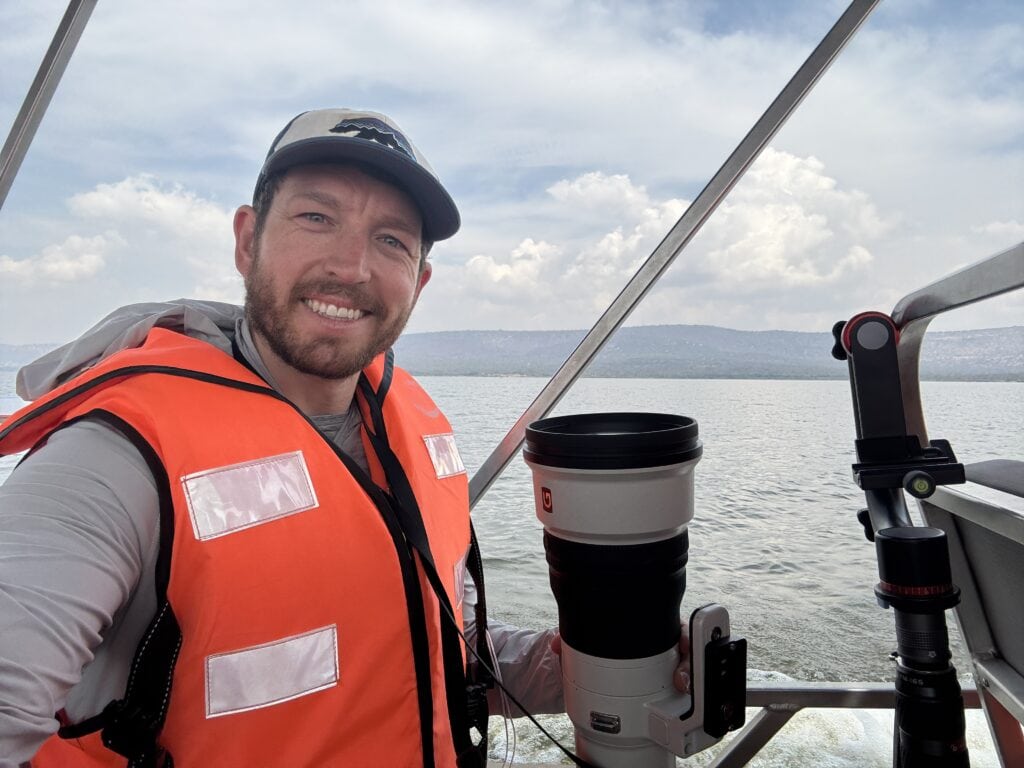
Side note: I did use a monopod on our boat cruise around Akagera National Park. That was nice to help with video stability.
Final thoughts on the best camera lens to bring on an African Safari
If money is no object, you’ll want to go with a 400mm prime or a 600mm prime. These are the two best camera lenses on the market for an African Safari. (And don’t forget about renting them.)
But you are limited, I would think long and hard about the Canon 100-500 or any of the 100-400 options. You’ll have great photo opportunities, and tossing on an extender would get you even closer!
Until next time, adventurers, stay safe.
Follow on social media: TikTok || Instagram || Facebook || Newsletter | YouTube