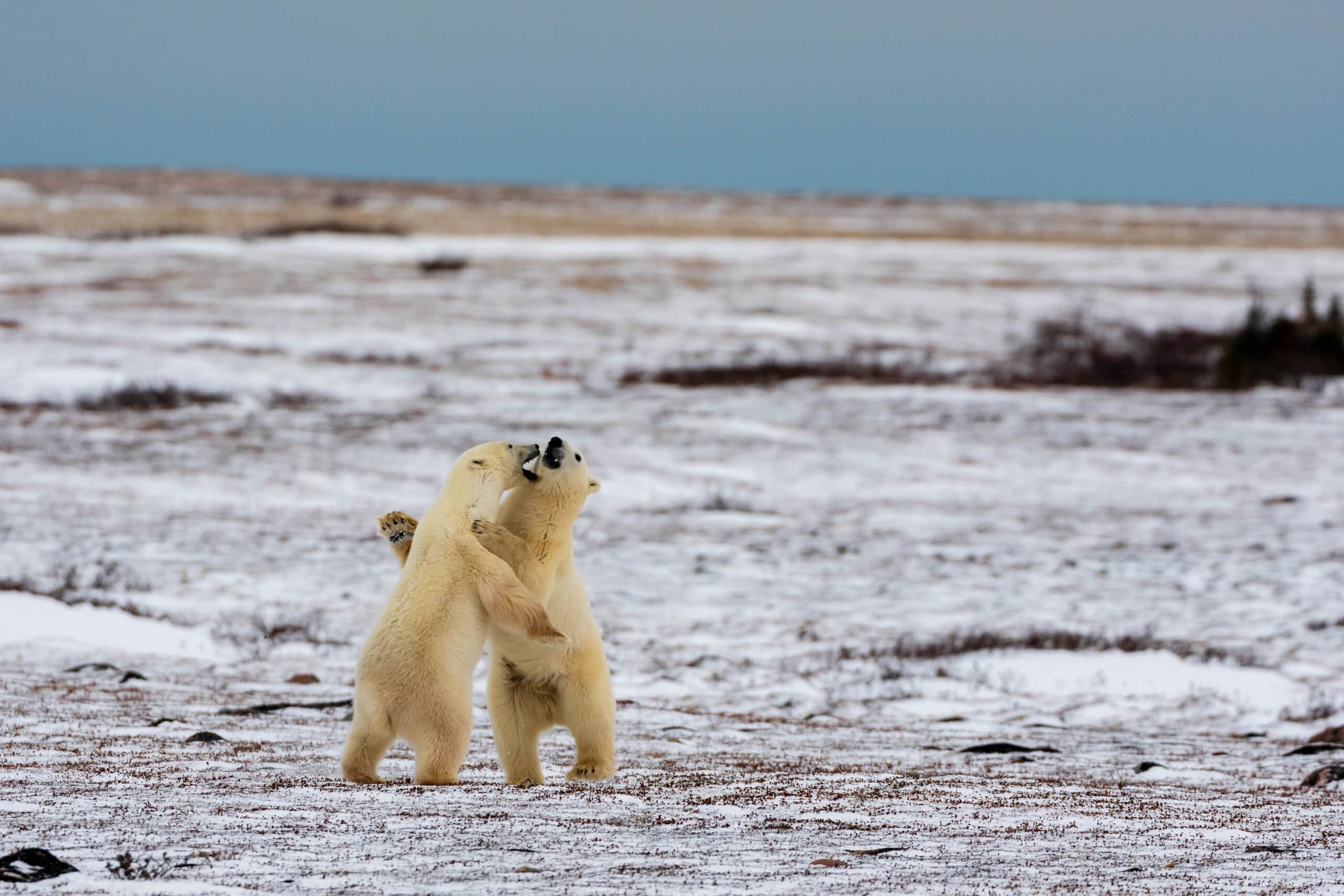
Ultimate Guide to Photographing Polar Bears in Churchill
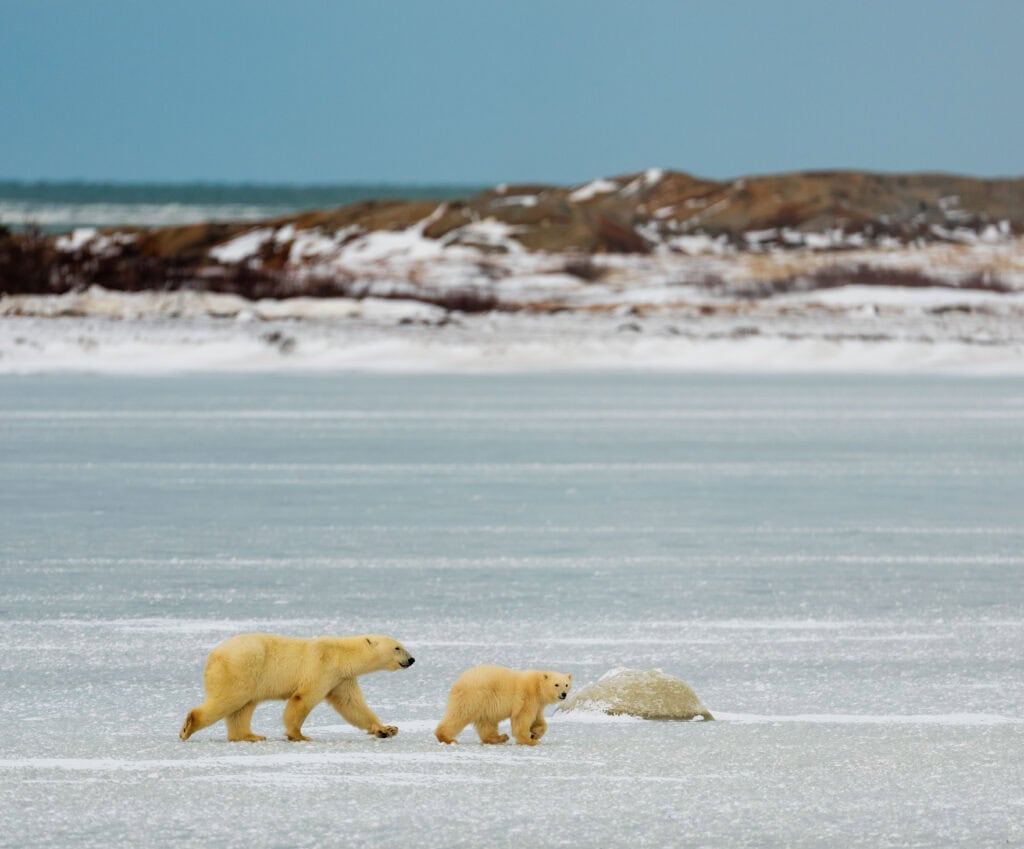
As we rolled through the tundra, I saw them in the distance. It was a polar bear mom and a cub walking on ice. Mom’s head was on a swivel, though, as a male soon popped up at the far edge of the ice, behind her. Almost at the same time, another male was headed toward her on the ice 25 yards away.
Never in my wildest dreams did I think I’d get to see polar bears in the wild with my own two eyes, let alone photograph them professionally. While it was a quick trip to Churchill to photograph polar bears, it was mesmerizing and incredible.
Truly a bucket list moment if there is such a thing.
Best Time of Year to Photograph Polar Bears
Why October/November in Churchill is so great to see polar bears
This isn’t just happenstance.
Polar Bears congregate in Churchill because it is one of the earliest places in the area where sea ice begins to freeze. (This is due to freshwater rivers flowing into Hudson Bay. And freshwater has a higher freezing point than salt water.) This gets polar bears off land and onto the ice sooner, allowing them to start eating again after a four- to five-month seal fast.
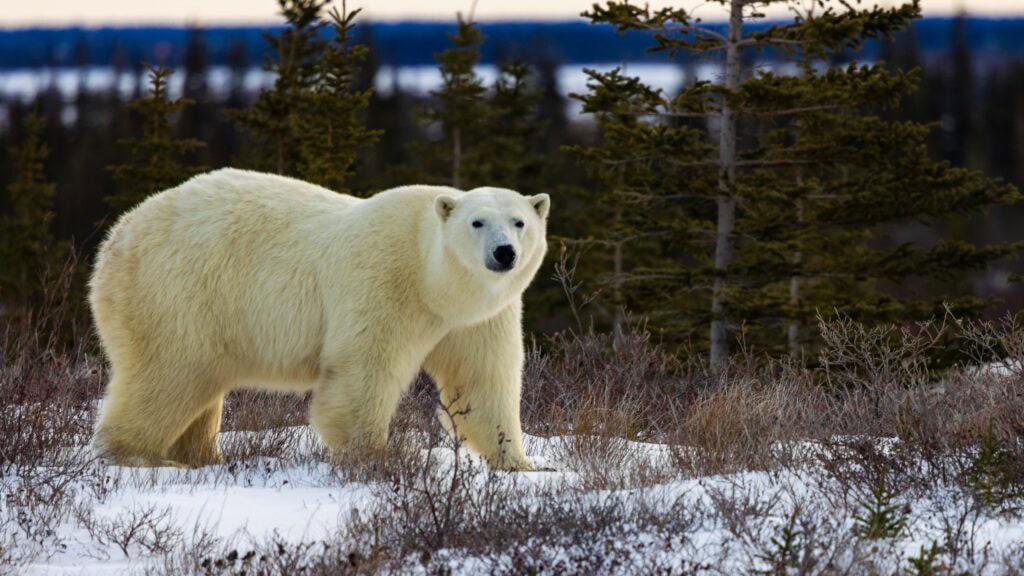
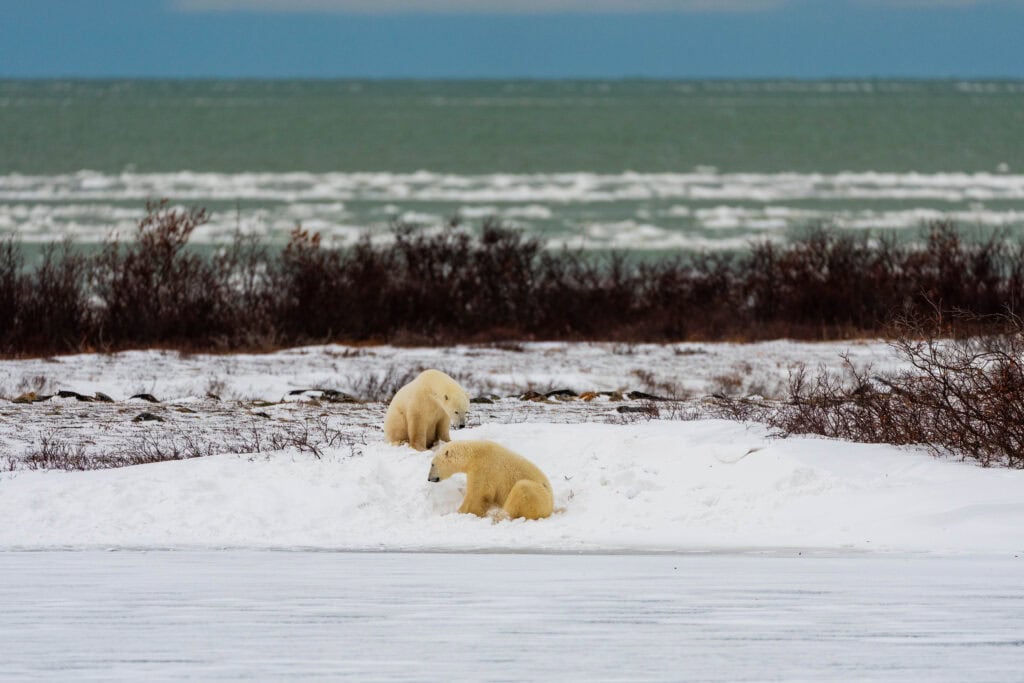
The best time to see polar bears in Churchill is from mid-October through mid-November. The peak is often at the end of October through the beginning of November.
However, it can always vary. A cold fall can contribute to faster sea ice buildup.
And vice versa.
A warmer fall, as they’ve been having thanks to a changing climate, means slower sea ice buildup. The longer the polar bears stay on land, the more at risk they are for malnutrition.
But once the sea ice forms, the bears are gone almost overnight. That doesn’t mean there won’t be any bears. It just means they’re not all bunched up at the same time, and your polar bear viewing will be less numerous.
Potential Off-Season Polar Bear Opportunities
One potential way to see polar bears without the excessive crowds and high prices is in early summer, when the sea ice melts and polar bears come to shore. This, though, is less of an exact science, and they could arrive sporadically in Hudson Bay.
Summer is Beluga Whale season, but if you want to try your luck, mid-June could offer decent polar bear photography opportunities without chilly conditions and with smaller, younger cubs.
Check out some of my polar bear photos on Instagram.
Essential Things To Know About Photographing Polar Bears in the Wild
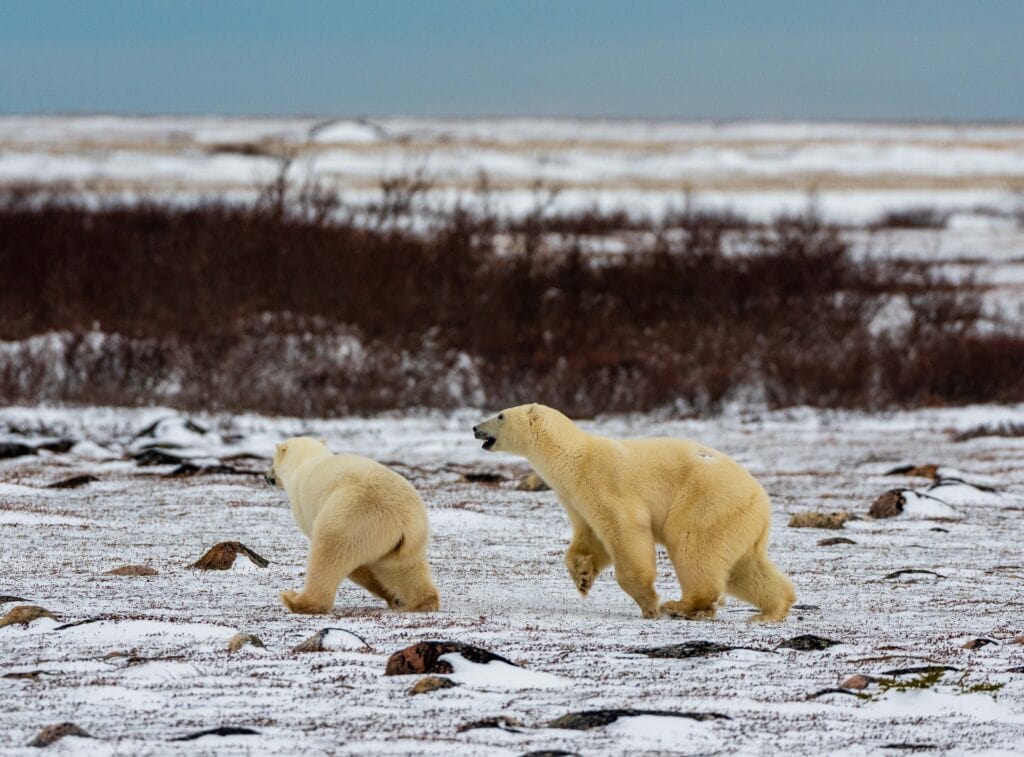
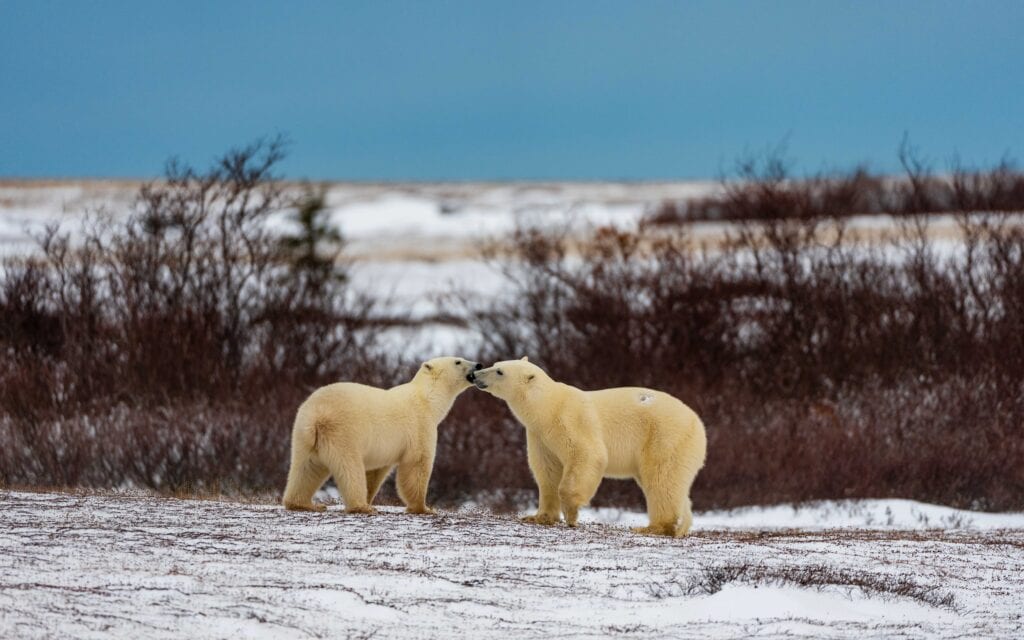
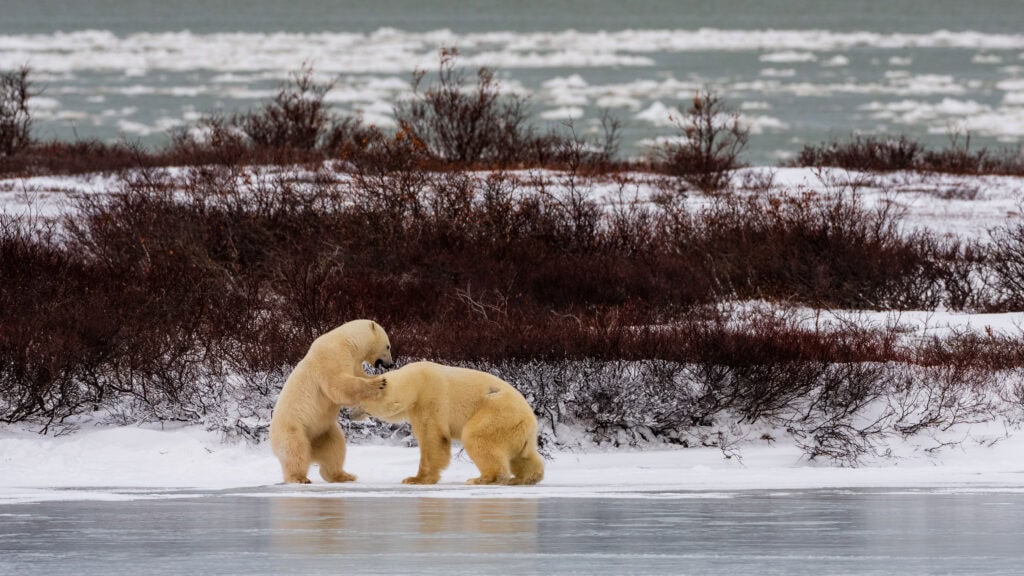
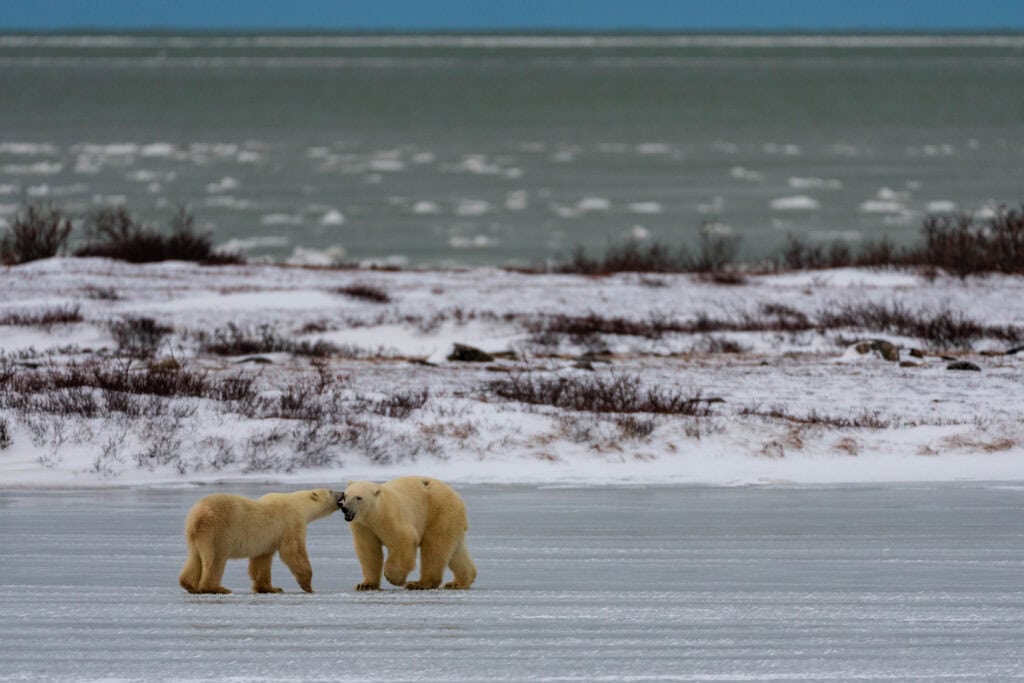
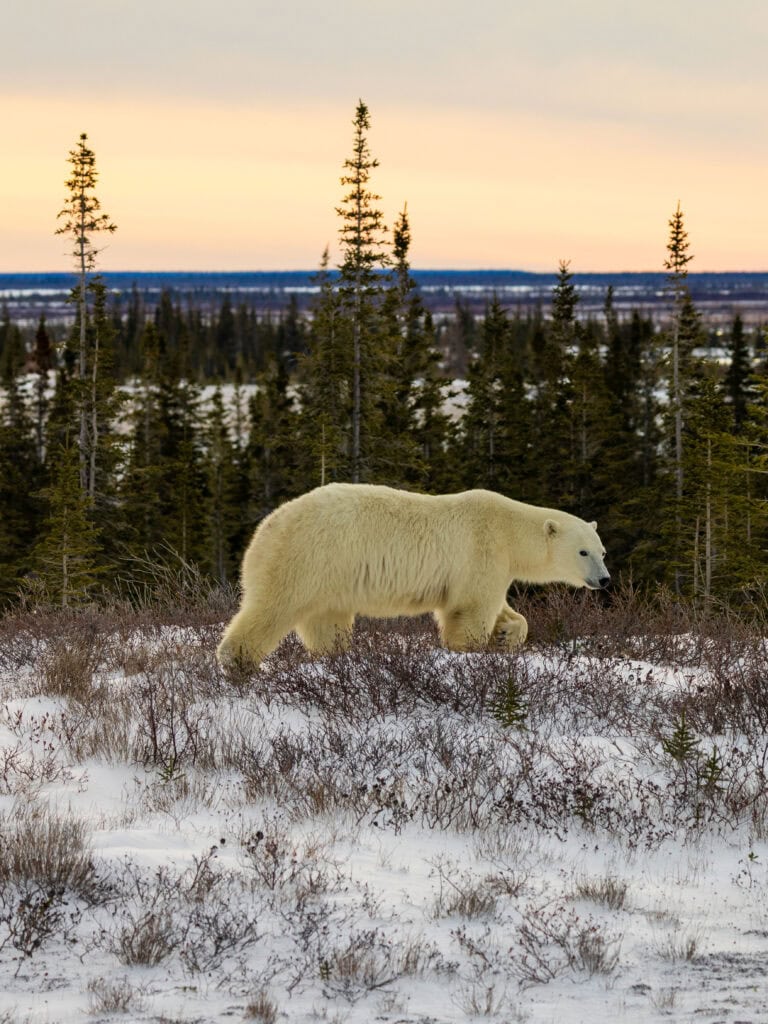
Most tours do not allow you to set foot on the ground
If you go with any of the leading tour companies in Churchill that use buggies on the tundra, you are not allowed outside of the buggy. This means every photo you take will be looking down (or out) at the bears.
Unfortunately, you won’t be able to get a low perspective of a bear walking toward you.
On the flip side, you will be alive and have the chance to tell people about your trip afterwards!
If you book a photo tour that is on the ground..
If you do a photo tour where you are allowed to walk, you have a better ability with composition. Here are a few tips:
- Get low, even lie on the ground. This shifts the view perspective out of the ordinary.
- Use rocks or bushes to frame the polar bears as you photograph them
- Find a safe way to get them to walk directly toward you. This creates an incredible photograph
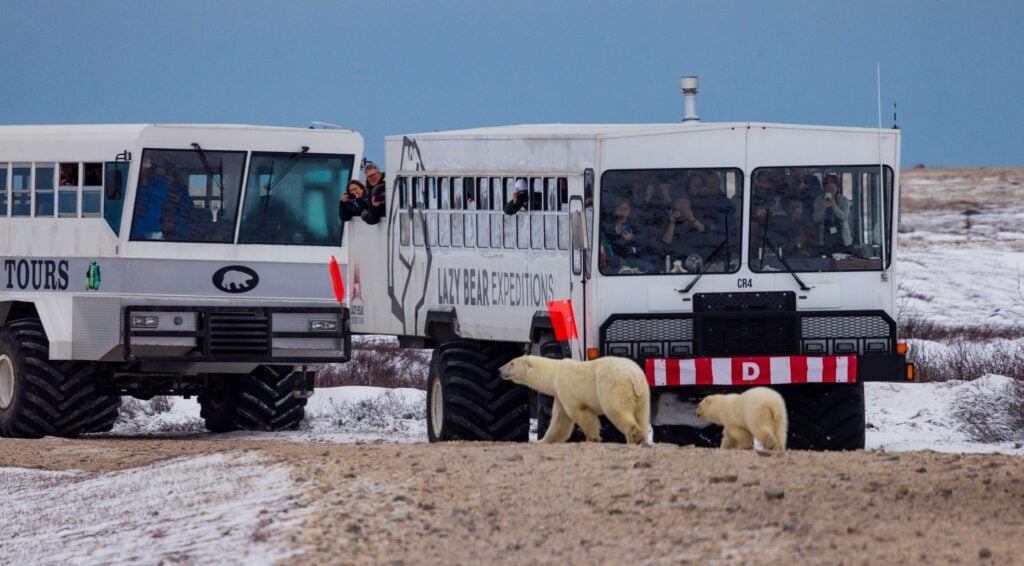
How close will you get to the bears?
The general rule in Churchill is that engines must be off at 100 meters (300 feet). Whatever happens after that is up to the bears.
For a lot of our tour, the bears were pretty far off. After a while, a mom and cub walked right in front of the buggy in front of us. Those guys got a SHOW!
Later on, another polar bear duo went up and sniffed the tundra buggy tires, with a final solo bear walking in front of us to close out the day.
Easy Booking: Expedia.com | Hotels.com | VRBO | Booking.com | Airbnb.com
Need Gear: Find Gear at REI
Find Awesome Tours: Viator.com or GetYourGuide.com
First time here? Stay in touch by following on IG: @Alecoutside and my newsletter
Iceland on your bucket list? Get my Iceland guide + 144 pinned locations on Google Maps
Please stay safe out there and follow Leave No Trace principles as best you can.
You could stay in one place for hours.
Every tour is different, so this isn’t a rule of thumb. But because we had so many bears around us (5-7), our buggy and everyone else’s stayed in the same area for 3-4 hours. This is neither good nor bad.
But I may have liked to explore a bit more and try to find different bears.
Be prepared for cold and wind
It’s generally always going to be cold when you visit Churchill in the fall. What you never know is how windy it’ll be. And it was windy. We had 15-25mph winds with even stronger gusts. It brought the ~30F temperatures down into the teens when factoring in wind chill.
Where can you see polar bears in Churchill?
Quite literally anywhere. While the community does its best to keep polar bears out of the town, no effort is foolproof. So, while less likely, there is a chance to see one in town.
The best place you’ll see polar bears is out on the tundra away from town. However, we saw a mom and cub as we were driving along the main road. That’s not uncommon. It just doesn’t have the large numbers farther out along the coastline.
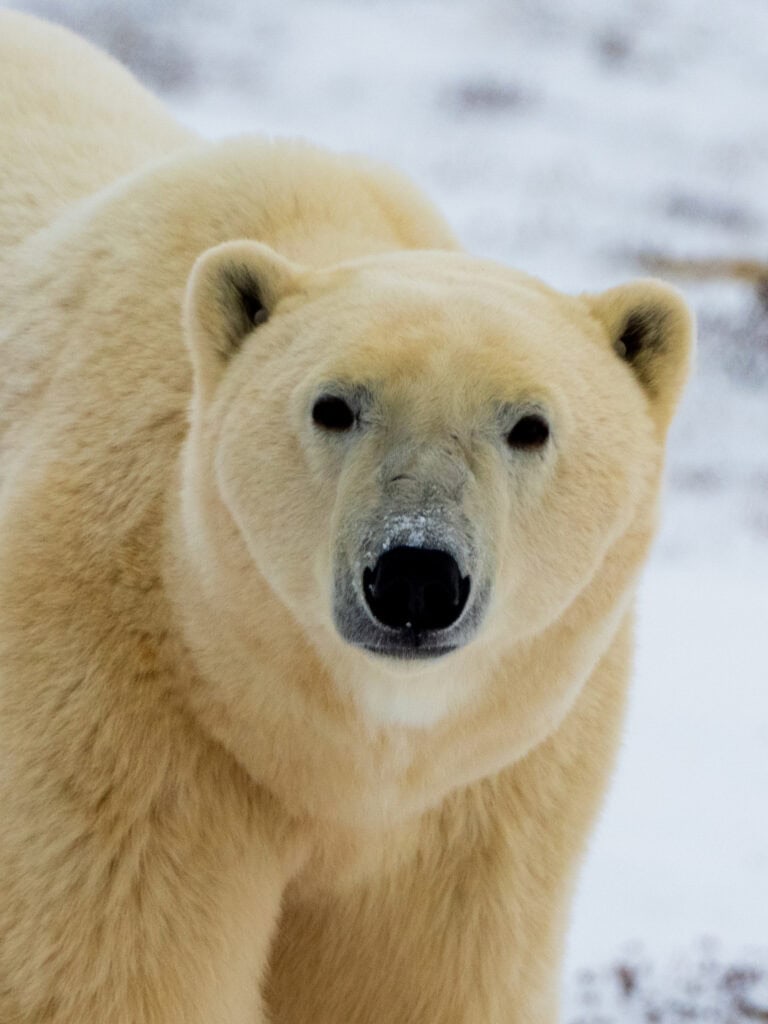
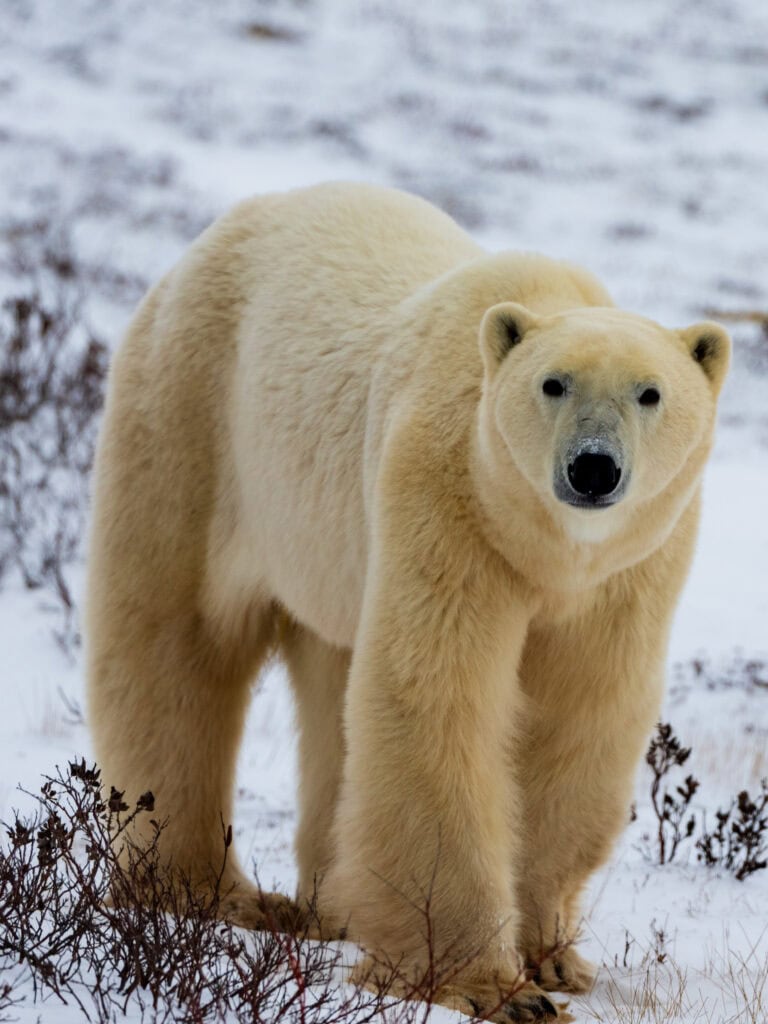
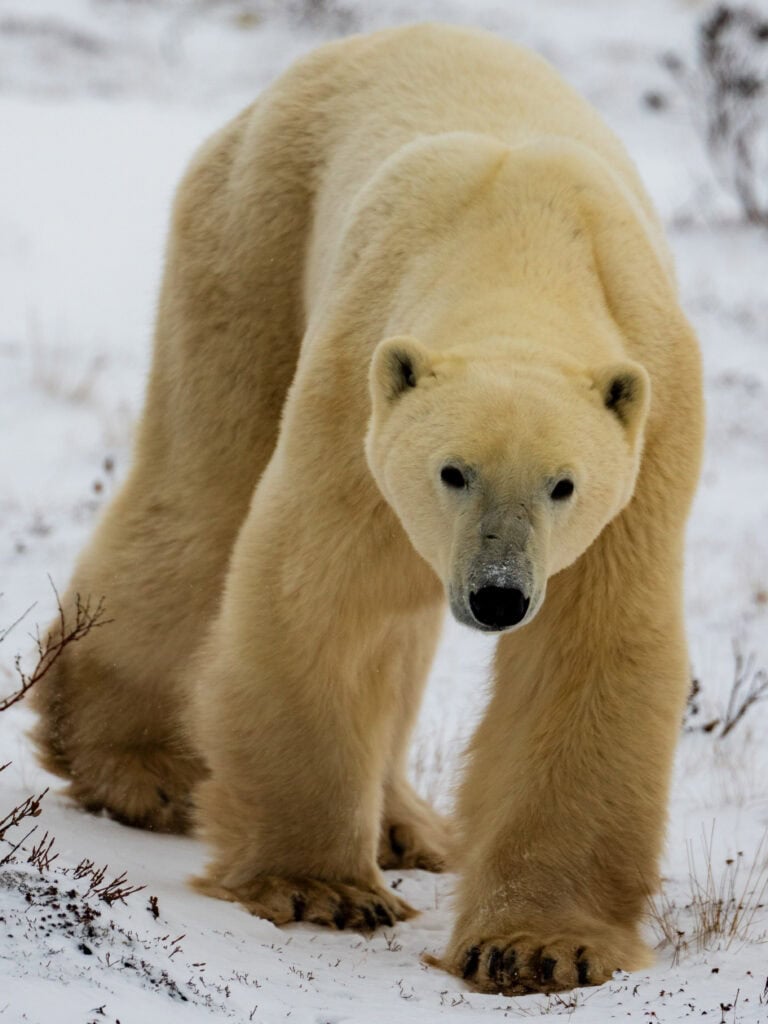
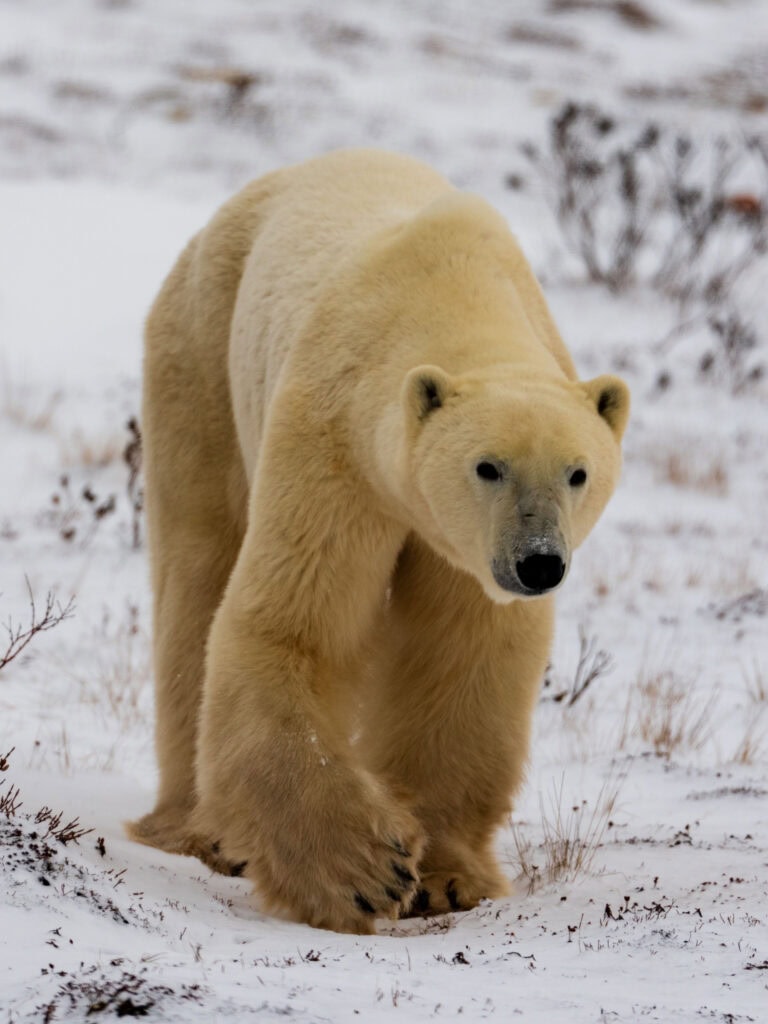
Camera Settings for Polar Bear Photography
As always, weather, light, and bears will determine your camera settings. Also, your camera and lens will determine your camera settings, haha!
I photographed polar bears with a Sony A1 II and a 600mm f/4.
I set my camera to High or High+ (20 or 30 frames per second), AF-C, and Manual mode. My camera settings fluctuated depending on how cloudy it was. It was overcast, but not dark. Lastly, I was using a tripod, which helped with stability.
The settings I’d recommend you start with and go from there.
- Shutter speed: 1/1,200 – 1/1,600 (if polar bears were moving, I tried to bump up.
- Aperature: f/4 – f/5.6
- ISO: 250-320
If you do not have a prime lens like I did, your aperture is likely in the 5.6-7.1 range. In this case, I would increase your ISO to 500+ and keep your shutter speed at 1/1,000 or higher. It’s better to have a clear image with slightly higher ISO than a blurry image with no grain.
Remember, you can always edit grain in post. You can’t do anything to a blurry photo.
Need SD Cards? See my favorites.
Best Cameras and Lenses For Polar Bear Photos in Churchill
Let’s dive into what lenses you should bring to Churchill. Usually, the best lens and camera are the ones you have. For photographing polar bears in Churchill, that’s not really the case.
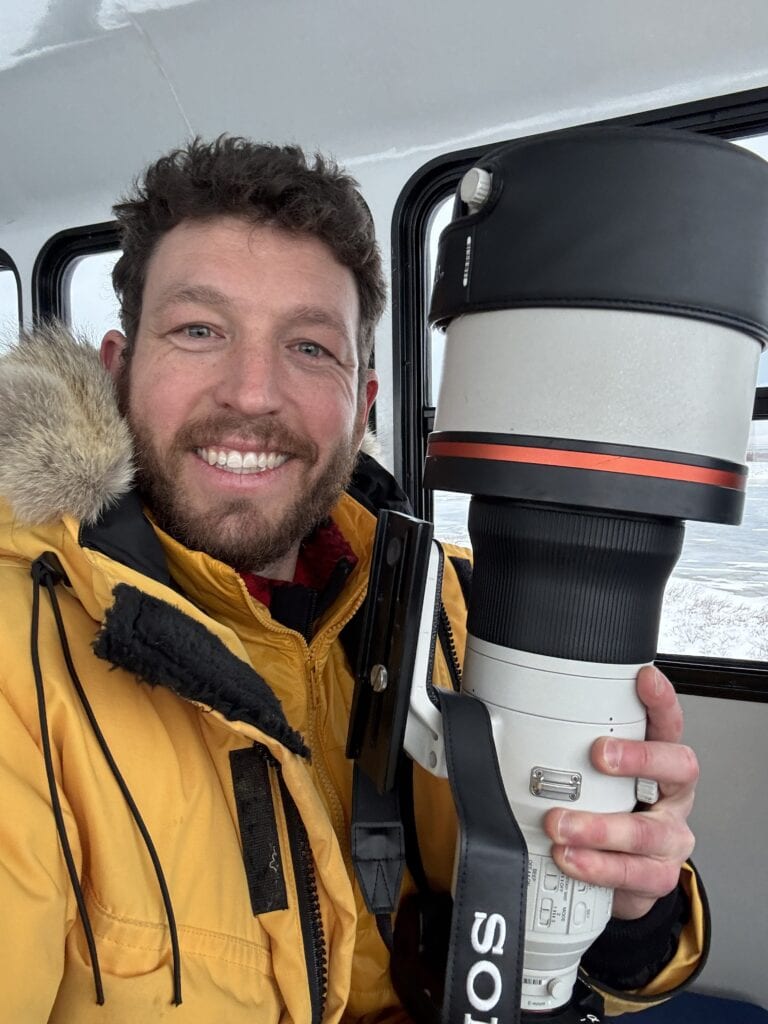
Best Lenses for Photographing Churchill’s Polar Bears
Let’s rank the best lenses to bring to the Polar Bear Capital of the World. (My safari lens guide applies here as well.)
- 600mm f/4 (Ideal length for photographing polar bears)
- 400mm 2.8 (Powerhouse lens. May want to put a 1.4x converter on it)
- 400-800 f/6.3-8 (Huge reach, but probably needs a tripod to keep things stable. Start with shutter speed at least 1/1250 and may need to go to 1/2000)
- Sony 200-600 f/5.6-6.3 (Great option, especially if they come close and you don’t have a backup)
- Canon 100-500 f/4.5-7.1 (Great option, and zoom variability is nice if they come close.)
- Canon 200-800 (Crazy reach, but also aperture is pretty high, making it subpar in lowlight.)
- Tamron/Sigma 150-600 f/5.6-6.3 (Having reach out to 600 is excellent. Third-party lens, but they’re getting pretty good. If you have a Canon, you may need an EF-RF adapter.)
- 100-400 4.5-5.6 (400 is probably not enough unless bears get closer…which can definitely happen)
Click here for my complete list of wildlife photography lenses.
Teleconverter or Not?
Good question. If you’re maxing out at 400mm, I think a 1.4x or a 2x converter is a good idea. If you have a 600mm, that’s up to you; you could go to 1.4x to get out to 840mm. Just remember, it will drop you down a few stops.
You’ll have to compensate by either slowing down your shutter or bumping up your ISO.
Explore 1.4x converters
Explore 2x converters
Recommended Camera Bodies
This isn’t a bad time to rent one of the best cameras on the market. Lens Rentals is my go-to rental place. But also check with a local store.
Here are a few things to look for in a camera body for photographing polar bears in Churchill:
- Megapixels: More MP’s = better ability to crop in.
- Shooting frame rate (frames-per-second): Faster FPS = better burst mode to ensure you don’t miss action shots
Perfect Camera Bodies
- Sony A1 II – High MP, above average FPS
- Sony A9 III – Okay MP, superior FPS
- Sony A7r5 – Very high MP, decent FPS
- Canon R1 – Okay MP, above average FPS
- Canon R5 II – High MP, decent FPS
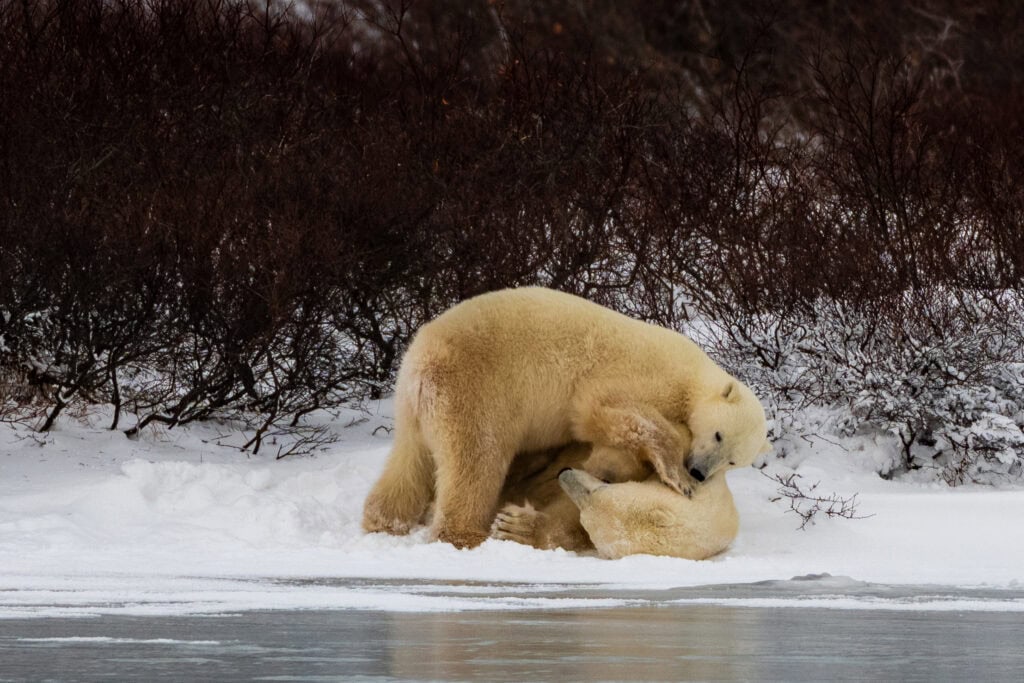
Tripods, Monopods & Accessories Worth Bringing
I strongly recommend bringing a tripod. This is two-fold. First, your arms are going to get heavy holding a big camera lens. Second, if you plan on taking any video, you’ll want the stability of a tripod.
- Manfrotto 055 Video Tripod
- SmallRig AD-100 FreeBlazer Heavy-Duty Carbon Fiber Tripod
- This is also a good tripod head.
What to Pack for Freezing or Sub-Zero Weather
Be prepared for cold winter days, with the wind dropping the temperatures even further. Because you’re going in the fall, the days shouldn’t be too terrible. Still, for us, temperatures were around 30°F, but the wind chill had it in the teens or lower.
Here are the must-haves:
- Parka (Men’s/Women’s)
- Down Jacket (Men’s/Women’s)
- Fleece (Men’s/Women’s)
- Wool Baselayer (Men’s/Women’s)
- Beanie
- Gloves or these could work for photography
- Warm Pants (Men’s/Women’s)
- Wind/Rain Pants to pull over
- Warm Boots (Men’s/Women’s)
- Sunglasses
How much does it cost to visit Churchill, Manitoba, the Polar Bear Capital of the World?
The only way to get to Churchill is by plane or train. The train takes about two days. The flight is about 100 minutes.
A tour with Frontier’s North Adventures, the tour operator with the most tundra permits, costs about $6,900 per person. There are more expensive options if you wish to sleep at their lodge out on the tundra with unprecedented views of polar bears.
There is a single-day trip that costs $1,500 per person.
I will note that those costs do not include the cost of flying to Manitoba.
Final thoughts on photographing polar bears in Churchill
Getting a chance to photograph polar bears in Churchill was incredible. That’s honestly nothing like seeing wild beasts the size of cars roam the tundra, waiting to disappear onto the ice for 7 months.
If you’re thinking about heading up and photographing polar bears, do it! It’s something you’ll remember forever, and you’ll be so stoked to have these in your portfolio!
Until next time, adventurers, stay safe.
Follow on social media: TikTok || Instagram || Facebook || Newsletter | YouTube