
The 13 Best Mirrorless Cameras of 2026 (Plus 6 Beginner Picks)
An eagle drops off a Sitka spruce, your burst kicks in, and two seconds later you know whether your camera kept up! A new mirrorless body is an expensive decision, and I want you to make it only once.
Hopefully, this helps you narrow down your decision. However, for many, you’ll likely stay within your current ecosystem, so you won’t need to buy new lenses. That’s what I would recommend first and foremost. Don’t switch unless you absolutely have to, because you’ll spend a ton on lenses!
Quick Picks
- Best overall: Sony A1 II ($6,998)
- Best for hybrid creators: Canon EOS R5 Mark II ($4,399)
- Best high-resolution: Sony A7R VI ($4,498)
- Best mid-range: Sony A7 V ($2,898)
- Best medium format: Hasselblad X2D II 100C ($7,799)
- Best budget full-frame: Nikon Z5IIc ($1,396)
- Best for beginners: Canon EOS R50 ($779)
Shop on your own: Amazon.com and Adorama.com.
Best Mirrorless Cameras in the World (2026 Edition)
I’ve owned the Canon R5 since fall 2022, tested the Sony A1 in Churchill, Manitoba, and carried the Sony A7R V through Alaska and Rwanda. For the cameras I haven’t shot with, I leaned on manufacturer spec sheets and hands-on reviews from other working photographers. Every price below was checked on October 29, 2026.
1. Sony A1 II – Best Overall Flagship Mirrorless Camera
The Sony A1 II is Sony’s new flagship mirrorless beast, built for professionals who refuse to compromise. With a 50MP stacked full-frame sensor, 30fps blackout-free shooting, plus 8K30p and 4K120p video, this camera dominates both the photography and cinema worlds.
Its new AI-powered autofocus system handles birds in flight, athletes mid-sprint, and even erratic human eye tracking with ease. It’s ideal for commercial photographers, sports shooters, wildlife pros, and hybrid creators shooting high-res stills and cinematic videos. You’re paying top dollar, but you’re getting a no-compromise machine.

- 50MP stacked full-frame, 30fps blackout-free, 8K30p/4K120p video
- Incredible autofocus + real-time tracking
- $6,998
- Buy on Amazon (or save with a renewed original A1)
- Buy on Adorama
I tested the Sony A1 during my trip to Churchill in 2025. It lives up to the hype! The burst rate, high megapixels, and video quality are incredible. Yes, it’s an expensive-as-heck camera, but if you’re in the Sony ecosystem and looking for a top-of-the-top camera, this is it. I was sad to part ways with it.
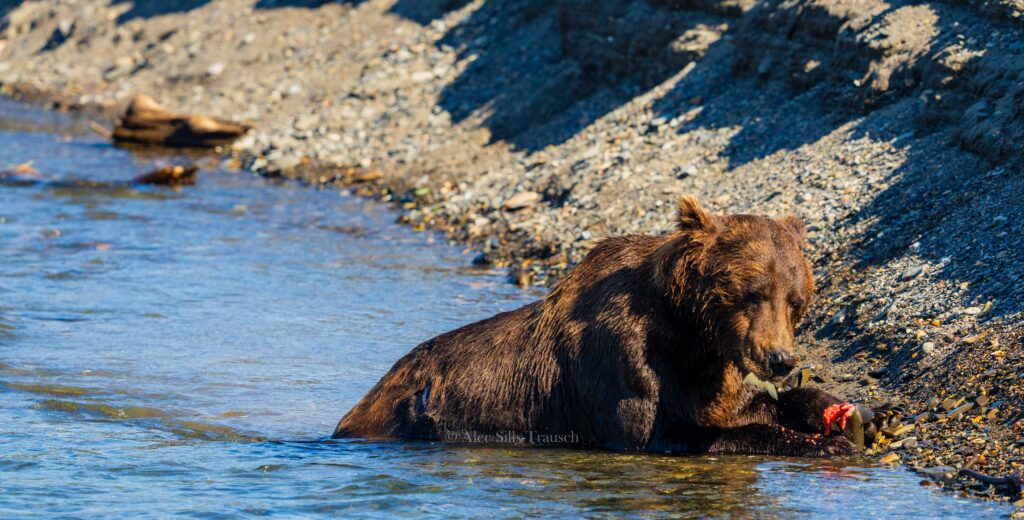
I also used the A1 ii during my August 2026 trip to photograph coastal brown bears. 10/10 camera to use.
2. Canon EOS R5 Mark II – Best Canon Mirrorless for Hybrid Creators
The Canon R5 II takes everything beloved about the original R5 and turns it up to 11. You get 45MP resolution, 8K60 RAW internal video, better heat dissipation, and an even faster autofocus engine.
It’s an ideal choice for hybrid shooters—wedding photographers, portrait pros, or YouTubers—who demand pristine image quality and professional-level video from a single body. Plus, the RF lens ecosystem continues to shine. If you’re already in the Canon system, this is your upgrade path.
- 45MP stacked full-frame, 30fps, 8K internal RAW video, advanced subject tracking
- Better thermals than R5, great for weddings, portraits, and video
- $4,399 (recently on sale for $4,099)
- Buy on Amazon
- Buy on Adorama
Learn how to choose the best memory cards for you.
3. Sony A7 V – Best Mid-Range Full-Frame Mirrorless Camera
The A7 V is the Sony body most photographers should look at before spending double on an A7R VI or A1 II. Its 33MP partially stacked sensor reads out about 4.5 times faster than the A7 IV’s, which unlocks 30fps electronic bursts and cuts rolling shutter on fast pans.
Video gets 4K60p from the full sensor width and 4K120p for slow motion. IBIS is rated at 7.5 stops, and the 5.76-million-dot EVF matches what you’d find on far pricier bodies. It has sat at or near the top of B&H’s sales charts since it shipped in late 2025.
- 33MP partially stacked sensor, 30fps electronic / 10fps mechanical
- 4K60p full-width and 4K120p video, 7.5-stop IBIS
- $2,898
- Buy on Amazon
4. Canon EOS R6 Mark III – Best Mid-Range Canon Mirrorless Camera
Canon moved the R6 line from 24MP to 32.5MP with the Mark III, giving landscape and portrait shooters more room to crop without paying R5 II prices. Bursts hit 40fps with the electronic shutter and 12fps with the mechanical one.
It records 7K60p RAW internally and adds a 7K open gate mode for creators who crop the same clip for vertical and horizontal. 4K120p covers slow motion, IBIS is rated at 8.5 stops, and you get CFexpress Type B plus SD slots.
- 32.5MP full-frame sensor, 40fps electronic shutter
- 7K60p internal RAW, 7K open gate, 8.5-stop IBIS
- $2,799
- Buy on Amazon
5. Nikon Z9 – Best Nikon Mirrorless Camera for Professionals
The Nikon Z9 is Nikon’s top-of-the-line mirrorless system—and one of the best professional tools on the market today. With a 45.7MP stacked sensor, no mechanical shutter (thanks to its ultra-fast sensor readout), and industry-leading autofocus and tracking, the Z9 is a war machine for wildlife, sports, and high-end commercial photography.
Add in 8K60 video, dual CFexpress cards, and a rock-solid weather-sealed build, and it’s clear Nikon made this for elite-level pros.
Worth knowing: the Z9 turned five in October 2026, and Nikon hasn’t announced a Z9 II yet, so expect a successor at some point.
- 45.7MP stacked sensor, 20fps RAW, 8K video
- No mechanical shutter, full pro build
- Used for sports, wildlife, and commercial photography
- $5,897 (recently on sale for $4,796)
- Buy on Amazon
- Buy on Adorama
6. Leica SL3-S – Best Mirrorless for Design and Color Purists
The SL3-S replaces the SL2-S with the same 24MP resolution on a new BSI sensor. Leica added hybrid phase-detection autofocus with 779 points, a long-awaited upgrade over the SL2-S’s contrast system, and bursts now reach 30fps.
Filmmakers get 6K open gate recording and internal ProRes. The tilting 3.2-inch screen is new to this body, and the IP54 sealing carries over. You’re still paying for Leica’s build and color rendering, which plenty of photographers consider worth the premium.
- 24MP BSI full-frame sensor, 30fps, 779-point hybrid AF
- 6K open gate video, internal ProRes, IP54 sealing
- $5,665
- Buy on Adorama
7. Hasselblad X2D II 100C – Best Medium Format Mirrorless Camera
The X2D II keeps the 100MP medium format sensor and the spare Scandinavian design of the original. Hasselblad rebuilt the autofocus around 425 phase-detect points with a LiDAR assist, and added subject detection and tracking.
IBIS is rated at 10 stops, which makes handheld medium format realistic at shutter speeds that once required a tripod. A 1TB SSD is built in alongside a CFexpress Type B slot. There is no video mode, and bursts top out at 3fps, so this is a tool for deliberate landscape and fine art work.
- 100MP BSI medium format, 10-stop IBIS, 1TB internal SSD
- LiDAR-assisted AF, HDR RAW, no video
- $7,799 (launched at $7,399)
- Buy on Amazon


8. Canon EOS R5 – Still a Top Choice for Hybrid Shooters
Despite the release of the R5 Mark II, the original Canon R5 remains a workhorse and is now priced more affordably. It delivers 45MP images with beautiful color science and crisp 8K30p video—making it an excellent hybrid option for wedding photographers, content creators, and event shooters.
The ergonomics are classic Canon, and the IBIS, dual card slots, and weather sealing make it highly capable. If you don’t need the extra horsepower of the R5 II, this is a phenomenal value.

- 45MP sensor, 8K video, fast and reliable AF
- A fantastic all-around choice at a slightly lower price than the Mark II
- $3,299 (recently on sale for $2,999)
- Buy on Amazon
- Buy on Adorama
This is my current camera, and I absolutely love it. It’s been my trusty sidekick since the fall of 2022. I upgraded from the Canon 5D Mark III, and having one of the best mirrorless cameras has been a game-changer. I really don’t have any complaints (though I would love a bit more megapixels, but at 45, you honestly don’t need any more to function professionally).
It’s been with me in Iceland, Alaska, Australia, Canada, and on backpacking trips throughout Washington. And it’s never failed me. *Knock on wood*
Lastly, for those moving to mirrorless cameras, I have had ZERO issues with my Canon EF-RF converter. It works like a charm, and I haven’t had any quality issues either.
9. Sony A7R VI – Best High-Resolution Mirrorless Camera
Sony moved the A7R line to a fully stacked 66.8MP sensor, which lets the A7R VI fire 30fps bursts with no viewfinder blackout. Earlier A7R bodies paired their resolution with slow readout, so photographers who wanted detail and speed had to step up to the A1 II.

The 9.44-million-dot EVF is roughly three times brighter than the A7R V’s, which helps on snowfields and glaring beaches. IBIS is rated at 8.5 stops at the center of the frame. Video tops out at 8K30p and 4K120p in 10-bit, though there’s no open gate mode, a sore point for some creators.
- 66.8MP fully stacked sensor, 30fps blackout-free
- 8K30p/4K120p 10-bit video, 8.5-stop IBIS
- $4,498 (the A7R V is now $3,498 on sale)
- Buy on Amazon
- Buy on Adorama
I had the pleasure of bringing the A7R V to Alaska and Rwanda, along with a Sony 400mm f/2.8 and a 24-70mm f/2.8. The tracking and autofocus on animals was incredible and blew me away. My Canon couldn’t track as well, which made it invaluable for photographing brown bears in Katmai National Park. If you’re already in the Sony ecosystem and don’t want to spend $7,000 on the A1 II, I highly recommend the A7R VI, or a discounted A7R V to save about $1,000.
10. Nikon Z8 – Flagship Power in a Smaller Body
Think of the Nikon Z8 as the Z9’s younger, leaner sibling. You get the same 45.7MP stacked sensor, 8K video, and blackout-free EVF, but in a smaller body that’s better suited for travel and handheld work.
Wildlife photographers, wedding shooters, and documentary filmmakers will love this camera’s versatility, all while costing about $1,600 less than the Z9 at list price. It’s a pro tool in a less intimidating form factor.
- Nearly all the power of the Z9 in a smaller and lighter form
- 45.7MP, 20fps, 8K60p
- $4,297 (recently on sale for $3,297)
- Buy on Amazon
- Buy on Adorama
11. Fujifilm GFX100 II – Medium Format Muscle for Professionals
The Fujifilm GFX100 II brings medium format to the mirrorless market with blazing speed and exceptional quality. Featuring a 102MP BSI sensor that’s 1.7x larger than full-frame, this beast delivers enormous dynamic range, gorgeous Fuji colors, and exceptional low-light performance.
Unlike many medium-format cameras, it’s surprisingly fast—with 8 fps burst shooting and advanced subject-detection AF. Videographers will also love its 8K video, ProRes internal recording, and cinema-level image quality.
Perfect for commercial pros, landscape photographers, and high-end editorial work where resolution and detail are paramount. If you have the budget, you can’t go wrong with making one of the best mirrorless cameras yours.
- 102MP medium format sensor, 8fps burst, 8K ProRes internal video
- For commercial, landscape, and fine art photographers who demand the highest resolution and dynamic range
- $8,499 (the GFX100S II gets you 102MP for $5,699 if you can live without 8K video)
- Buy on Amazon
- Buy on Adorama
12. Leica Q3 – Best Luxury Compact Mirrorless
The Leica Q3 might not be an interchangeable-lens camera, but it earns a spot here for its 60MP full-frame sensor, Summilux 28mm f/1.7 fixed lens, and drop-dead gorgeous image quality.
It’s beloved by street photographers and travel creatives who want minimalist setups without losing detail. You also get phase-detect AF, macro mode, 8K video, and timeless Leica design.
- 60MP full-frame fixed-lens camera, weather-sealed, amazing colors
- For street photographers and Leica fans
- $7,350
- Buy on Amazon
- Buy on Adorama
13. Canon EOS R1 – Best Mirrorless for Pro Sports & Wildlife
Canon’s first flagship mirrorless camera, the EOS R1, is built for speed, precision, and reliability. It features a 24.2MP stacked full-frame sensor, blackout-free 40 fps shooting, and Canon’s most advanced autofocus system to date, with deep-learning subject tracking.
Designed for elite sports, wildlife, and photojournalism, the R1 also packs in 6K RAW video, dual CFexpress slots, and a rugged pro body with an integrated grip. This is the tool for those who never miss a moment and want one of the best mirrorless cameras on the market.
- 24.2MP stacked full-frame sensor, 40 fps burst, 6K RAW video
- For sports shooters, wildlife pros, and Canon loyalists
- $6,799
- Buy on Amazon
- Buy on Adorama
Comparison Table for the Best Mirrorless Cameras
| Camera | Sensor | Max Burst | Top Video | IBIS | Price (body) | Best For |
|---|---|---|---|---|---|---|
| Sony A1 II | 50MP stacked FF | 30fps | 8K30 | 8.5 stops | $6,998 | All-around pro |
| Canon R5 Mark II | 45MP stacked FF | 30fps | 8K60 RAW | 8.5 stops | $4,399 | Hybrid shooters |
| Sony A7R VI | 66.8MP stacked FF | 30fps | 8K30 | 8.5 stops | $4,498 | Landscape/detail |
| Sony A7 V | 33MP partially stacked FF | 30fps | 4K120 | 7.5 stops | $2,898 | Mid-range all-rounder |
| Canon R6 Mark III | 32.5MP FF | 40fps | 7K60 RAW | 8.5 stops | $2,799 | Enthusiast hybrid |
| Nikon Z9 | 45.7MP stacked FF | 20fps RAW | 8K60 N-RAW | 6 stops | $5,897 | Wildlife/sports |
| Nikon Z8 | 45.7MP stacked FF | 20fps RAW | 8K60 N-RAW | 6 stops | $4,297 | Pro on the go |
| Canon R1 | 24.2MP stacked FF | 40fps | 6K60 RAW | 8.5 stops | $6,799 | Sports/wildlife |
| Canon R5 | 45MP FF | 20fps | 8K30 RAW | 8 stops | $3,299 | Value hybrid |
| Leica SL3-S | 24MP BSI FF | 30fps | 6K open gate | 5 stops | $5,665 | Color/design |
| Hasselblad X2D II | 100MP BSI MF | 3fps | None | 10 stops | $7,799 | Fine art/landscape |
| Fujifilm GFX100 II | 102MP BSI MF | 8fps | 8K30 | 8 stops | $8,499 | Commercial/landscape |
| Leica Q3 (fixed lens) | 60MP FF | 15fps | 8K30 | Lens OIS | $7,350 | Travel/street |
Prices are body-only prices, checked October 29, 2026.
6 Best Budget and Beginner Mirrorless Cameras in 2026
If you’re not in the market for the best mirrorless cameras, let’s drop down to a more affordable price range.
1. Canon EOS R50 – Best Budget Mirrorless for Beginners
The Canon EOS R50 is one of the most accessible entry points into Canon’s mirrorless system. Lightweight and compact, it’s designed for simplicity—perfect for travel, vlogging, and everyday photography.
The 24MP APS-C sensor delivers excellent color and sharpness, while Canon’s reliable Dual Pixel autofocus helps ensure your subject is always sharp, even if you’re just starting out. It also has a fully articulating screen, making it a solid vlogging choice.
- Sensor: 24.2MP APS-C
- Autofocus: Dual Pixel CMOS AF with eye tracking
- Video: 4K/30p with no crop
- Who it’s for: Beginners, travel photographers, vloggers
- Price Range: $779 body / $899 with kit lens (recently $729 / $849 on sale)
Buy on Amazon | Buy on Adorama
If you mostly shoot video, the Canon EOS R50 V ($719 body) drops the viewfinder and adds a vertical tripod socket.
2. Sony ZV-E10 II – Best for Beginner Creators & Vloggers
Sony’s ZV-E10 II was built for content creators. It pairs Sony’s real-time tracking autofocus with a new 26MP APS-C sensor and a much larger NP-FZ100 battery, a big step up from the small cell in the original.
The side-flip screen and built-in directional mic suit YouTubers and streamers, and 4K60p video (with a slight crop at 60p) gives you smooth footage for slow-motion edits. There’s no in-body stabilization or viewfinder, so plan on a gimbal or a stabilized lens for walking shots.
- Sensor: 26MP APS-C
- Video: 4K/60p, FHD 120p for slow motion
- Autofocus: Fast, real-time tracking with face/eye detection
- Who it’s for: Vloggers, YouTubers, solo creators
- Price Range: $1,198 (body only), $1,298 with 16-50mm lens
Buy on Amazon
3. Fujifilm X-S20 – Best All-Around Midrange Camera Under $1,500
The Fujifilm X-S20 is an incredible value for both photography and video. With a 26MP APS-C sensor, in-body image stabilization (IBIS), 6.2K video recording, and excellent battery life, it’s perfect for hybrid creators.
The classic Fuji colors and film simulations make editing photos more fun and creative, and the new “Vlog Mode” on the mode dial simplifies things for newer users.
- Sensor: 26.1MP X-Trans CMOS 4
- IBIS: 5-axis, up to 7 stops
- Video: 6.2K/30p, 4K/60p
- Who it’s for: Hybrid shooters, travel photographers, casual videographers
- Price Range: $1,499 body, $1,749 with 23mm f/2.8 kit (recently $1,649 on sale)
Buy on Amazon | Buy on Adorama
4. OM SYSTEM OM-5 Mark II – Best Compact Camera for Outdoor & Travel Use
The OM SYSTEM OM-5 Mark II (formerly Olympus) is a rugged and compact mirrorless camera that punches above its weight for adventure, nature, and travel photography. Its Micro Four Thirds sensor may be smaller than APS-C, but it’s paired with excellent IBIS, weather-sealing, and computational photography features like handheld high-res mode and live ND.
This is a great pick for hikers or travelers who want performance in a small, reliable package. The Mark II adds a deeper grip, USB-C charging from a power bank, and Starry Sky AF for night shooting.
- Sensor: 20.4MP Micro Four Thirds
- Features: IP53 weather-sealing, live ND filter, handheld high-res, Starry Sky AF
- Video: 4K/30p
- Who it’s for: Travel shooters, hikers, outdoor content creators
- Price Range: $1,199.99 (body only), recently $1,049 on sale
Buy on Amazon
5. Nikon Z30 – Best Budget Mirrorless for Video Beginners
Nikon’s Z30 is a fantastic budget-friendly mirrorless camera geared toward video creators. It ditches the electronic viewfinder to save on cost and weight but keeps essential features like a fully articulating touchscreen, 4K video with no crop, and excellent autofocus.
Its compact size makes it a great choice for streaming, video podcasts, or casual content creation on the go.
- Sensor: 20.9MP APS-C
- Video: 4K/30p, Full HD 120p
- Design: Flip-out LCD, mic input, no EVF
- Who it’s for: Beginner vloggers, streamers, budget-conscious creators
- Price Range: $947 with 16-50mm lens (recently $596 on sale)
Buy on Amazon | Buy on Adorama
6. Nikon Z5IIc – Best Budget Full-Frame Mirrorless Camera
The Z5IIc puts a 24.5MP full-frame sensor and 7.5-stop IBIS into a compact, weather-sealed magnesium-alloy body for $1,396. Nikon gets the price down by dropping the viewfinder and the second card slot, and the autofocus and video specs carry over from the Z5II.
Subject detection now includes a fish mode, and autofocus works down to -10EV in dim light. Bursts reach 14fps with the mechanical shutter and 30fps with the electronic one, and 4K video can be recorded internally as 12-bit N-RAW. If you’re comfortable composing on the rear screen, it’s a direct path into full-frame and Nikon’s Z lenses.
- Sensor: 24.5MP full-frame
- IBIS: Up to 7.5 stops
- Video: 4K/30p uncropped, internal 12-bit N-RAW
- Design: Vari-angle screen, no EVF, single card slot
- Who it’s for: Beginners moving up to full-frame, travel shooters
- Price Range: $1,396 (body only), $1,696 with 24-50mm lens
Buy on Amazon
Comparison Table for Budget and Beginner Mirrorless Cameras
| Camera | Sensor | Video | IBIS | EVF | Price |
|---|---|---|---|---|---|
| Canon EOS R50 | 24.2MP APS-C | 4K30 uncropped | No | Yes | $779 body / $899 kit |
| Sony ZV-E10 II | 26MP APS-C | 4K60 | No | No | $1,198 body |
| Fujifilm X-S20 | 26.1MP APS-C | 6.2K30 | 7 stops | Yes | $1,499 body |
| OM System OM-5 Mark II | 20.4MP Four Thirds | 4K30 | 6.5 stops | Yes | $1,199.99 body |
| Nikon Z30 | 20.9MP APS-C | 4K30 | No | No | $947 with lens |
| Nikon Z5IIc | 24.5MP FF | 4K30 uncropped | 7.5 stops | No | $1,396 body |
Prices are B&H prices, checked October 29, 2026.

FAQ: Best Mirrorless Cameras in 2026 and Beyond
Do professional photographers use mirrorless cameras?
Yes. Every current pro flagship from the major brands is mirrorless, including the Canon R1 and Nikon Z9. Some people may have purchased the last great DSLR and are holding on for a while, but in the end, everyone will eventually have a mirrorless camera.
Who is the leader in mirrorless cameras?
Four years ago, I would have said Sony was running away with it, and it wasn’t even close.
While they are still the leader in my mind, other brands, especially Canon, have caught up nicely. I don’t see a massive difference in quality, but people who focus on the granular details would probably say there are plenty of things that separate the two.
What are the disadvantages of a mirrorless camera?
For one, mirrorless cameras drain battery power much faster than DSLRs, so you’ll want more batteries on hand than you’re used to. Another drawback, at least early on, was that they tended to overheat. I think this has been worked out enough that it’s not much of an issue.
Why is everyone switching to mirrorless cameras?
People are switching to the best mirrorless cameras because they offer better performance and are newer than older DSLR models. Canon and Nikon haven’t released a new DSLR body since 2020, and nearly all their new lenses are for mirrorless mounts. Pentax is the main brand still making DSLRs, so if you want new technology, you have to go this route. Additionally, they are lighter, more compact, and create incredible images.
Should I buy a mirrorless or DSLR camera?
It is now the era of mirrorless cameras. DSLRs are excellent cameras, but it’s time to leave the old ones behind and move to mirrorless. The primary reason is that the new lenses are designed for mirrorless cameras, and for Canon, that makes a significant difference.
Sony has been on the mirrorless train for a while, so they primarily offer lenses for mirrorless cameras.
What’s the best mirrorless camera for beginners?
For most beginners, the Canon EOS R50 is a low-risk place to start. It costs $779 for the body ($899 with the 18-45mm kit lens), and Canon’s RF-S and RF lenses give you room to grow. If you mostly shoot video, the Sony ZV-E10 II is worth the extra money for its larger battery and creator-focused design.
Is full-frame worth it for beginners?
It can be, and it’s cheaper than it used to be. The Nikon Z5IIc ($1,396) and Canon EOS R8 Mark II ($1,899) have pushed new full-frame prices well below the $2,000 mark. Full-frame gives you cleaner high-ISO files and shallower depth of field. APS-C bodies and lenses are smaller and cost less, which matters on long hikes.
What other camera accessories do I recommend?
Trusty Backpack
Back in 2021, I purchased my first Wandrd backpack in Anchorage for my 21-day trip to Alaska. For the next four years, it’s been a trusty partner on all my outings to Iceland (twice), road tripping throughout the PNW, up to Canada, and so much more.
Reliable SD and CF Cards
This is one area where you do not want to go cheap, because if your images get corrupted on the card, there might not be a way to recover them. I’ve been going with Lexar Professional for the last couple of years, and they’ve never failed me.
Visit my Amazon storefront for additional camera accessories.
Final Thoughts on the Best Mirrorless Cameras in 2026
I know it can be tough to sort through the best mirrorless cameras and find one that not only fits your budget but also aligns with your photography goals.
If you’re a Canon shooter, the call is easy. Choose the R5 (if your budget is tight), the R6 Mark III if you want 7K video for $1,600 less than the R5 II, or the R5 II for the full package. You can’t go wrong with any of them.
For Sony shooters, unless you do this full-time, there’s no reason to get the A1 II. It’s far too expensive and more than you likely need. The A7 V gives most people everything they need for $2,898, and the A7R V has dropped to $3,498 now that the A7R VI is out. To save even more, look for a used A7R IV.
Whatever you end up choosing, I hope this guide to the best mirrorless cameras helped give you plenty to consider, and if you do plan to make a purchase, using one of my links helps support this website and my business.
Until next time, adventurers, stay safe.
Follow on social media: TikTok || Instagram || Facebook || Newsletter | YouTube