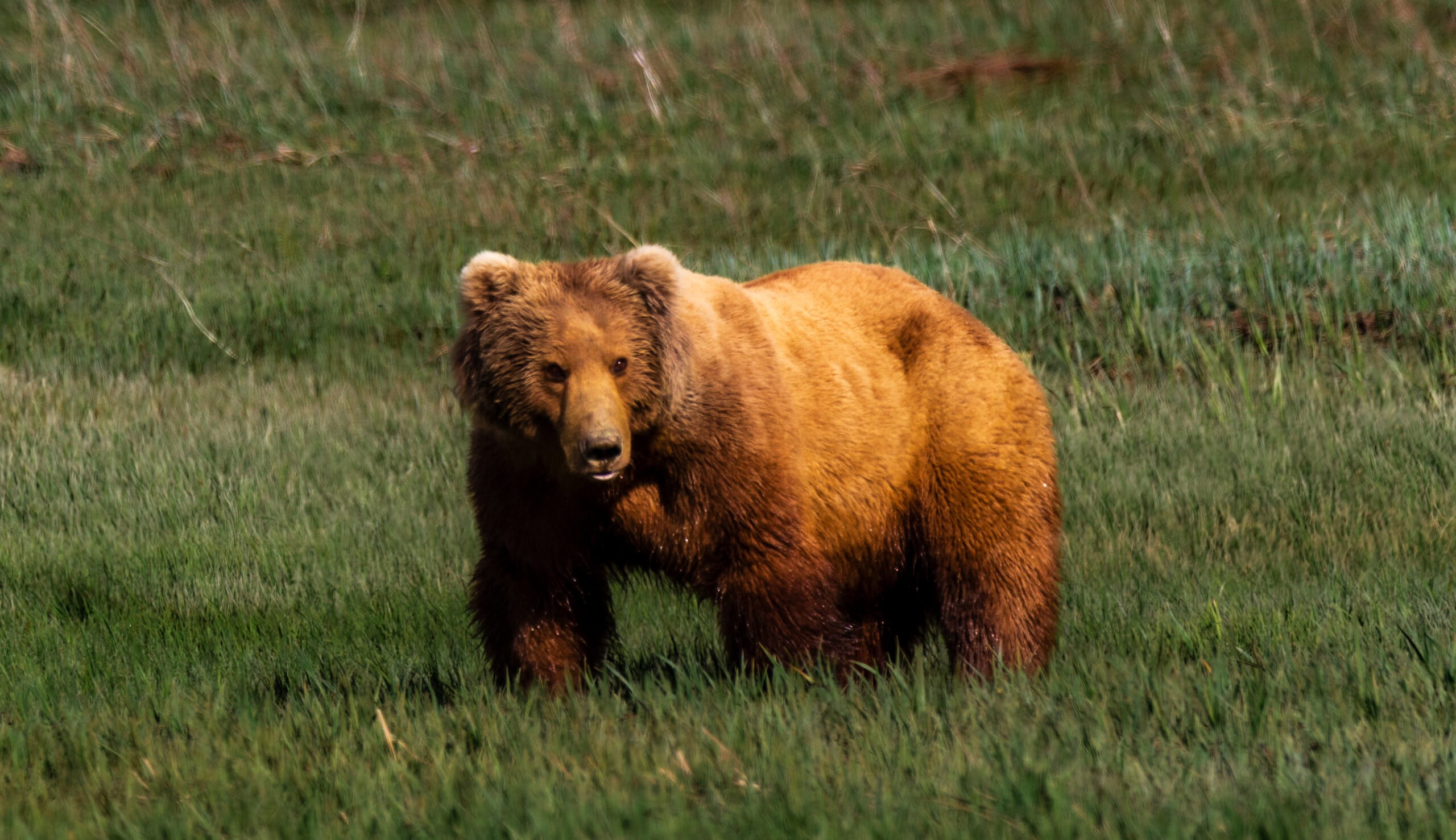
The Best Places For Bear Viewing in Alaska + Photo Tips
In the United States, there’s one place in a league of its own when it comes to bear watching. And that’s Alaska. The state has 98% of the US’s brown bear population and over 70% of North America’s, which is why it’s the best place to see bears.
I’ve been bear watching in Alaska three times — Lake Clark in 2021, a multi-day trip hitting both Brooks Falls and Funnel Creek in Katmai in 2024, and again in Lake Clark National Park at Brown Bear Bay in 2026 — and I’ve photographed coastal brown bears from 10 feet away. The photos inI took theis guide are mine, taks.
This guide covers 12 locations across Alaska, broken down by access, species, season, and cost — from the most remote lottery-only sanctuaries to a spot you can reach on foot from a glacier visitor center.
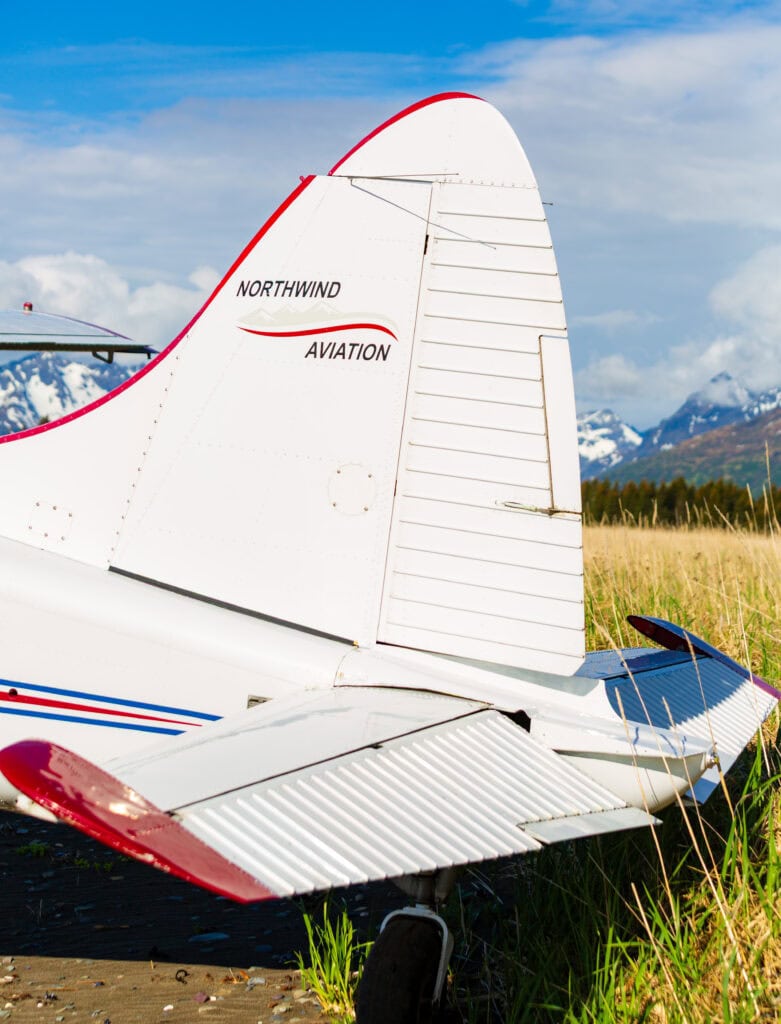
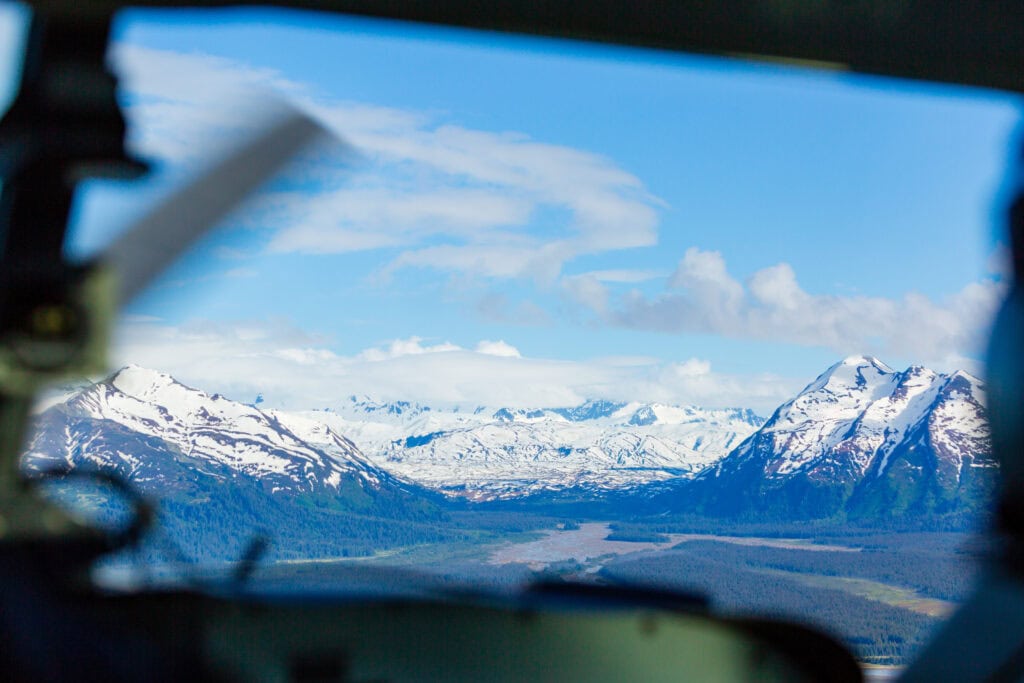
While no wildlife is ever guaranteed, you have a chance of seeing them if you book a flightseeing tour with a local company that will fly you fliess Falls in Katmai or popular areas in Lake Clark National Park.
And it’s a liIt’sing moment when you first lay eyes on aseeown bear eating salmon.
So, if you’re looking for the best place to see bears in Alaska, you’re in the right place. Enjoy learning about the bear hot spots, looking at my photos, and watching my videos.
Looking to visit both Lake Clark and Katmai National Park in one day to see bears?
This will let you cross off two bucket list places in one day!
Best Places to See Bears in Alaska: Your Ultimate Bear Watching Guide
Let’s dive into the best places to see bears in Alaska! Also, as is obvious, this isn’t every single spot, but a nice roundup to help people out. First, I think these are so worth adding to your Alaska itinerary. They will create memories you’ll never forget.
Brooks Falls – Katmai National Park
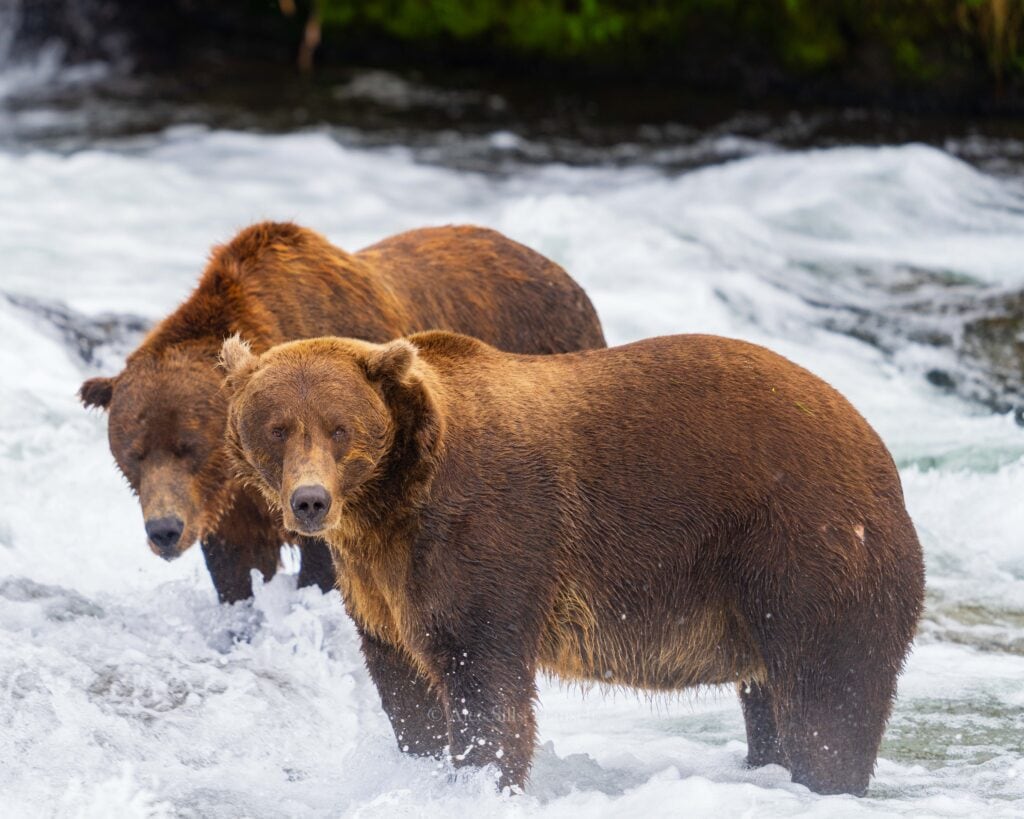
Easily the most famous of the bear-watching destinations in Alaska. This is thanks to Brooks Falls being within Katmai National Park and the consistent availability of epic bears throughout the summer.
I visited Brooks Falls in August of 2024 and had a fun time. The salmon run had died down, so we didn’t have the 25+ bears snapping at flying fish. It was more like six bears and a few flying fish. Still, seeing the iconic view was remarkable, and I was so thankful to have had the chance to visit.
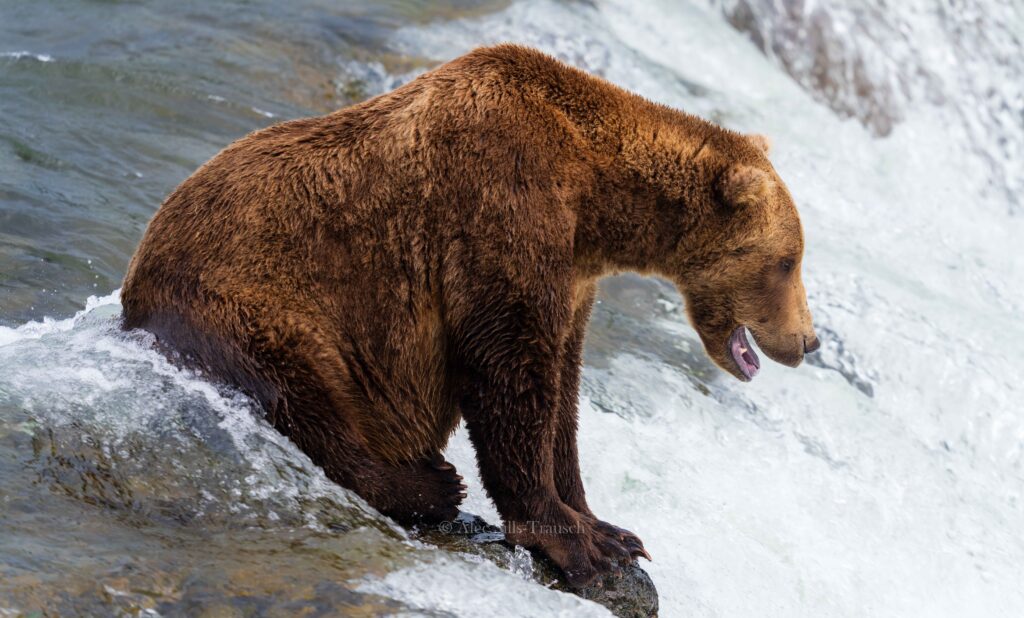
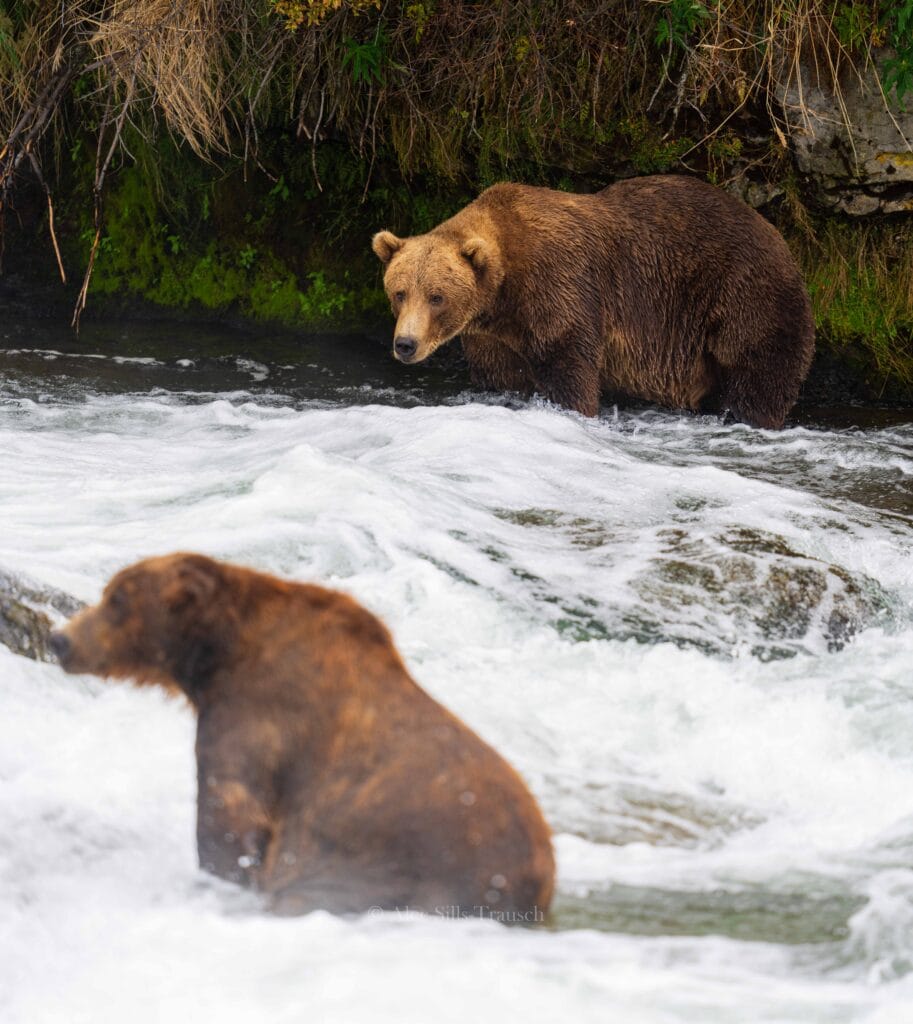
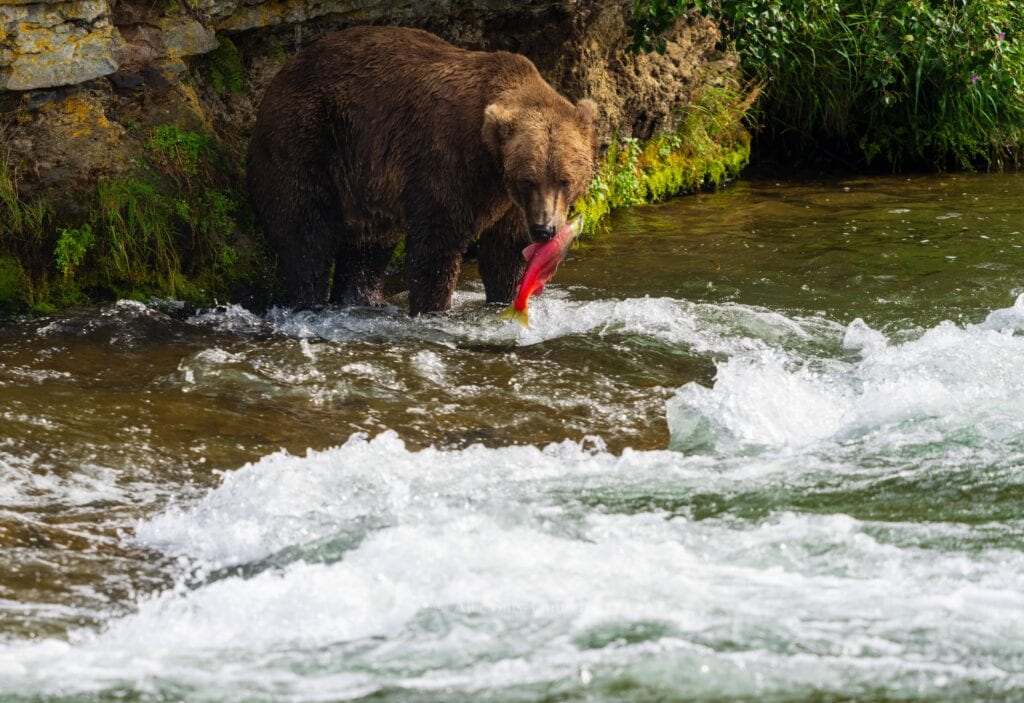

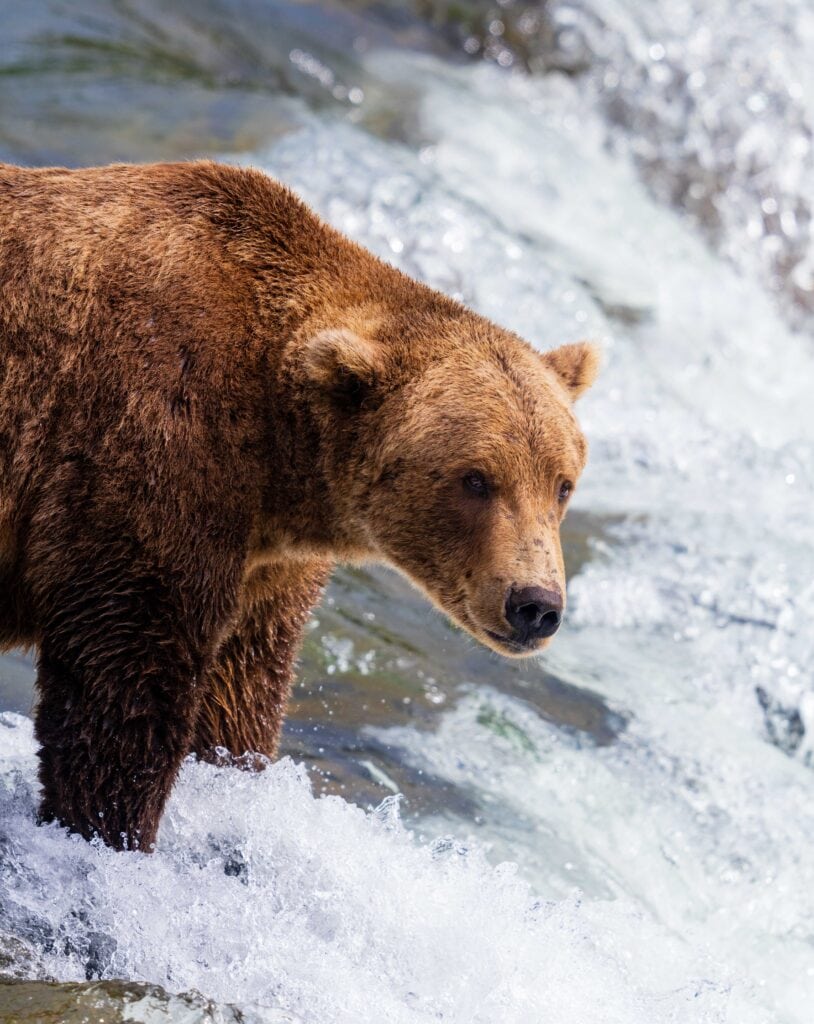
Everyone who visits has to sit through a 15-minute Bear Safety Class. This is a general don’t do stupid things and/or get eaten.
Funnel Creek – Katmai National Park and Preserve
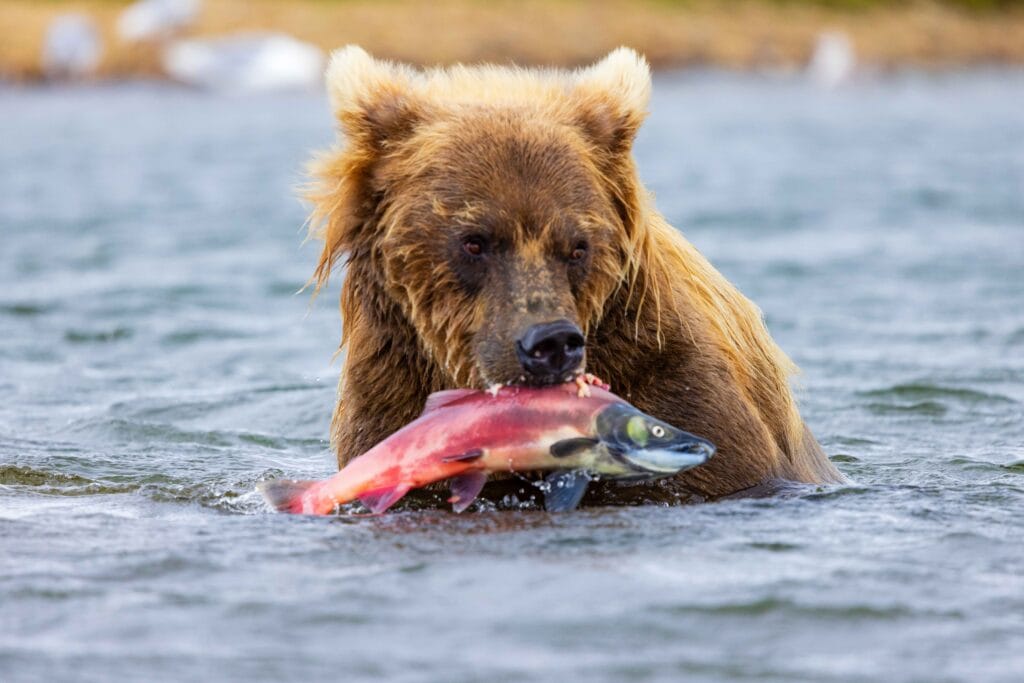
This was our first day of bear watching from Lake Clark Resort, and it turned out to be the most impressive day of wildlife photography. We landed in a remote part of Katmai Preserve and saw 25-30 bears both in the air and on the ground.
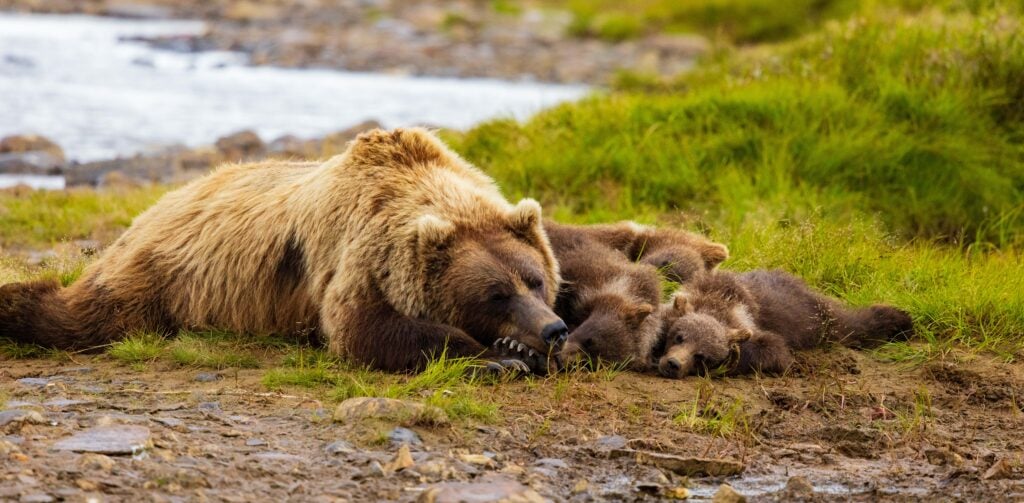
Once we settled into our little spot on Funnel Creek, I’d estimate we had around 12-15 bears come and go. I was on cloud nine. I’d never experienced anything like this before, and the highlight was a mom and three cubs coming down to the water and napping 20 feet from us.
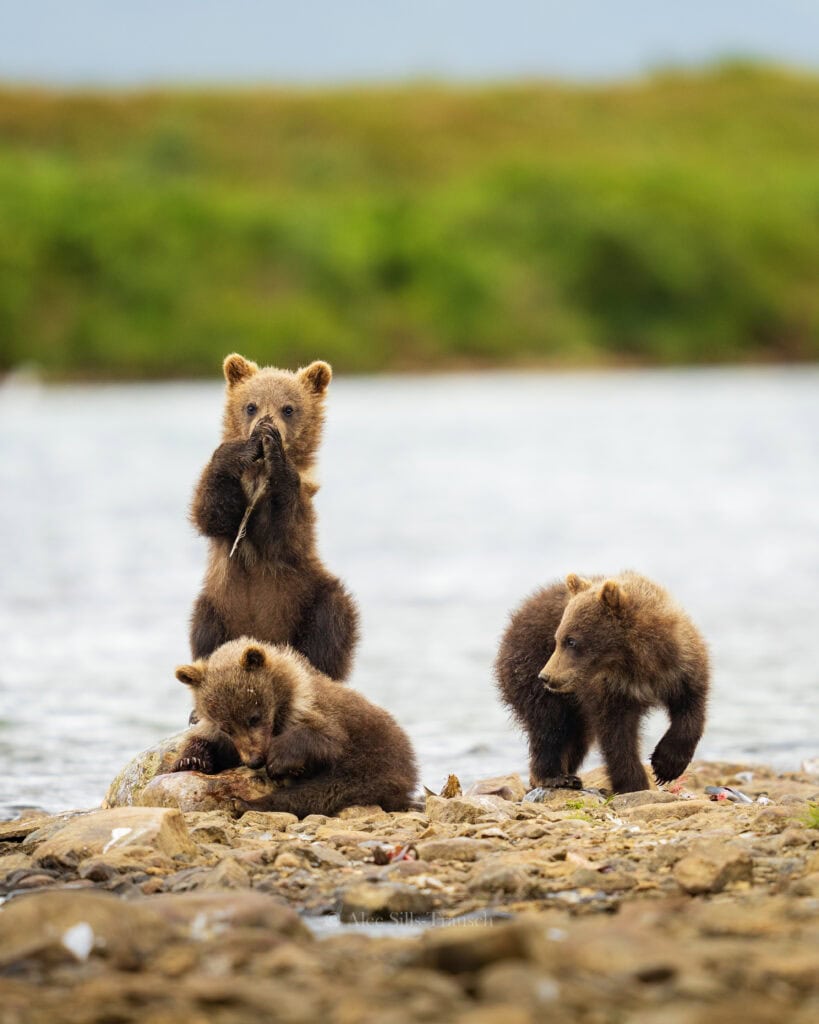
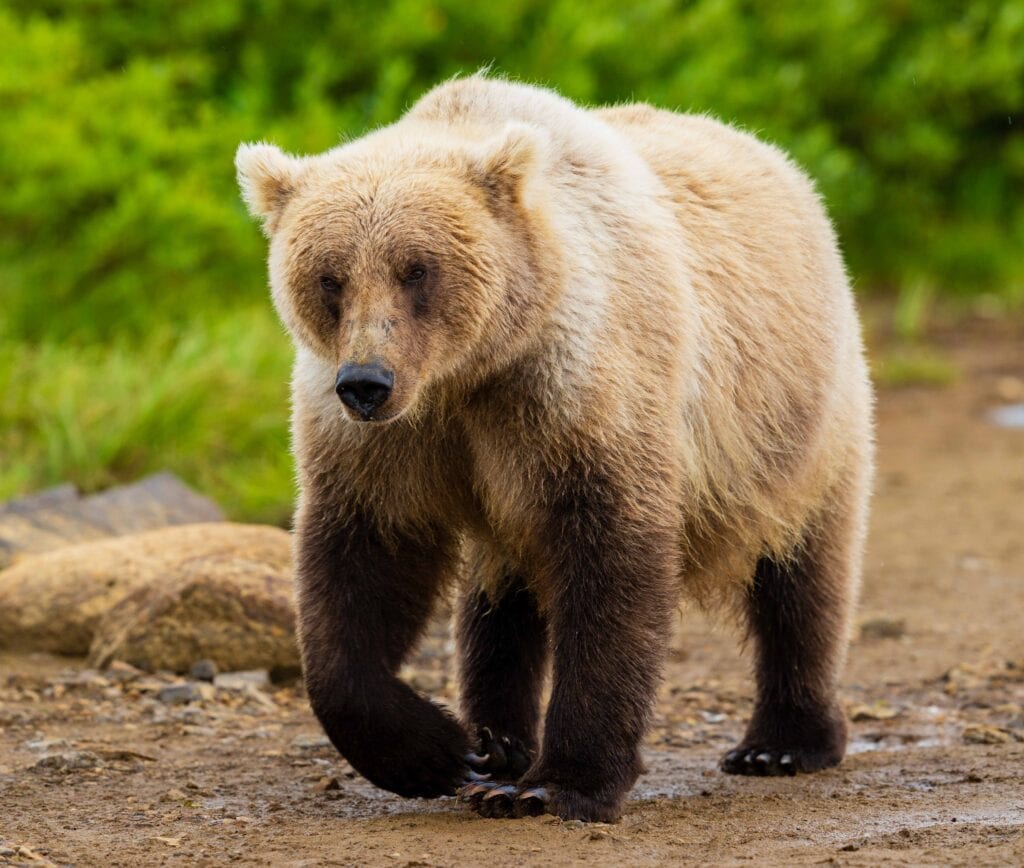
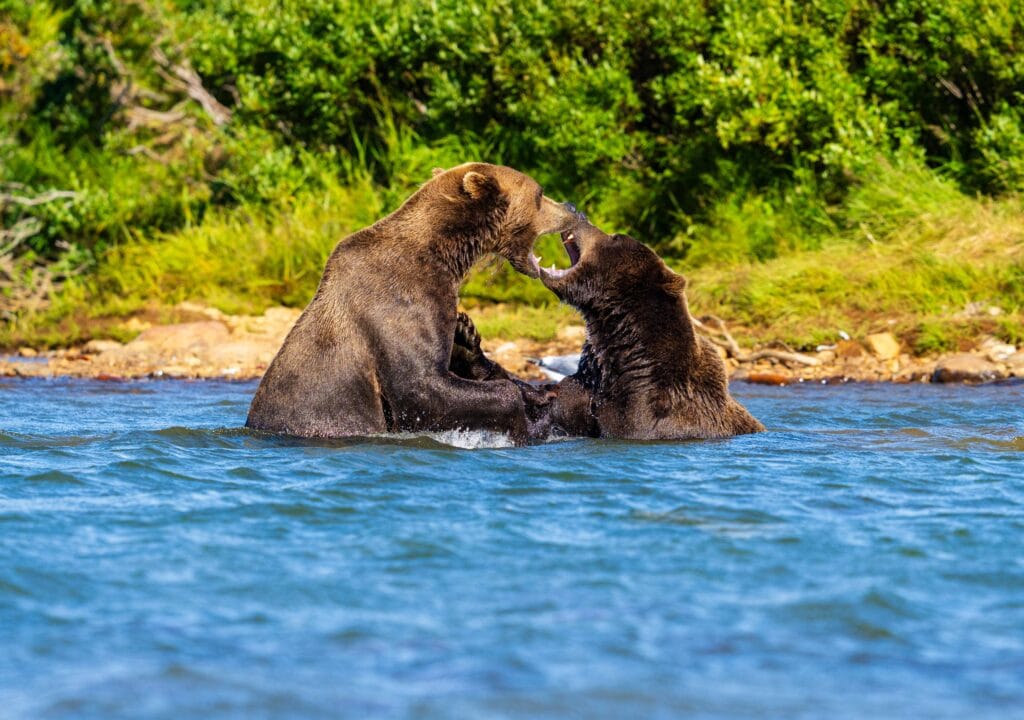
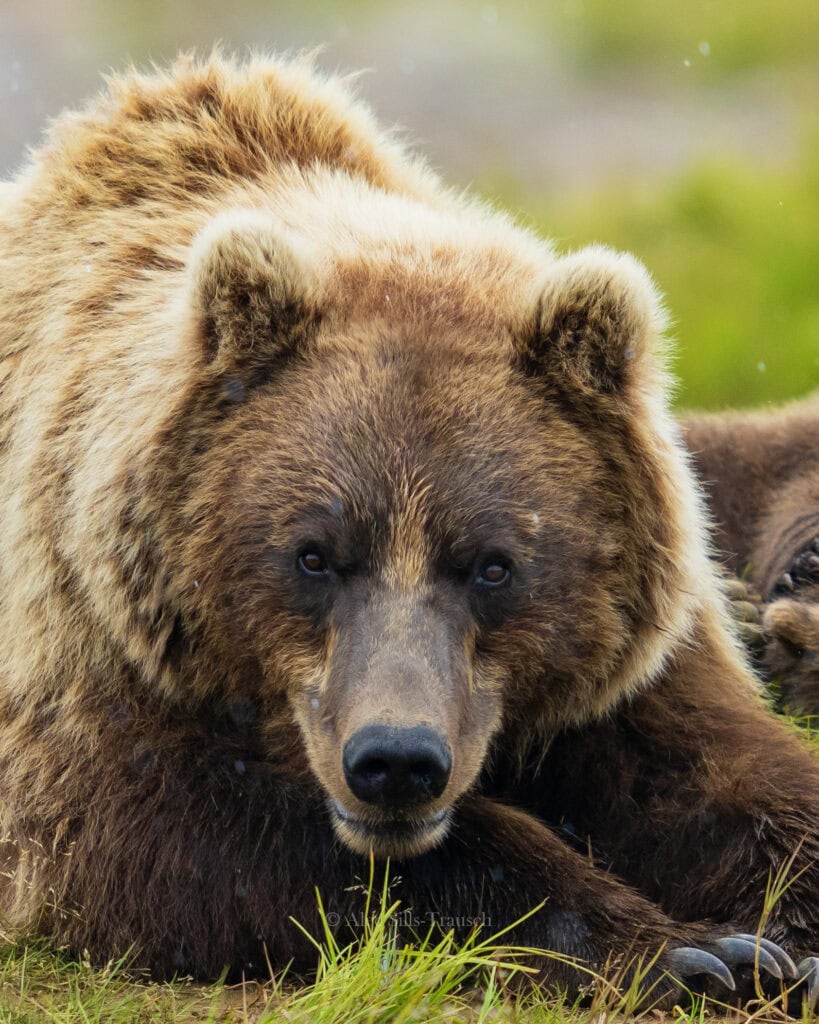
Truly, truly amazing. You can see our entire trip below. (I recommend watching on your TV, though.)
McNeil River Sanctuary
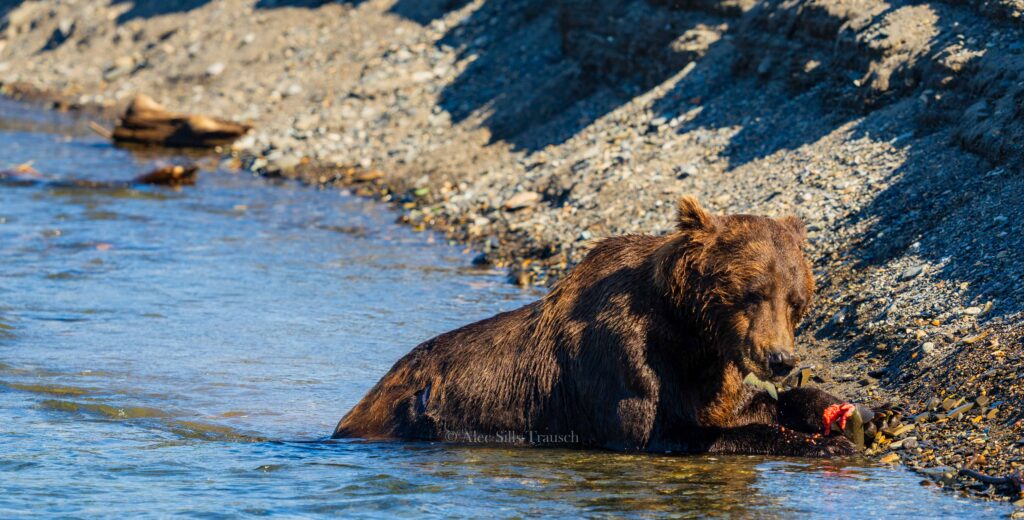
Another one of the 10/10 locations for bear watching in Alaska. It’s actually more than that. It’s the most bears ever documented in an area, ever. It’s so highly sought out that there’s a yearly lottery, and only 10 people get to go per 4-day stretch. This is on the eastern edge of the Alaska Peninsula, a bit northeast of Brooks Falls.
During peak chum salmon runs, wildlife biologists believe it’s the most densely populated area in Alaska.
Access is controlled through an annual lottery run by the Alaska Department of Fish and Game. Permits are limited to 10 visitors per day during the primary season (late June through late August), with a separate 10-person cap during the spring season when bears gather to graze sedge before salmon arrive.
The lottery opens in January each year, and the application fee is $25. Actual permit fees for non-residents run around $350 during the primary season. Getting drawn is not guaranteed, as demand far exceeds availability.
I haven’t made it there yet — we flew near it in 2024 — and it stays at the top of my list. If you have the flexibility to apply in January and plan around a potential June–August window, do it.
Apply for the McNeil River lottery at the Alaska Department of Fish and Game website.
Chinitna Bay – Lake Clark National Park
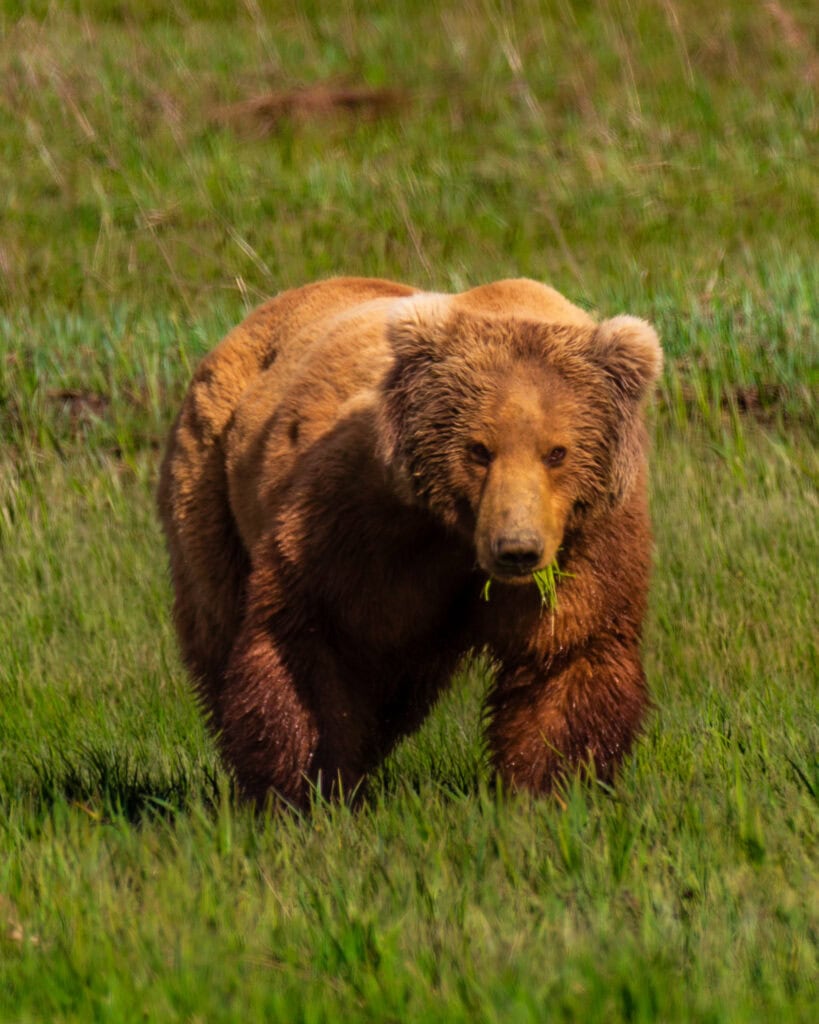
Chinitna Bay, on the coast of Lake Clark National Park, was the first place Jaimie and I went bear watching back in 2021. It was super cool, but nowhere near the experiences we had in Katmai.
However, it was somewhat self-inflicted. We went right at the beginning of bear-watching season, so the bears were pretty far off in the meadows. We had an adolescent sorta near us, but not 10 feet close like in 2024.
Still, it’s one of the closest areas to Homer, Soldotna, and Anchorage.
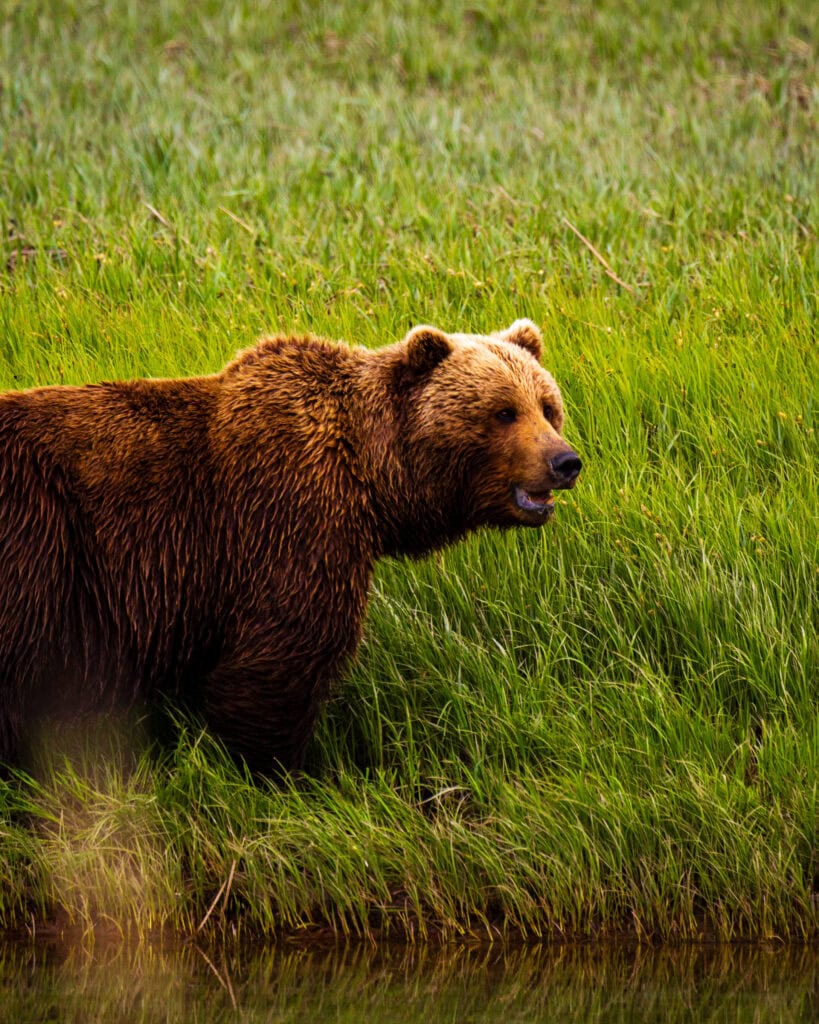
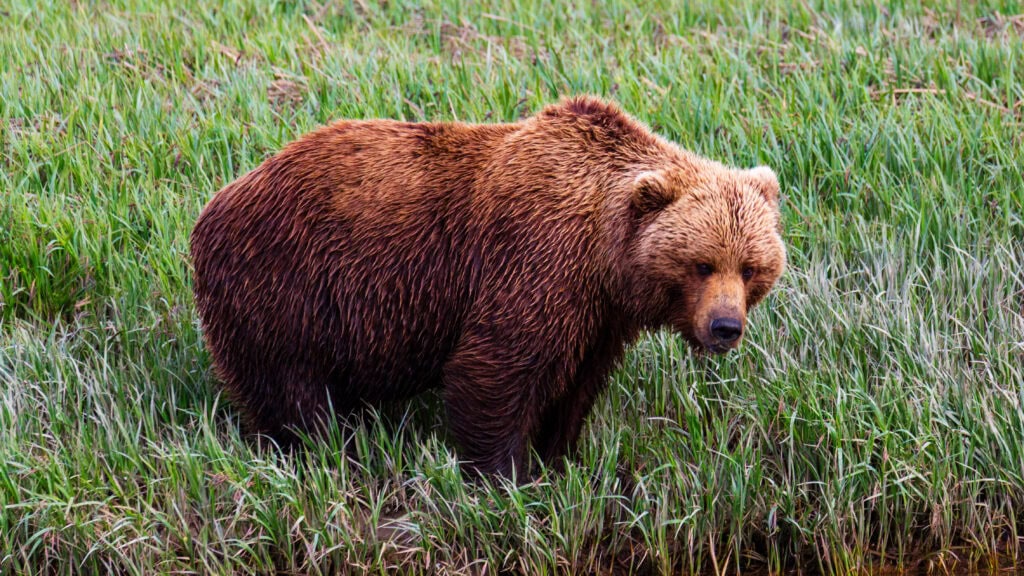
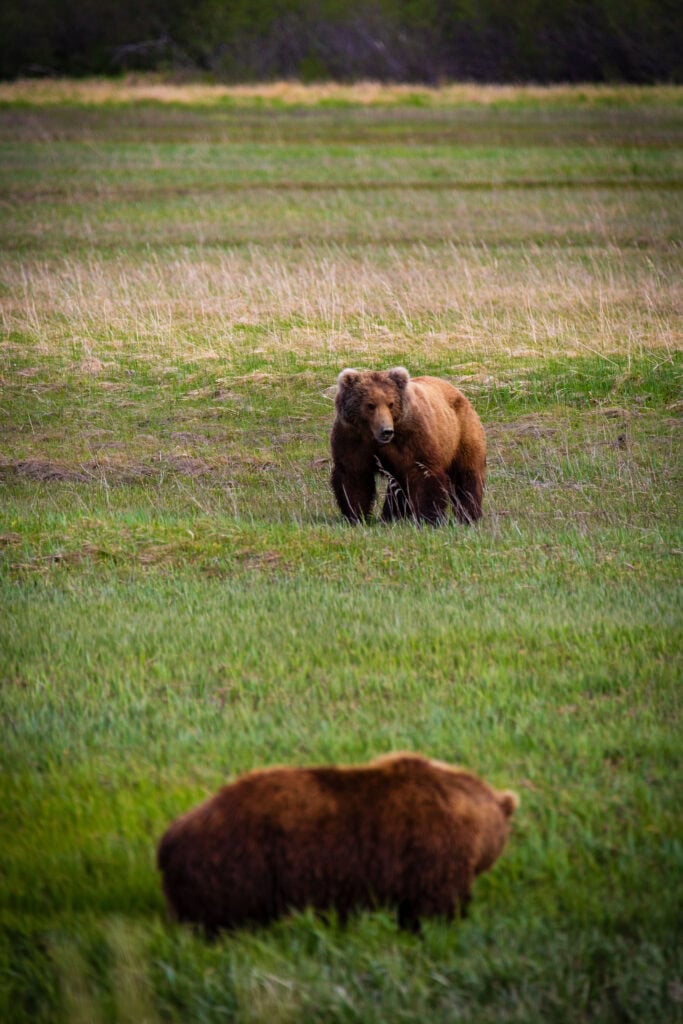
Then in August of 2026, I went back for six days of bear watching at Brown Bear Bay. This area is further inland than the designated National Park viewing areas we visited on the day trip, and we had much better experiences. Because this is native corporation land, access is restricted and only allowed to guests of Brown Bear Bay.
If you’re looking for an exclusive area without crowds, this is it!
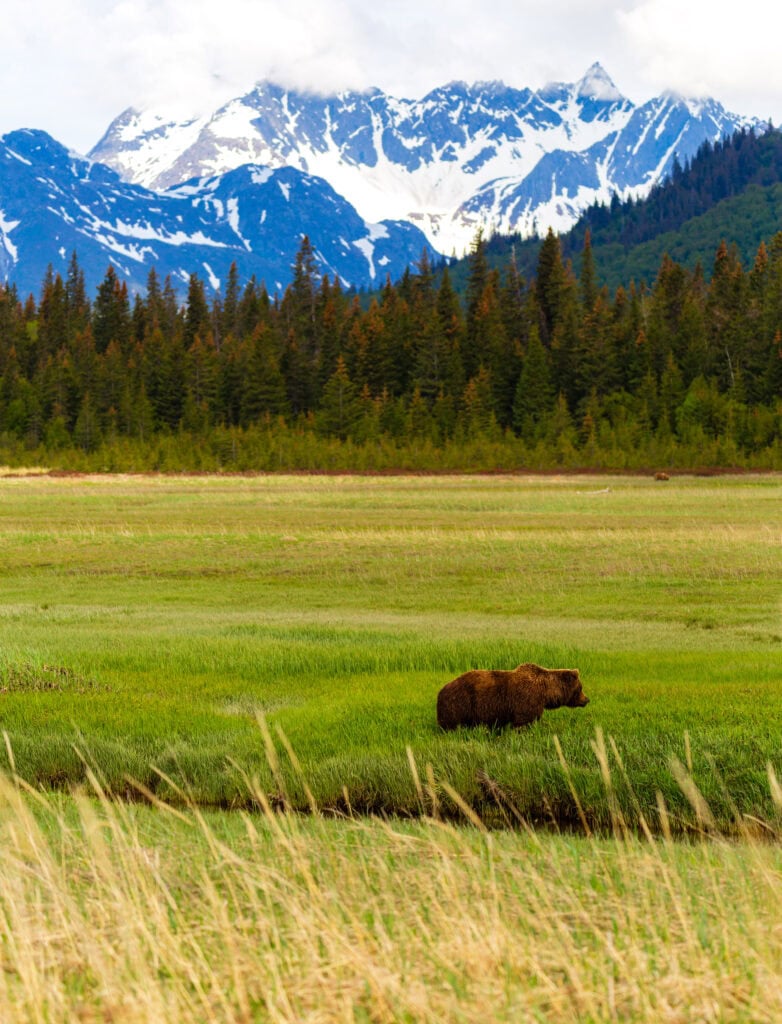
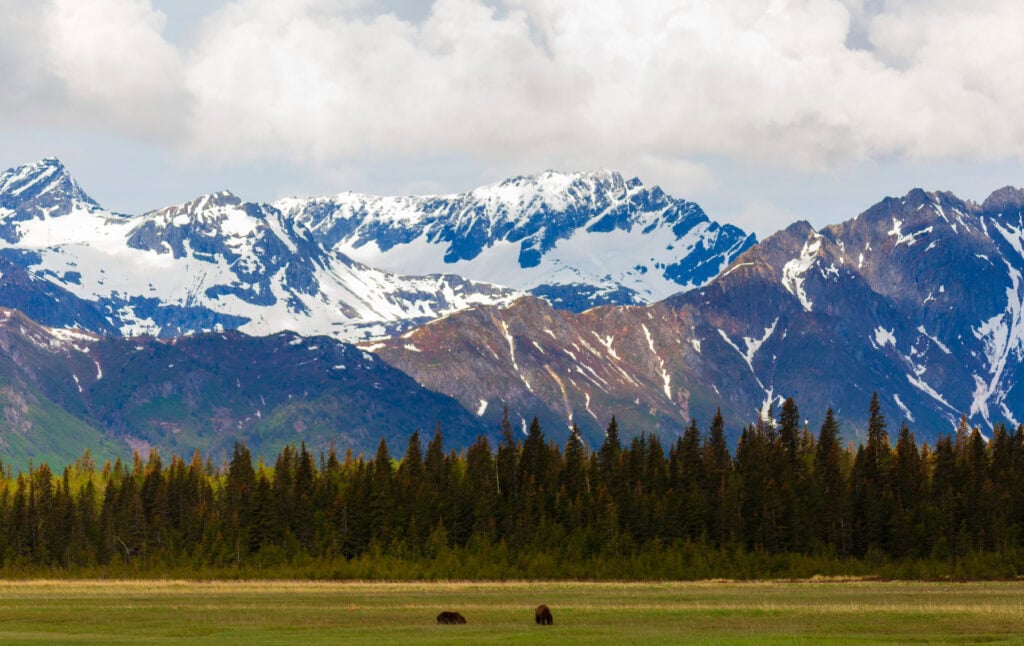
Salmon Creek – Lake Clark National Park
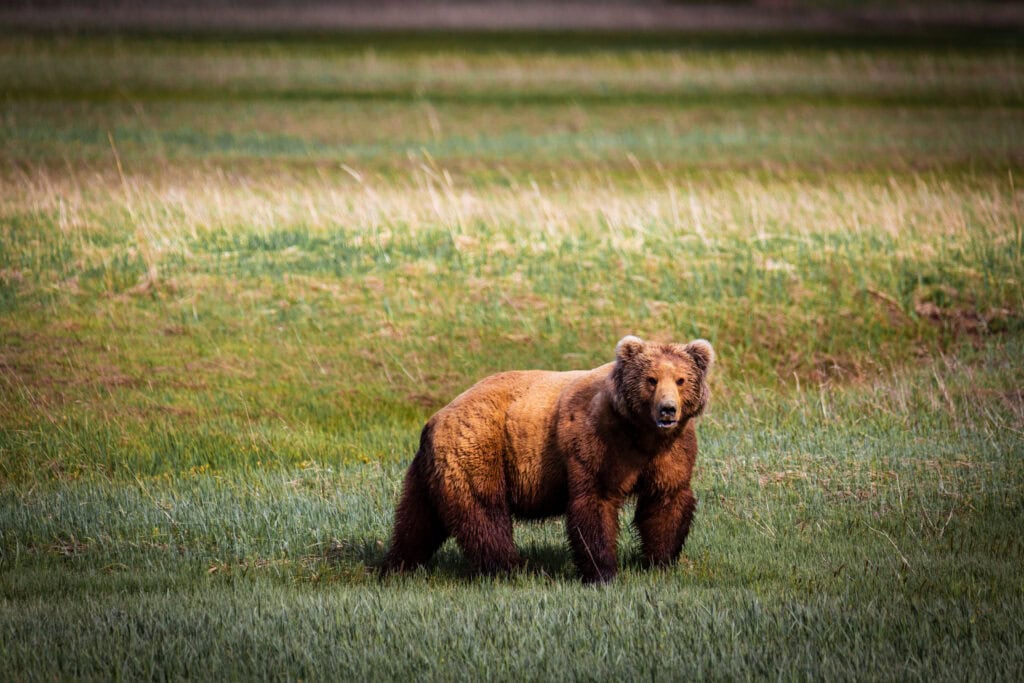
One of the top photography-focused bear destinations in Alaska — coastal meadows, tidal flats, and a salmon-rich creek combine to create an ideal habitat. It’s a fantastic area to photograph and see bears, but also incredibly popular. It’s the closest area to Anchorage, and planes are landing here daily.
You can stay overnight at the lodge, but that runs near $2,000 per night. However, it does seem worth it. If you’re looking for one of the best places to see bears in Alaska, this is it.
Wolverine Creek – Redoubt Bay and Cook Inlet
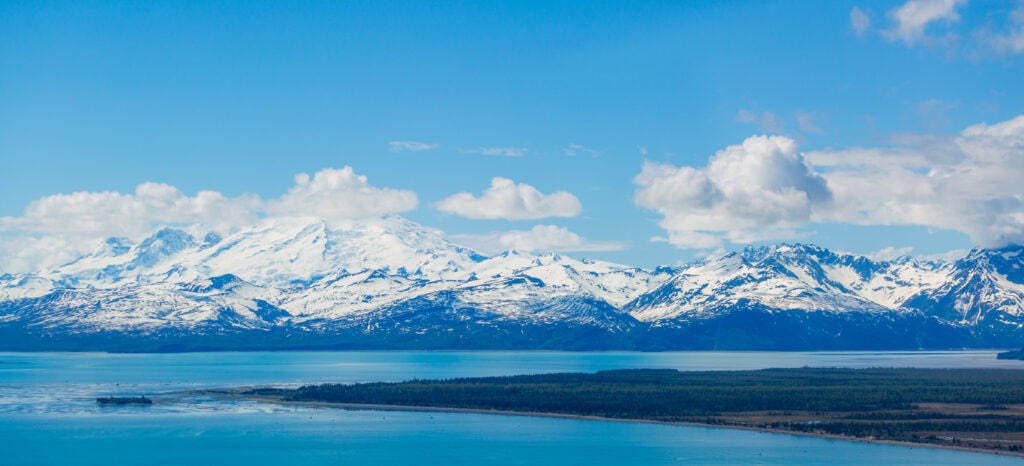
Brown bears are primarily present, with black bears also present. One of the few spots where you can watch bears go “snorkeling” — head fully submerged, ears and body sticking out of the lake — hunting salmon pooled up in the shallows.
The experience is entirely boat-based; there’s no shoreline access. Small skiffs and covered pontoon boats motor you into the cove to watch bears fishing at the creek mouth. Peak season runs mid-June through mid-July, about 50 minutes by floatplane from Anchorage.
It can get crowded at peak salmon, but the water-level perspective on the bears is unlike anything you’ll get from a platform.
Frazier Lake – Kodiak Island
Kodiak brown bears are a distinct subspecies and among the largest bears on earth. This is the second-largest sockeye run on the island, and during peak times, it’s typical to see five to ten bears working the falls and fish ladder where salmon back up on their way into the lake.
The viewing area sits about 50 yards from where bears fish, though they regularly come much closer — sometimes napping or nursing cubs nearby. Best July through September.
Floatplane from Kodiak City, about 50 minutes out, followed by a short walk to the falls. Kodiak Island is hands down one of the best places to see bears in Alaska.
Skilak Lake – Kenai Peninsula

We had a fun encounter as a black bear wandered up a small creek next to our campsite and popped up as we were making breakfast. It almost seemed more surprised than we were. Jaimie ran to hide behind the car, the bear ran off, and I ran to grab my camera.
This is one of the most accessible areas to see them in Alaska, along with nearby Russian River Falls. You can get both brown bears and black bears in the Kenai Peninsula.
Denali National Park – Mainland Alaska
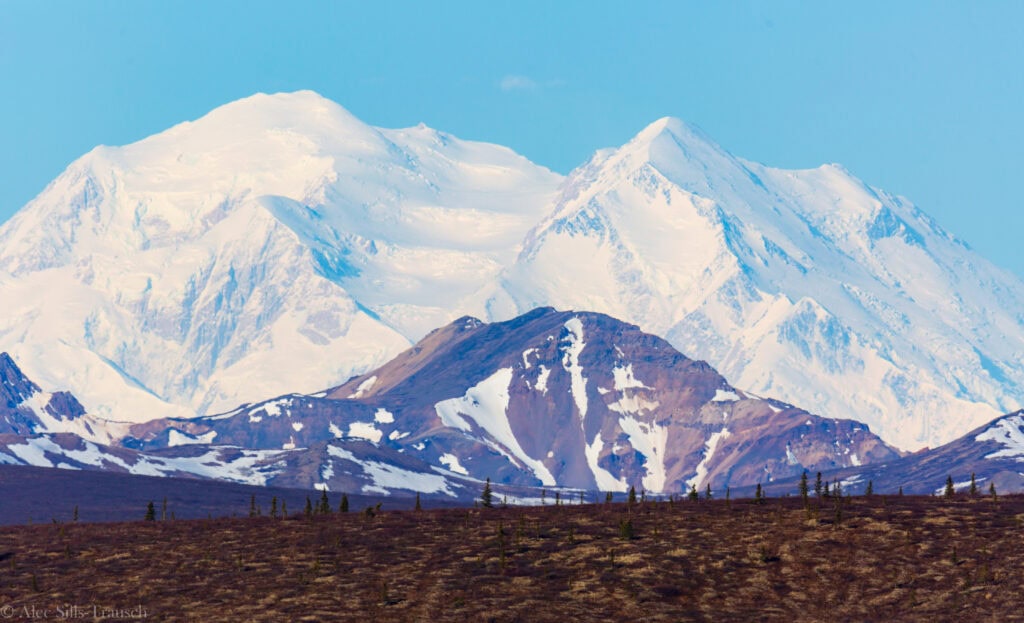
The only location on this list without a salmon run or a waterway. This is why Denali bears, aka Grizzly Bears, are different from Coastal Brown Bears.
While the Coastal Brown bears of Katmai or Lake Clark are more docile and welcoming to human presence, thanks to an abundant food supply, Denali Grizzly Bears are more like the ones you’d see in Montana and Wyoming.
They are more aggressive and territorial, so you should keep your distance if you spot them. And because food is more scarce, you need to treat encounters with caution.
We never got to see them in Denali, though. Granted, it made for a safer experience, haha.
Pack Creek – Admiralty Island (Inside Passage)
One of the densest populations on earth, Admiralty Island has more bears per square mile than almost anywhere in North America. Pack Creek puts you on a tidal flat watching them fish for salmon up close during the July–September salmon run.
The brown bears here are habituated to humans but wild, which means close encounters without the erratic behavior of a surprised animal. Permit required; floatplane in from Juneau. Group sizes are limited, so it stays uncrowded.
Mendenhall Glacier and Steep Creek – Juneau
The most accessible bear viewing in Alaska — no charter, no permit, no remote logistics. Bears fish Steep Creek within walking distance of the glacier visitor center, typically late July through September, when sockeye and coho move through.
The tradeoff is crowds on the boardwalk. But a glacier as your backdrop while a brownie pulls salmon from the creek is a composition you won’t find anywhere else. This is very easy to reach.
Anan Creek – Inside Passage
Both black bears and brown bears — one of the few places in Alaska you’ll reliably see both species at the same site. The pink salmon run here is among the largest in Southeast Alaska, which is what pulls them in.
A Forest Service wildlife observatory keeps you elevated and close without disturbing the animals. The season runs roughly from July through mid-August, peaking with the salmon—permit required; accessible by floatplane or boat out of Wrangell, about 30 miles south.
Utqiagvik and Kaktovik – Arctic Circle
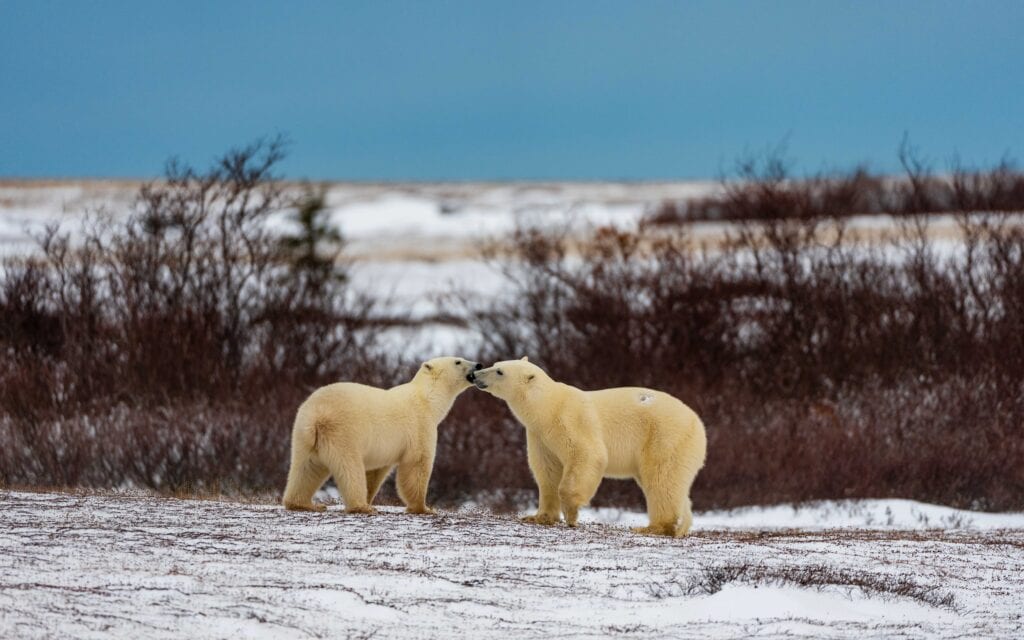
These are the places to see Polar Bears in Alaska, though Kaktovik is considered the gold standard. Thanks to subsistence whale hunting, polar bears feed on the carcasses, creating incredible photo and bear-viewing opportunities.
Unfortunately, federal regulations and COVID-19 have put a pause on most bear watching at the moment, with hopes of a 2027 revival in the air.
When the pandemic struck, Kaktovik paused visitation. Then in 2021, the federal government, which manages polar bears, halted boat tours, mostly over concerns about how tourists were affecting bear behavior and overrunning the town.
Alaska Native leaders are now in talks with the U.S. Fish and Wildlife Service to address those concerns and reignite the industry, perhaps as early as 2027. The agency told The Associated Press in a statement that it’s working with Kaktovik “to ensure that any future opportunities are managed in a way that prioritizes visitor safety, resource protection, and community input.”
Just like in Churchill, polar bears congregate along the shores waiting for sea ice to form. September and October are the prime months to see them here.
How much does it cost to go bear watching in Alaska?
This depends on where you go, where you depart from, and which company you use. But generally speaking, you’re looking at $1,000-$1,300 per person for a day of bear watching. Yes, I can envision your eyes opening as you look at the pricing.
It is expensive. Most of the best things to do in Alaska cost money. But it’s incredibly worth it. The days spent with bears in Alaska are among my fondest memories!
The cheapest option I’ve found is the boating one from Homer to Cook Inlet. You’ll spend more time on the boat and less on the ground. But you’re also saving basically 50%! Not a bad deal.
Comparison Table for Alaska Bear Watching
| Location | Species | Access | Best Month(s) | Crowd Level | Cost Tier |
|---|---|---|---|---|---|
| Brooks Falls – Katmai | Brown | Floatplane | July | High | $$$ |
| Funnel Creek – Katmai | Brown | Floatplane | July–Aug | Low | $$$ |
| Chitina Bay – Lake Clark | Brown | Floatplane/Boat | Late June–Sept | Low | $$$ |
| McNeil River Sanctuary | Brown | Lottery + Floatplane | June–Aug | Very Low (permit) | $$$$ |
| Salmon Creek – Lake Clark | Brown, occasional Black | Floatplane | July–Sept | Low | $$$ |
| Wolverine Creek – Cook Inlet | Brown, Black | Boat | Mid-June–mid-July | Moderate | $$ |
| Frazier Lake – Kodiak Island | Brown (Kodiak subspecies) | Floatplane | July–Sept | Low | $$$ |
| Skilak Lake – Kenai Peninsula | Brown, Black | Drive | June–Sept | Moderate | Free–$ |
| Denali National Park | Brown (Grizzly) | Bus/Drive | June–Sept | Moderate | Free-$ |
| Pack Creek – Admiralty Island | Brown | Floatplane (Juneau) | July–Sept | Low (permit) | $$$ |
| Mendenhall / Steep Creek – Juneau | Brown | Walk | Late July–Sept | High | Free |
| Anan Creek – Inside Passage | Brown, Black | Floatplane/Boat | July–mid-Aug | Low (permit) | $$$ |
| Kaktovik / Utqiagvik | Polar | Floatplane | Sept–Oct | Currently paused | $$$ |
Cost tier key: $ = 200–$500 · $$ = 800–$1,500 · $$$ = $1,500+
Cost tiers are per-person estimates for day tours from the nearest hub city. McNeil River lottery fees are separate from floatplane costs.
Tips for Photographing Bears in Alaska
Fast Shutter, ISO Auto
When it comes to your camera settings, your camera, lens, and time of day will matter. So the exact setting will vary. But this is a general framework. Also, if you’re on a tripod, you have a little more freedom with shutter speed.
- Shutter Speed – 1/1000 (remember, double your focal length (500mm = 1/1000, 400mm = 1/800)
- Aperture – f/5.6
- ISO – AUTO (Don’t risk having a ton of dark photos in case a cloud moves in or you move to photograph a bear in the shade.)
Turn on Eye Tracking, Continuous Autofocus, and High-Speed Mode
Turning these on in your settings will let you easily lock onto a bear, stay focused on them as they move, and capture every single movement they make. (Make sure you have a high-quality memory card that can read fast.)
Bring a telephoto lens
I don’t think I need to say this, but I will. You want at least 200mm, and 400-500 will be perfect. I had a 400mm 2.8 telephoto and a 100-500 lens for when bears got closer. Anything less and you won’t feel like you got the shots you need. Now, the bears will likely be closer, but having a top-of-the-line lens for this experience will make you feel better.
Bring a wide-angle secondary lens
Just in case, have a 24-70, 70-200, or a 24-105 on hand if you want to get wider shots of the entire scene. This is great if you have the good fortune to have 40 bears in view. I used the 70-200 a lot in Lake Clark National Park in addition to the 400.

Have a sturdy tripod
If you are bringing a massive prime lens, make sure you have a tripod that can handle it. A Manfrotto 055 was really nice to me in Alaska. It’s heavy as heck, but it kept everything very sturdy.
Related:
Best Cameras for Wildlife Photography
Best Mirrorless Cameras
Bring protection from the elements
I highly recommend these lens coverings. They’re plastic and uber-lightweight and helped me a lot when it started to rain on us. And then this one offers more protection but is slightly bulkier.
Stay aware of your surroundings
This applies less at Brooks Falls, because you’re on a platform. But elsewhere, even with a guide, stay aware of what is happening and how the bears are behaving. While the odds are low that they will come up to you, you need to protect yourself first and foremost.
When is the best time to go bear watching in Alaska?
The bear-watching window in Alaska runs from June through September, but the right month depends entirely on where you’re going.
June is the quietest month on the ground. Bears are active in coastal meadows, grazing on sedge grass, and you’ll often see mothers with new cubs. Salmon haven’t arrived yet at most locations, so the action is spread out and slower — bears at Chitina Bay in early June will be 200 yards out in the meadows rather than 10 feet from you at the creek. For Wolverine Creek in Redoubt Bay, mid-June marks the start of the salmon push and can be excellent.
July is the peak month for most locations and the best time to visit Brooks Falls. The sockeye run typically peaks in mid-to-late July, which is when you get the classic video footage: 20+ bears stacked at the falls, fish flying. It’s also the most expensive and most crowded time to visit. If Brooks Falls is the priority, July is non-negotiable.
I visited in August 2024 — the salmon run at Brooks Falls had wound down, but Funnel Creek/Crosswind was still very active. August can actually be better for less-famous locations like Salmon Creek and Pack Creek, where fish are still moving and crowds thin out from the July peaks.
September is underrated. Bears enter hyperphagia — the pre-hibernation feeding frenzy when they eat up to 20 hours a day — which means they’re predictable, focused on food, and often easier to photograph because they’re not moving around as much.
Coastal locations like Lake Clark and Kodiak stay productive into September. The tradeoff is weather: September in Alaska brings rain, shorter days, and more unpredictable flying conditions.
Polar bear season (Kaktovik) is completely different — September through October, timed to when sea ice begins forming along the Arctic coast.
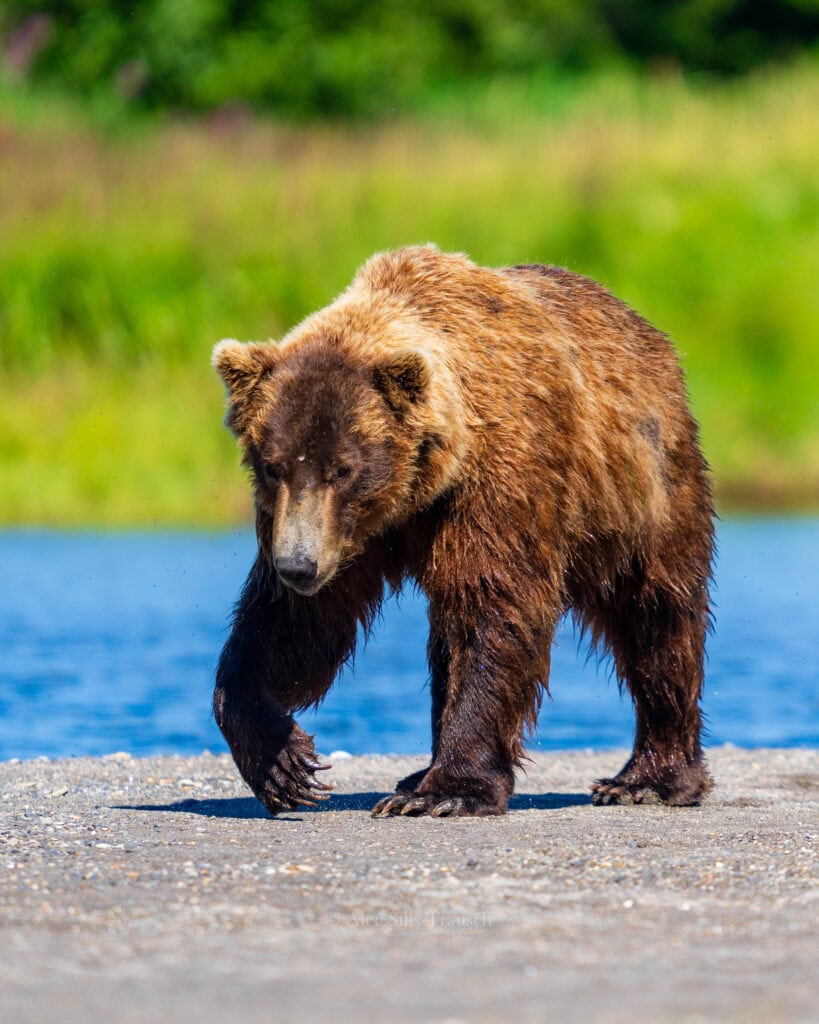
Bear Safety on Alaska Bear-Watching Trips
Most of the locations on this list are guided, structured experiences where safety is actively managed. At Brooks Falls, you’re on an elevated platform. At Funnel Creek and most Lake Clark locations, a guide is with you the entire time.
That said, a few things are worth knowing regardless of where you go:
Carry bear spray on any ground-level experience. If you’re venturing into bear territory (say for a hike), it’s mandatory to have bear spray with you. But if you go on a bear trip or stay at a lodge with guides, you won’t need to bring any. This is mostly because you can’t fly with bear spray.
Read the bears, not your camera. A bear that’s feeding is generally not interested in you. A bear that stops feeding, stands up, and orients toward you is telling you something. Your guide will read this too, but don’t be so locked into your viewfinder that you miss it.
Coastal brown bears and interior grizzlies behave differently. Coastal bears at Katmai, Lake Clark, and similar locations have abundant food and are habituated to human presence — they’ve learned that people on platforms and in small groups are not a threat. Interior grizzlies at Denali have no such history and should be treated with far more caution. The difference is food density: a bear that doesn’t have to compete for resources is calmer.
At Mendenhall and Skilak, you’re on your own. These are the two locations on this list where you may encounter bears without a guide or an elevated platform. Keep distance (at least 50 yards for brown bears, 25 for black bears per NPS guidelines), never approach a bear on a trail, and make noise in dense brush so you’re not a surprise.
The bear safety class at Brooks Falls is 15 minutes of common sense, but it’s useful common sense. The core of it: don’t run, don’t make yourself look small, and give the bear a way out.
How do you get to these Alaska bear-watching destinations?
Get ready to fly (or maybe boat). Almost all of the top-tier bear-watching locations in Alaska are far away from civilization. Outside of Skilak Lake, Mendenhall Glacier, and Redoubt Bay, you’ll need an airplane to drop you off.
This is what makes these locations so superb, but also expensive.
FAQ About Where to See Bears in Alaska
Brooks Falls in Katmai National Park is the most iconic location, famous for the mid-July salmon run when dozens of bears gather at the falls. For a less crowded alternative with comparable bear density, Funnel Creek in Katmai Preserve and the McNeil River State Game Sanctuary are the top options — though McNeil requires winning a permit lottery.
Most guided bear-watching day trips run $1,000–$1,500 per person, including the floatplane charter and guide fees. The most affordable option is a boat-based trip from Homer to Cook Inlet, which can run $400–$600 per person. Brooks Falls via a floatplane from Homer or Anchorage typically costs $700–$1,000 per person for a day trip
July is peak season at most locations, coinciding with the sockeye salmon run. Brooks Falls is best in mid-July. August remains strong at many locations, including Funnel Creek and Lake Clark. September brings hyperphagia — bears feeding aggressively before hibernation — and can offer excellent viewing with fewer crowds.
Yes — brown bears and grizzly bears are the same species (Ursus arctos). In Alaska, the term “brown bear” typically refers to coastal bears with access to salmon, which grow significantly larger than interior grizzlies.
A coastal brown bear at Katmai can weigh over 1,000 pounds; an interior Denali grizzly typically weighs 300–600 pounds. The behavioral difference is also significant — coastal bears are generally calmer due to abundant food.
Final Thoughts on The Best Places to See Bears in Alaska
Bears are amazing. Alaska is amazing. Combined, you’re on another planet! So, as you’re planning your summer adventures, make sure to book a day out with the bears in one of our incredible national parks.
If it were up to me, the most incredible moments to be had are probably at Brooks Falls during the peak salmon run. But it’s also exceptionally crowded, and you will only get a turn or two at the closest platform. Otherwise, going to another Katmai spot or McNeil River will be a pretty great consolation prize.
If you’re looking for exclusivity and top-tier bear watching, Brown Bear Bay is the place to be. However, the per-person price starts in the five figures.
These experiences will shape you for the better and leave you with photos and memories you’ll forever cherish.
Until next time, adventurers, stay safe.
Follow on social media: TikTok || Instagram || Facebook || Newsletter | YouTube